

Oceanography: The Ocean's Secrets!
Images
Oceanography
The Interdisciplinary Nature of Oceanographic Inquiry
Oceanography, derived from the Greek words for 'ocean' and 'writing,' is the comprehensive scientific study of the world's oceans. It is not a single, isolated field but rather a convergence of numerous scientific disciplines, reflecting the ocean's immense complexity. Oceanographers draw upon insights from astronomy to understand tidal forces, biology to study marine life, chemistry to analyze water composition, geography and geology to map the seafloor and understand its formation, hydrology to study water cycles, meteorology to link ocean and atmospheric phenomena, and physics to model ocean currents and wave dynamics.
This holistic approach is essential because the ocean influences and is influenced by nearly every aspect of our planet's systems, from climate regulation to the distribution of life.
Physical Oceanography
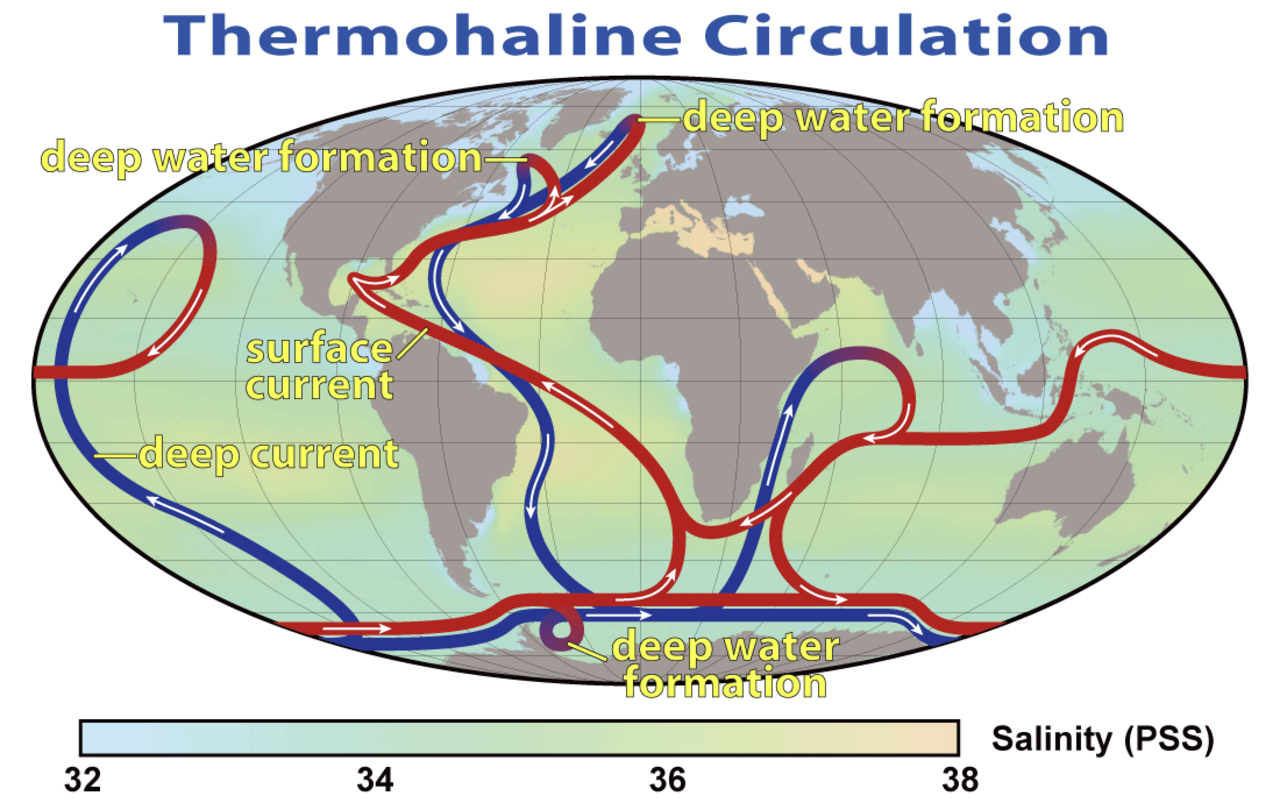
Physical oceanography focuses on the physical properties and phenomena of the ocean. This includes the study of ocean currents, which are driven by a complex interplay of wind, temperature differences, salinity variations, and the Earth's rotation (the Coriolis effect). Understanding these currents is critical, as they are major transporters of heat, influencing global climate patterns and weather systems.
Wave dynamics, including their generation, propagation, and interaction with coastlines, are also a key area. Furthermore, physical oceanographers investigate geophysical fluid dynamics, applying principles of fluid mechanics to large-scale oceanic and atmospheric motions, and study the exchange of energy and properties across the ocean's boundaries with the atmosphere and seafloor.
Chemical Oceanography
Chemical oceanography examines the composition of seawater and the biogeochemical cycles that occur within the ocean and across its boundaries. This involves analyzing the concentration of salts, dissolved gases (like oxygen and carbon dioxide), nutrients (such as nitrates and phosphates), and trace elements. Oceanographers study how these substances are transported, transformed, and interact with marine organisms and the environment.
A critical aspect is understanding the ocean's role in the global carbon cycle, particularly its capacity to absorb atmospheric carbon dioxide, which has profound implications for climate change and ocean acidification. Research also covers pollution and its dispersal within marine environments.
Biological and Geological Oceanography
Biological oceanography, or marine biology, investigates the life within the oceans. This spans from the microbial communities in the deep sea to the complex food webs of coral reefs and open oceans. It explores how marine organisms adapt to diverse environments, their ecological relationships, and the impact of human activities on marine biodiversity.
Geological oceanography, conversely, focuses on the solid Earth beneath the oceans. This includes studying the processes of plate tectonics that shape the ocean floor, the formation of underwater features like mid-ocean ridges and trenches, the composition of marine sediments, and the history of Earth's climate as recorded in seafloor sediments. Understanding seabed geology is also crucial for resource exploration and hazard assessment.
The Significance of Oceanography in a Changing World
Oceanography is more critical now than ever. As our planet faces unprecedented environmental challenges, understanding the ocean is paramount. It is the largest biome on Earth, playing a fundamental role in regulating climate, producing oxygen, and supporting a vast array of life.
Oceanographic research informs policies on climate change mitigation, sustainable fisheries management, marine conservation, and the responsible use of ocean resources. Advances in technology, such as autonomous underwater vehicles (AUVs) and sophisticated remote sensing, continue to push the boundaries of exploration, revealing new insights into the ocean's mysteries and its indispensable role in maintaining planetary health.
Go deeper
Frequently Asked Questions
What is oceanography?+
Why do oceanographers study waves and currents?+
How does the ocean help with climate?+
What do biological oceanographers study?+
What is geological oceanography?+
Based on content from Wikipedia · Licensed under CC BY-SA 4.0