

Nucleophilic Substitution
Images

VicariousNucleophilicSubstitution


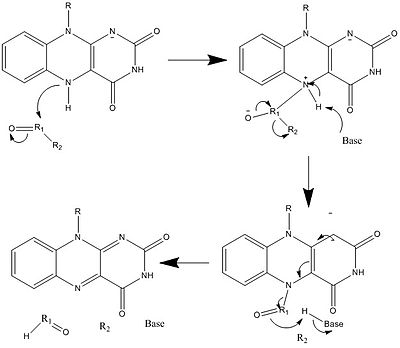
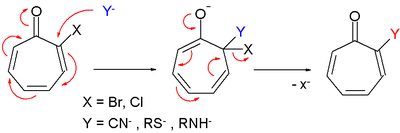


The Core Mechanism
Nucleophilic substitution represents a cornerstone class of reactions in organic chemistry, characterized by the replacement of a leaving group (LG) on a substrate molecule by a nucleophile (Nuc). The general representation, Nuc: + R-LG → R-Nuc + LG:, encapsulates this fundamental transformation. The nucleophile, by definition, possesses a lone pair of electrons or a pi bond that it can donate to form a new covalent bond with an electrophilic center, typically a carbon atom.
This electrophilic carbon is rendered electron-deficient due to the presence of electronegative atoms or groups attached to it, including the leaving group itself. The leaving group is a crucial component; its ability to stabilize a negative charge or depart with a bonding electron pair dictates the feasibility and rate of the substitution. Common leaving groups include halides (like bromide or iodide), tosylates, and mesylates, which are excellent leaving groups due to their ability to delocalize negative charge.
Historical Evolution
The concept of substitution reactions has roots in early organic chemistry, but a rigorous understanding of nucleophilic substitution emerged with the development of physical organic chemistry. Pioneers like Sir Christopher Ingold and Saul Winstein were instrumental in elucidating the distinct mechanistic pathways. Ingold, in particular, meticulously studied reaction kinetics and stereochemistry, leading to the classification of nucleophilic substitutions into two primary mechanisms: SN1 (Substitution Nucleophilic Unimolecular) and SN2 (Substitution Nucleophilic Bimolecular).
The SN1 mechanism involves a rate-determining unimolecular ionization step where the leaving group departs first, forming a carbocation intermediate, which is then attacked by the nucleophile. The SN2 mechanism, conversely, is a concerted, bimolecular process where the nucleophile attacks the electrophilic carbon simultaneously as the leaving group departs, proceeding through a single transition state without a discrete intermediate. This distinction profoundly impacted synthetic strategy and the prediction of reaction outcomes.
Profound Significance
The significance of nucleophilic substitution cannot be overstated; it is arguably the most important reaction class for constructing carbon-based molecules. Its applications span virtually every field of chemistry and beyond. In pharmaceutical synthesis, it is indispensable for building complex drug molecules, allowing for precise functionalization and the creation of chiral centers crucial for biological activity.
The synthesis of polymers, from common plastics like polyethylene to advanced materials, often relies on nucleophilic polymerization or modification. Furthermore, it plays a role in the synthesis of agrochemicals, fragrances, dyes, and specialty chemicals. The ability to selectively replace one functional group with another provides chemists with unparalleled control over molecular architecture, enabling the design and creation of molecules with tailored properties for specific applications.
Mechanistic Pathways
The SN1 and SN2 mechanisms represent the two fundamental modes of nucleophilic substitution at saturated carbon centers. SN1 reactions are favored by tertiary or resonance-stabilized substrates that can form stable carbocation intermediates. The reaction rate depends only on the concentration of the substrate (unimolecular).
Stereochemically, SN1 reactions typically lead to racemization if the electrophilic carbon is chiral, due to the planar nature of the carbocation intermediate. SN2 reactions, on the other hand, are favored by primary or secondary substrates and strong nucleophiles. The reaction rate depends on the concentration of both the substrate and the nucleophile (bimolecular).
SN2 reactions proceed with inversion of configuration at the electrophilic carbon center, a phenomenon known as Walden inversion. Factors such as solvent polarity, nucleophile strength, leaving group ability, and substrate structure critically influence which mechanism predominates. While SN1 and SN2 are primary, variations and related reactions like allylic and vinylic substitutions also exist, each with unique mechanistic nuances.
Illustrative Examples and Modern Applications
A classic example of nucleophilic substitution is the hydrolysis of an alkyl bromide (R-Br) with hydroxide ion (OH-), yielding an alcohol (R-OH) and bromide ion (Br-). This reaction can proceed via SN1 or SN2 depending on the structure of R. Industrially, the Williamson ether synthesis, a prime example of SN2, involves the reaction of an alkoxide ion with a primary alkyl halide to form an ether.
This is a vital method for producing a wide range of ethers used as solvents and intermediates. In biochemistry, many enzymatic reactions involve nucleophilic attack, such as the hydrolysis of esters by esterases or the addition of water to activated carbonyl groups. Modern applications also include the synthesis of organometallic compounds and the functionalization of complex biomolecules for diagnostic or therapeutic purposes, all heavily reliant on the principles of nucleophilic substitution.
See also
Frequently Asked Questions
What is nucleophilic substitution?+
How does a leaving group help the reaction?+
What are SN1 and SN2 reactions?+
Why are halides like bromide or iodide good leaving groups?+
Where is nucleophilic substitution used in real life?+
Based on content from Wikipedia · Licensed under CC BY-SA 4.0