

Nucleomorph: Tiny Secrets Inside Plants!
Images
Nucleomorph


The Genesis of Nucleomorphs
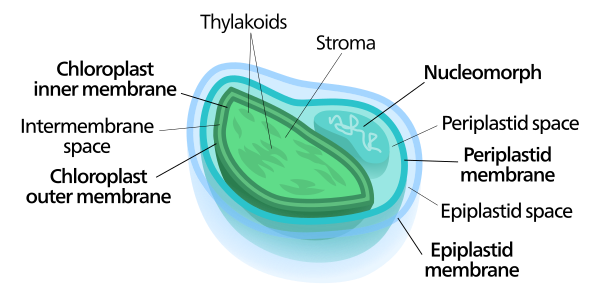
Nucleomorphs represent a fascinating biological phenomenon: the persistence of a eukaryotic nucleus within the confines of another eukaryotic cell's organelle. Specifically, they are found situated between the inner and outer membranes of complex plastids, which are characteristic of certain algal lineages, most notably cryptophytes and chlorarachniophytes. The prevailing scientific consensus posits that nucleomorphs are the evolutionary vestiges of the nucleus from a eukaryotic endosymbiont-likely a red alga in the case of cryptophytes and a green alga in the case of chlorarachniophytes-that was engulfed by a host eukaryotic cell.
This engulfment event, termed secondary endosymbiosis, is a cornerstone of eukaryotic evolution, explaining the origin of plastids in a vast array of photosynthetic eukaryotes. The nucleomorph’s presence is a direct morphological and genetic signature of this ancient cellular integration, providing tangible evidence for the dynamic history of organelle acquisition.
Endosymbiotic Theory
The discovery and study of nucleomorphs have profoundly strengthened the endosymbiotic theory, particularly its extension to secondary endosymbiosis. Primary endosymbiosis, the engulfment of a prokaryote by a eukaryote, is widely accepted as the origin of mitochondria and the initial plastids (in red and green algae). Secondary endosymbiosis, however, describes the subsequent engulfment of a primary endosymbiont (like a red alga) by another eukaryote.
This process results in plastids with more than two membranes. Nucleomorphs, residing within these multi-membraned plastids, are direct evidence of this secondary engulfment. They are the shrunken nuclei of the engulfed algal cell, which, rather than being destroyed, were retained and reduced in size and genetic content.
This retention highlights the complex evolutionary pathways that led to the diversification of photosynthetic eukaryotes, including the ancestors of many modern algae and even plants.
Unraveling Evolutionary Pathways and Genetic Reduction
The significance of nucleomorphs extends beyond mere evidence for endosymbiosis. They are invaluable for understanding the process of genome reduction, a common theme in evolutionary biology where organisms shed genetic material over time. The nucleomorph genome is drastically smaller than that of its free-living algal ancestor, containing only essential genes required for the plastid's function within the host cell.
Studying this reduced genome allows scientists to pinpoint which genes were deemed dispensable and subsequently lost, and which were retained, offering insights into gene transfer events between the nucleomorph and the host nucleus. This genetic archaeology helps reconstruct the evolutionary trajectory of the plastid and its host, illuminating the selective pressures that drive genome simplification and the co-evolution of symbiotic partners.
Mechanisms of Retention and Function
The persistence of a nucleomorph within a plastid implies a delicate balance and functional integration between the host cell, the nucleomorph, and the plastid itself. While the nucleomorph's nucleus has largely lost its autonomy, it still harbors genetic information that can influence the plastid's function. Research suggests that some genes encoded by the nucleomorph genome may be transcribed and translated within the plastid, contributing to its overall operation. This inter-organellar communication and genetic interdependence underscore the sophisticated nature of secondary endosymbiosis.
The host cell provides the necessary environment and resources for the nucleomorph's survival, while the nucleomorph, through its genetic contribution, aids in the maintenance and function of the complex plastid, creating a stable, albeit unusual, symbiotic relationship.
Modern Relevance
In contemporary biology, nucleomorphs remain a focal point for research in genomics and phylogenetics. The sequencing of nucleomorph genomes has provided unprecedented resolution for tracing the evolutionary history of their host organisms and the endosymbionts themselves. By comparing nucleomorph DNA with that of related free-living algae, scientists can refine phylogenetic trees and understand the timing and nature of endosymbiotic events.
Furthermore, the study of nucleomorphs contributes to our broader understanding of organelle biology, gene regulation, and the evolution of eukaryotic complexity. This knowledge has potential implications for fields ranging from biotechnology, where understanding photosynthetic machinery is key, to astrobiology, where the search for life on other planets often involves considering alternative evolutionary pathways for cellular organization.
See also
Frequently Asked Questions
What is a nucleomorph?+
Why do nucleomorphs exist inside some algae?+
How big is a nucleomorph compared to a normal nucleus?+
Where can we find nucleomorphs in nature?+
What do scientists learn from studying nucleomorphs?+
Based on content from Wikipedia · Licensed under CC BY-SA 4.0