

Novichok: The Super Sneaky Poison
Images

Novichok structuur voorbeelden


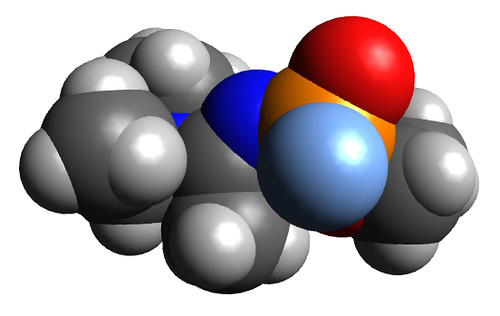

The Genesis and Nature of Novichok Agents
Novichok, translating from Russian as 'newcomer' or 'novice', refers to a sophisticated family of nerve agents developed by the Soviet Union and later Russia at the GosNIIOKhT state chemical research institute. Their development spanned from 1971 to 1993, aiming to create chemical weapons with enhanced properties, potentially including greater stability, ease of dispersal, and extreme toxicity. Some variants exist as solids, capable of being dispersed as ultrafine powders, while others are liquids.
The most alarming aspect, as claimed by their developers, is their potency. Certain Novichok agents are reported to be five to eight times more powerful than the notorious VX nerve agent, and others up to ten times more potent than soman. This places them among the most lethal chemical compounds ever synthesized, raising significant concerns about their potential for misuse and the challenges in their detection and neutralization.
A History of Secrecy and Escalation
The development of Novichok agents occurred during a period of intense military research and development, particularly within the context of the Cold War. The Soviet Union's program sought to circumvent existing arms control treaties by developing novel chemical agents. The fact that these agents were developed over two decades underscores a sustained effort to advance chemical warfare capabilities.
While the program was largely secret, its existence and the potential dangers became more apparent in the late 20th and early 21st centuries. The first documented public use of Novichok agents for assassinations or poisonings, outside of military testing, began to surface, bringing these previously obscure weapons into global focus and highlighting the ongoing threat posed by undeclared or illicit chemical weapon programs.
The Global Response to a Potent Threat
The significance of Novichok agents extends beyond their chemical properties; it lies in their documented use against political dissidents and their subsequent impact on international security policy. Incidents involving Novichok in the United Kingdom in 2018 and the poisoning of Alexei Navalny in 2020 brought these agents to the forefront of global attention. These events demonstrated that Novichok was not merely a theoretical threat but a weapon actively employed.
In response, the Organisation for the Prohibition of Chemical Weapons (OPCW), the executive body of the Chemical Weapons Convention (CWC), took decisive action. In November 2019, Novichok agents were officially added to the CWC's list of controlled substances, marking one of the most significant updates to the treaty since its inception. This inclusion signifies a global consensus on the extreme danger posed by these agents and the need for stringent international control.
Mechanism of Action
Novichok agents, like other organophosphate nerve agents, exert their lethal effects by inhibiting acetylcholinesterase (AChE). This enzyme is crucial for breaking down acetylcholine, a neurotransmitter responsible for transmitting signals from nerves to muscles and other organs. When AChE is inhibited, acetylcholine accumulates in the synaptic cleft, leading to continuous stimulation of nerve receptors.
This overstimulation causes a cascade of physiological effects, including muscle fasciculations, paralysis, excessive salivation, sweating, and bronchoconstriction. Crucially, the respiratory muscles can become paralyzed, leading to respiratory failure, and the heart's rhythm can be disrupted, resulting in cardiac arrest. The extreme potency of Novichok agents suggests they may bind more effectively or irreversibly to AChE, or possess other properties that enhance their toxicity and speed of action, making them exceptionally dangerous.
Broader Implications and Related Topics
The emergence and use of Novichok agents have far-reaching implications for international arms control and public health. They highlight the persistent challenge of preventing the proliferation of chemical weapons, even in the face of international treaties like the CWC. The development of such potent agents also raises questions about the dual-use nature of scientific research, where advancements in chemistry can be applied for both beneficial and harmful purposes.
Related topics include the history of chemical warfare, the development of antidotes and medical countermeasures for nerve agent exposure, and the ongoing efforts by international bodies to monitor and verify compliance with chemical weapons conventions. The incidents involving Novichok underscore the critical need for continued vigilance and robust international cooperation to prevent the re-emergence and use of these horrific weapons.
See also
Frequently Asked Questions
What is Novichok?+
Why is Novichok so dangerous?+
How was Novichok created?+
Where has Novichok been used?+
What did the world do to stop Novichok?+
Based on content from Wikipedia · Licensed under CC BY-SA 4.0