

The Nine Years' War in Ireland
Images

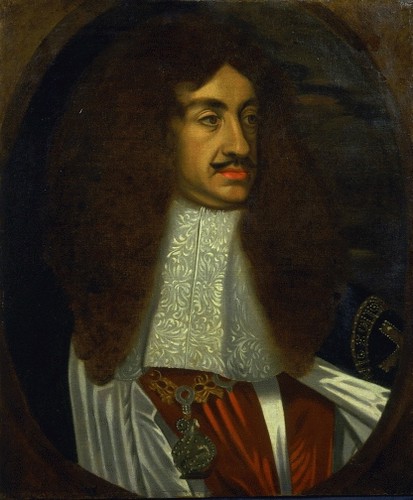
King Charles II of Britain




![THE FLYING ANGEL IN THE SAILORSTOWN AREA OF BELFAST [BY MAURICE HARRON ]-129216](https://live.staticflickr.com/4252/34192475484_201d86c8f9_n.jpg)


Geopolitical Fault Lines
The Nine Years' War (1593-1603) was not merely an internal Irish rebellion but a complex entanglement within broader European power struggles, notably the Anglo-Spanish War and the Wars of Religion. Ireland's strategic location made it a crucial pawn. The English Crown viewed Ireland as a potential launching pad for Spanish invasions, necessitating its firm control. The war's primary theater was Ulster, a region historically dominated by Gaelic lordships like those of O'Neill and O'Donnell.
Its geography, characterized by rugged terrain, extensive bogs, and dense woodlands, favored guerrilla tactics and defensive strategies, posing significant logistical and tactical challenges for the English army. The climate, with its persistent rain and fog, further complicated military operations, impacting supply lines and troop morale. The war's expansion across the entire island underscored the deep-seated resistance to English encroachment and the interconnectedness of Irish resistance movements.
Seeds of Revolt
The war's origins lie in the escalating tensions between the English Crown and the native Gaelic aristocracy. The policy of 'surrender and regrant,' introduced in the mid-16th century, aimed to consolidate English authority by having Irish lords formally cede their lands to the Crown and receive them back as feudal tenants. While ostensibly offering security, this policy gradually eroded traditional Gaelic power structures and customs.
By the 1590s, widespread discontent festered due to several factors: the execution of prominent Gaelic lords, the often brutal and corrupt administration of appointed sheriffs who pillaged settlements, and the religious persecution of Catholics, which aligned with the broader European Catholic-Protestant divide. The revolt, initially sparked by Hugh Maguire's defiance against an English sheriff in Fermanagh in May 1593, quickly coalesced under the leadership of Hugh O'Neill and Hugh Roe O'Donnell, transforming a localized uprising into a full-scale war for Irish sovereignty.
The Crucible of Conflict
The Nine Years' War witnessed intense military engagements and significant strategic innovations. The confederacy of Irish lords, bolstered by crucial Spanish support, achieved notable successes against the English forces. Victories at the Battle of Clontibret (1595) and the Battle of the Yellow Ford (1598) demonstrated the effectiveness of Irish leadership and tactics, inflicting heavy casualties and undermining English morale.
These triumphs were particularly significant given the overwhelming resources the English Crown committed to the conflict. At its zenith (1600-1601), the English army in Ireland numbered over 18,000 soldiers, a deployment exceeding their commitment in the Eighty Years' War against Spain. This massive investment underscored the perceived threat posed by the Irish rebellion.
However, the tide turned decisively at the Siege of Kinsale (1601-1602), where a combined English and Dutch force defeated the Irish and their Spanish allies, marking a critical turning point and effectively breaking the back of the rebellion.
The Aftermath
The conclusion of the Nine Years' War with the Treaty of Mellifont in 1603 ushered in a period of profound transformation for Ireland. The defeat of the Gaelic lords and the subsequent 'Flight of the Earls' in 1607, where many prominent leaders exiled themselves to continental Europe seeking foreign support, marked the symbolic end of Gaelic Ireland's independent political power. This exodus created a vacuum that the English Crown readily filled.
The war's immense cost and the perceived threat of future rebellions directly led to policies like the Plantation of Ulster. This systematic resettlement of Protestant settlers from England and Scotland onto confiscated Irish lands fundamentally altered the demographic, religious, and political landscape of the province, laying the groundwork for centuries of sectarian tension and conflict. The war, therefore, stands as a critical juncture, irrevocably shaping Ireland's future.
See also
Based on content from Wikipedia · Licensed under CC BY-SA 4.0