

Nikolai Bulganin
Images
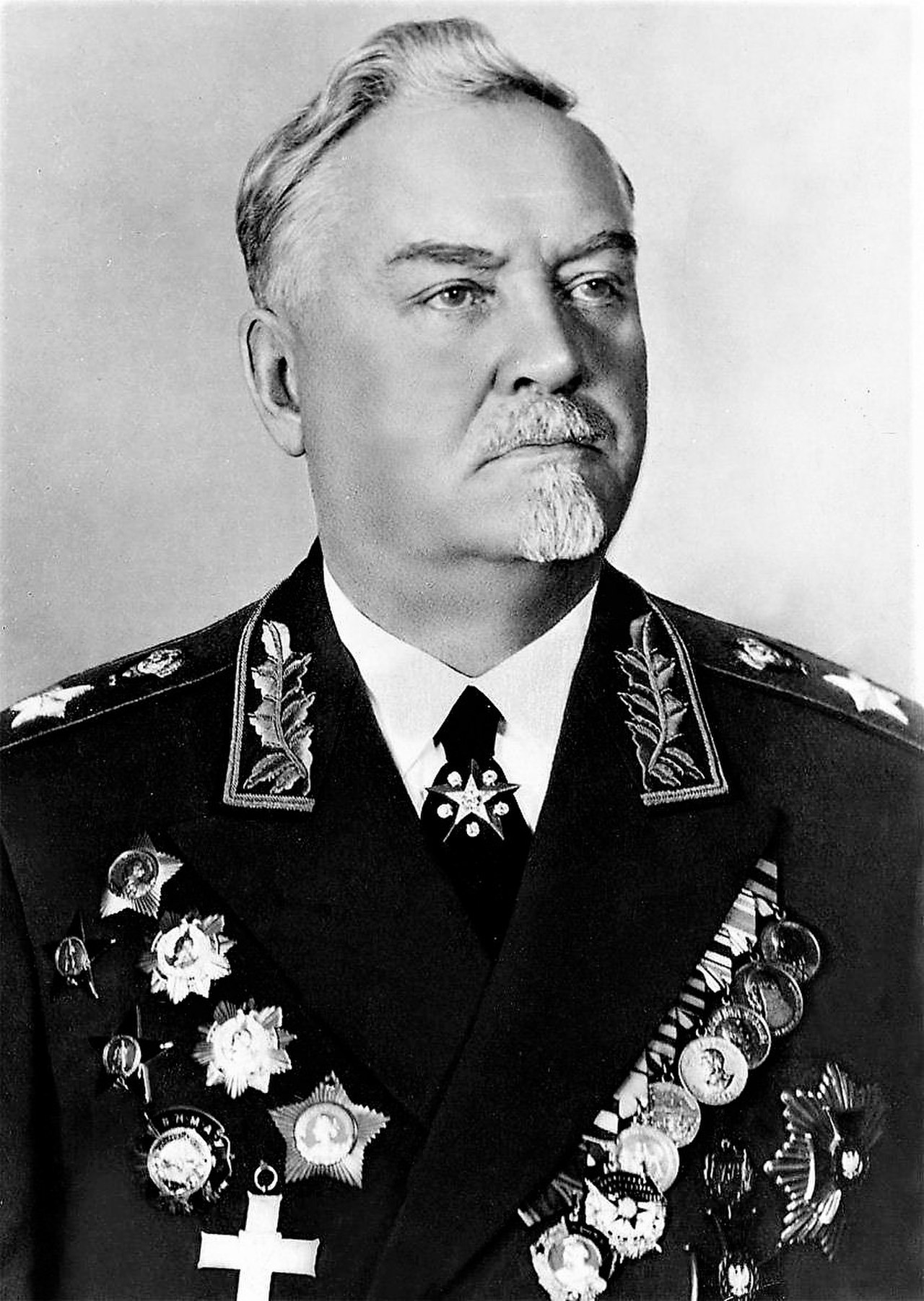
Nikolai Bulganin


Ascension Through the Ranks
Nikolai Alexandrovich Bulganin's political trajectory was deeply intertwined with the evolution of the Soviet state. His early involvement with the Bolshevik Party in 1917 and subsequent service in the Cheka laid the groundwork for a career in state administration. By 1931, with the backing of influential figures like Lazar Kaganovich, he assumed leadership of the Moscow City Soviet, a significant urban administrative role.
Bulganin distinguished himself as a staunch Stalinist, a critical attribute for survival and advancement during the Great Purge era. His loyalty and competence were rewarded with increasingly senior positions: premier of the Russian SFSR in 1937 and a full member of the Central Committee. By 1938, he was Deputy Prime Minister and, notably, headed the Soviet State Bank.
This latter appointment underscores his involvement in managing the nation's financial infrastructure, a testament to his perceived reliability in handling sensitive economic portfolios, even as the country underwent radical political purges.
Wartime Leadership and Military Authority
During World War II, Bulganin's contributions were primarily in a political and administrative capacity within the Red Army, rather than direct battlefield command. He served on Stalin's State Defense Committee, the supreme wartime authority responsible for mobilizing the nation's resources and directing the war effort. This role placed him at the heart of strategic decision-making.
His post-war career saw a significant elevation in military standing. In 1947, he succeeded Stalin as Minister for the Armed Forces, a position that consolidated control over the entire Soviet military apparatus. The conferral of the rank of Marshal of the Soviet Union in the same year was a clear indication of his immense power and influence within the military establishment.
His subsequent elevation to full membership in the Politburo in early 1948 solidified his status as one of the Soviet Union's most powerful figures, a key player in the post-war consolidation of power.
Navigating the Post-Stalin Power Struggle
The death of Stalin in 1953 triggered a complex and often perilous power struggle. Bulganin emerged as a crucial player, strategically aligning himself with Nikita Khrushchev against Georgy Malenkov. This alliance proved instrumental in Khrushchev's eventual rise to First Secretary and Bulganin's own appointment as Premier of the Soviet Union in 1955, replacing Malenkov.
Initially, Bulganin and Khrushchev presented a united front, symbolizing a collective leadership aimed at de-Stalinization and reform. However, ideological and policy differences soon emerged. Bulganin began to harbor reservations about Khrushchev's increasingly radical policies and his perceived authoritarian tendencies.
This led Bulganin to associate with a faction of Old Guard communists, including Vyacheslav Molotov, who sought to curb Khrushchev's power and reverse some of his reforms. This opposition, however, was ultimately unsuccessful.
The Fall from Grace and Legacy
The failure of the anti-Khrushchev faction in 1957 marked the beginning of the end for Bulganin's political career. In 1958, he was unceremoniously dismissed as Premier and expelled from the Politburo, effectively ending his tenure in the highest echelons of Soviet power. This marked a significant downfall for a man who had held such prominent positions for decades.
Forced into retirement, Bulganin lived out his remaining years away from the political spotlight. He died in 1975 at the age of 79. Bulganin's career exemplifies the volatile nature of Soviet politics, where loyalty, strategic alliances, and ideological alignment were paramount.
His tenure as Premier, though relatively short, occurred during a critical period of transition and ideological debate within the Soviet Union, leaving a complex legacy as a leader who navigated, and was ultimately overcome by, the shifting currents of Soviet power dynamics.
See also
Frequently Asked Questions
Who was Nikolai Bulganin?+
How did Bulganin help during World War II?+
What job did Bulganin have after the war?+
Why did Bulganin become Premier of the Soviet Union?+
What happened to Bulganin's career later?+
Based on content from Wikipedia · Licensed under CC BY-SA 4.0