

Nicéphore Niépce
Images

Tribute to Nicéphore Niépce Chalon-sur-Saône


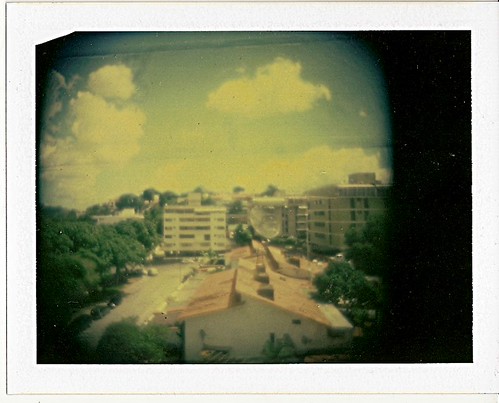
The Genesis of Heliography
Joseph Nicéphore Niépce (1765–1833) stands as a pivotal figure in the history of visual representation, recognized primarily for his pioneering efforts in photography. Driven by a desire to mechanize the reproduction of images, Niépce developed a process he termed 'heliography,' meaning 'sun drawing.' This technique involved coating a metal plate, typically pewter, with bitumen of Judea, a light-sensitive asphalt. When exposed to light within a camera obscura, the bitumen would undergo a photochemical reaction, hardening in areas exposed to more light.
After an extended exposure period, often lasting many hours or even days, the plate was treated with a solvent. The unhardened bitumen was washed away, leaving a permanent, albeit crude, image formed by the differential hardening of the bitumen. His most famous work, 'View from the Window at Le Gras,' created around 1826 or 1827, is the oldest surviving photograph of a real-world scene, a testament to his perseverance and innovative approach.
This achievement marked a profound departure from manual artistic reproduction, offering a new paradigm for documenting reality.
A Broader Spectrum of Innovation
Niépce's inventive genius extended far beyond the realm of optics and light. In collaboration with his elder brother, Claude Niépce, he was instrumental in the development of the Pyréolophore, patented in 1807. This device is widely considered one of the earliest successful internal combustion engines.
The brothers experimented with various fuels, including lycopodium powder and coal dust, to generate power. Their engine was initially designed to propel boats on the River Saône, demonstrating an early application of engine technology for practical purposes. Although the Pyréolophore did not achieve widespread commercial success, its conception and development highlight the Niépce brothers' forward-thinking approach to mechanical engineering and their contributions to the nascent field of engine technology, predating many later advancements in the industrial revolution.
The Technical Nuances of Early Photography
The technical challenges faced by Niépce in developing heliography were immense. The extremely long exposure times required for his process meant that capturing moving subjects was impossible, and even static scenes could be distorted by subtle environmental changes over the duration of the exposure. The bitumen of Judea was not highly sensitive to light, necessitating prolonged periods of direct sunlight.
Furthermore, the resulting images were often low in contrast and detail compared to later photographic methods. Despite these limitations, Niépce's work was foundational. His experiments laid the groundwork for subsequent photographic pioneers like Louis Daguerre, with whom he eventually formed a partnership, leading to the development of the daguerreotype.
Niépce's meticulous, albeit slow, process demonstrated the fundamental principle of photography: the ability of light to chemically alter materials and record an image.
Legacy and Impact
Nicéphore Niépce's legacy is profound and far-reaching. His creation of the first permanent photograph fundamentally altered the course of art, science, and communication. It provided a new means of documentation, enabling the preservation of historical events, scientific discoveries, and personal memories with unprecedented fidelity.
Photography democratized image-making, making it accessible to a broader population and transforming how societies perceive themselves and the world. Niépce's work, though initially overshadowed by the more commercially successful daguerreotype, is now recognized for its groundbreaking originality. His contributions are essential to understanding the evolution of visual media and the technological advancements that continue to shape our modern, image-saturated world.
He was not just an inventor but a visionary who opened a window to a new way of seeing.
See also
Frequently Asked Questions
What did Nicéphore Niépce invent that made the first picture?+
How did Niépce make the first photograph?+
Why did Niépce's early photographs look blurry or low detail?+
Did Niépce work on anything besides photography?+
Who did Niépce partner with to improve photography?+
Based on content from Wikipedia · Licensed under CC BY-SA 4.0