

NHK: Japan's Amazing Storytellers!
Images

NHK-Hall 2016
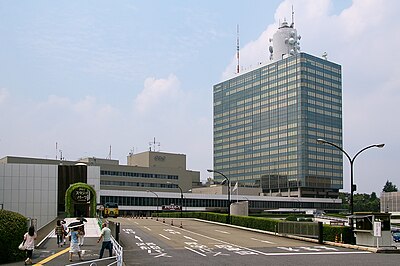


Foundations of a National Broadcaster
The Japan Broadcasting Corporation, universally known as NHK, stands as a cornerstone of Japanese media and culture. Established as a statutory corporation, its mandate transcends commercial interests, prioritizing public service in information, education, and entertainment. NHK’s operational framework is distinct: it is funded primarily through mandatory television license fees paid by households that own televisions.
This financial independence from advertising revenue allows NHK to pursue a broad spectrum of programming, including in-depth investigative journalism, comprehensive cultural documentation, and educational content often deemed less commercially viable by private broadcasters. Its dual terrestrial channels, NHK General TV and NHK Educational TV, alongside a suite of satellite and ultra-high-definition services, underscore its commitment to reaching diverse audiences with varied content needs. This model positions NHK not just as a broadcaster, but as a vital public institution integral to the fabric of Japanese society, reflecting and shaping national identity.
Technological Vanguard
NHK’s legacy is deeply intertwined with technological innovation, consistently placing it at the forefront of broadcast advancements. It holds the distinction of being the world's first broadcaster to transmit in high-definition (HD) television, a groundbreaking achievement under the 'Hi-Vision' standard. This initiative not only elevated the visual quality of television but also spurred global development in HD technology.
Further cementing its pioneering status, NHK was also the first to broadcast in 8K resolution, offering an unprecedented level of detail and immersion that foreshadowed the future of visual media. The continued operation of NHK BS Premium 4K and NHK BS8K channels demonstrates an ongoing dedication to pushing the boundaries of picture clarity and viewer experience. These technological leaps are not merely for show; they represent NHK's strategic investment in providing the highest quality content and maintaining its role as a leader in the global broadcasting landscape.
Global Reach and Cultural Diplomacy
Beyond its domestic responsibilities, NHK plays a significant role in international communication and cultural exchange through its NHK World-Japan service. This multifaceted platform includes NHK World TV, NHK World Premium, and the shortwave radio service Radio Japan. These services are crucial for disseminating Japanese news, culture, and perspectives to a global audience.
In an era of increasing interconnectedness, NHK World-Japan serves as a vital conduit for understanding, offering insights into Japanese society, policy, and arts. The availability of some programs online further extends its reach, making Japanese content accessible to a worldwide audience. This international broadcasting arm is a key component of Japan's soft power, fostering goodwill and mutual understanding across diverse cultures and nations.
Operational Structure and Content Diversity
The operational scope of NHK is extensive, encompassing a wide array of broadcasting platforms to cater to different viewing habits and technological capabilities. It operates two primary terrestrial television channels, NHK General TV and NHK Educational TV, forming the backbone of its domestic service. Complementing these are three satellite television channels, including the advanced NHK BS Premium 4K and NHK BS8K, which leverage cutting-edge technology for superior visual fidelity.
The organization also maintains a robust radio presence with three distinct networks: NHK Radio 1, NHK Radio 2, and NHK FM, each offering unique programming. This diverse portfolio ensures that NHK can effectively deliver its mandate of informing, educating, and entertaining across multiple media, adapting to technological shifts while maintaining a consistent commitment to quality and public service.
The Enduring Significance of Public Service Broadcasting
In the contemporary media landscape, characterized by fragmentation and the rise of digital platforms, NHK's role as a public service broadcaster remains profoundly significant. Its funding model insulates it from the short-term pressures of commercial markets, enabling it to undertake long-form investigative reporting, preserve cultural heritage through broadcasting, and provide educational programming that might not be profitable for private entities. NHK's commitment to impartiality and accuracy in news reporting is a critical counterpoint to the often sensationalized or biased content found elsewhere.
Furthermore, its continuous investment in advanced broadcasting technologies, such as 8K, sets industry standards and drives innovation. NHK exemplifies the enduring value of public service media in fostering an informed citizenry, promoting cultural understanding, and ensuring access to high-quality content for all, regardless of their ability to pay subscription fees.
See also
Frequently Asked Questions
What is NHK?+
How does NHK get its money?+
Why does NHK make high‑definition and 8K TV shows?+
What are NHK General TV and NHK Educational TV?+
Does NHK share Japanese culture with other countries?+
Based on content from Wikipedia · Licensed under CC BY-SA 4.0