

Neofunctionalization
Images

Neofunctionalization

The Genesis of Novelty
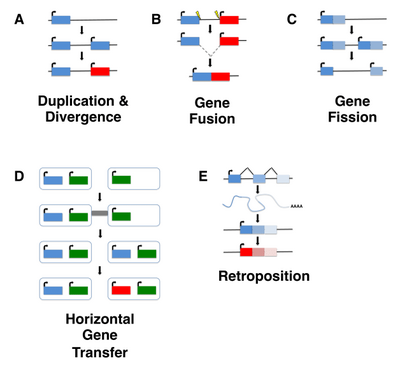
Neofunctionalization stands as a pivotal mechanism in evolutionary biology, representing one of the primary outcomes of gene duplication events. When a gene undergoes duplication, the organism now possesses two copies of the same genetic blueprint. While one copy typically retains the ancestral function, safeguarding essential biological processes, the duplicate copy enters a state of relative relaxed selective pressure.
This relaxation allows the duplicated gene to accumulate mutations without immediate detrimental consequences for the organism's survival. Over evolutionary timescales, these accumulated mutations can lead to significant alterations in the gene's sequence, ultimately enabling it to acquire a completely new function, distinct from its progenitor. This process is inherently adaptive, as the acquisition of novel functions can confer significant advantages, enhancing an organism's ability to exploit new ecological niches, respond to environmental changes, or develop more complex physiological systems.
The emergence of new protein functions, driven by neofunctionalization, is a cornerstone of biological innovation.
Mechanisms of Functional Divergence
The transition from a redundant gene copy to one with a novel function is a complex, multi-step process. Initially, following duplication, the new gene copy is essentially a backup. However, the absence of strong purifying selection on this duplicate allows for the accumulation of a variety of genetic changes.
These can include point mutations, insertions, deletions, or even larger chromosomal rearrangements that alter the gene's coding sequence, its regulatory elements, or both. If these mutations result in a protein with a slightly altered substrate specificity, a new binding partner, or a different catalytic activity, the gene has begun to diverge. Further mutations can then refine this new function, making it more efficient or specialized.
This gradual accumulation of changes, driven by random mutation and shaped by natural selection (which favors advantageous new functions), is the essence of neofunctionalization. It’s a testament to the evolutionary potential inherent in genetic redundancy, transforming a copy into a source of innovation.
The Profound Impact
The significance of neofunctionalization extends far beyond individual genes; it is a driving force behind the vast biodiversity and intricate complexity observed in the living world. Consider the evolution of complex traits such as vision, immunity, or the intricate metabolic pathways found in different organisms. Many of these likely owe their existence to cascades of gene duplications and subsequent neofunctionalization events.
For instance, the evolution of the globin gene family, responsible for oxygen transport in vertebrates, is a classic example where an ancestral globin gene duplicated and neofunctionalized multiple times to produce myoglobin, hemoglobin alpha, and hemoglobin beta, each with specialized roles. This process allows organisms to develop new molecular tools, leading to the emergence of new cell types, tissues, organs, and ultimately, entirely new species adapted to diverse environments. It provides the raw material for evolutionary experimentation.
Tracing the Evolutionary Footprints
Understanding neofunctionalization is crucial for fields ranging from evolutionary developmental biology (evo-devo) to medicine. By comparing the genomes of different species, scientists can reconstruct evolutionary histories, identify gene families that have expanded through duplication, and infer which genes have likely undergone neofunctionalization. Techniques like comparative genomics and phylogenetic analysis are instrumental in this endeavor.
The study of neofunctionalization also has direct relevance to human health. For example, understanding how genes involved in disease resistance or drug metabolism have evolved through duplication and functional divergence can provide insights into disease susceptibility and inform therapeutic strategies. It highlights how our own biology is a product of millions of years of gene duplication and adaptation.
Beyond Neofunctionalization
It is important to note that neofunctionalization is not the only possible fate for a duplicated gene. Other outcomes include subfunctionalization, where the ancestral function is partitioned between the two copies, and nonfunctionalization, where one copy is inactivated by mutations and becomes a pseudogene. However, neofunctionalization is particularly significant because it directly generates novel biological capabilities.
This ability to create entirely new functions is what allows life to continually explore new evolutionary pathways and adapt to an ever-changing planet. The interplay between duplication, mutation, and selection, leading to outcomes like neofunctionalization, is a fundamental engine of evolutionary innovation and the source of life's remarkable diversity.
See also
Frequently Asked Questions
What is neofunctionalization?+
Why does a duplicated gene get a new function?+
How does a duplicated gene become useful?+
Where can we see examples of neofunctionalization?+
When does neofunctionalization happen?+
Based on content from Wikipedia · Licensed under CC BY-SA 4.0