

Necktie
Images

How to Tie the Necktie


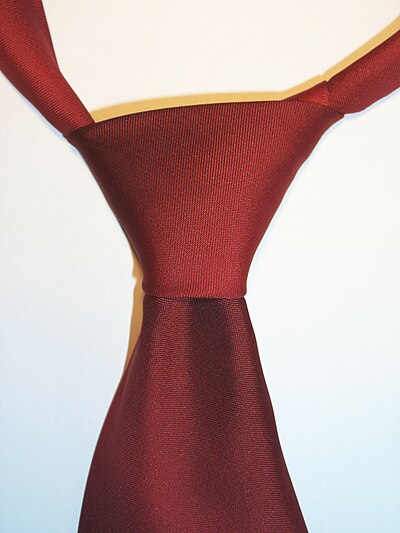
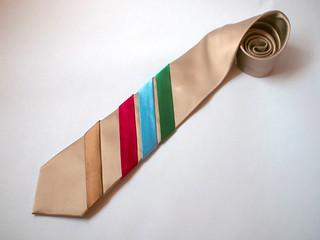


The Necktie's Historical Trajectory and Cultural Evolution
The necktie, a ubiquitous symbol of formal attire and professional presentation, boasts a rich history that stretches back centuries. Its lineage can be traced to the 'cravat,' a decorative neckcloth popular during the Regency era. This precursor, often elaborate and tied in various styles, laid the groundwork for the more standardized necktie that emerged later.
The transition from cravat to necktie reflects evolving fashion sensibilities and manufacturing techniques. Initially conceived as a masculine accessory, the necktie has transcended gender boundaries in contemporary Western culture, becoming a unisex item embraced for its versatility and stylistic potential. Its presence in formal wear, office environments, and even as part of specific uniforms, like that of the United States Marine Corps, underscores its enduring significance as a marker of occasion, authority, and personal expression.
The practical consideration of tucking the tie into a shirt during manual labor further illustrates its adaptable nature within different contexts.
The Mathematical Elegance of Necktie Knots
Beyond its sartorial function, the necktie has become a surprising subject of mathematical inquiry. The act of tying a necktie involves a complex interplay of folds and twists, leading to a vast array of possible knots. In the late 1990s, researchers Thomas Fink and Yong Mao at the University of Cambridge undertook a project to mathematically categorize and analyze these knots.
They identified 85 distinct ways to tie a necktie, but critically, they determined that only 13 of these knots were 'aesthetically viable.' This means that while many knots are physically possible, only a select few possess the visual balance and pleasing proportions that are generally accepted in fashion. Common knots like the four-in-hand, Pratt, and Windsor were among those deemed aesthetically superior, highlighting a blend of tradition and mathematical principle in necktie styling. The choice of knot is often paired with the style of a dress shirt's collar, demonstrating a nuanced approach to formal dressing.
Design Principles and Functional Adaptations
The design of a necktie is not arbitrary; it follows specific principles aimed at achieving a harmonious visual effect. Adult neckties are typically unsized, meaning they are not manufactured in standard S, M, L sizes. Instead, they are designed with a tapered shape, gradually narrowing from the neck to the wider end. This tapering is crucial for how the tie drapes and knots.
For taller individuals, longer versions are available to ensure the tie reaches an appropriate length. A key design consideration is the width of the tie, which is often calibrated to match the width of a suit jacket's lapels. This proportional relationship is vital for creating a balanced silhouette.
The tie is traditionally worn with the top shirt button fastened and the knot nestled between the collar points, further emphasizing the importance of precise placement and proportion in achieving a polished look.
The Necktie's Multifaceted Role in Society
The necktie functions on multiple levels within society, serving as more than just an accessory. It acts as a powerful signifier of formality and professionalism, instantly elevating an outfit and conveying a sense of seriousness or occasion. In many corporate environments, it is an unspoken requirement, a visual cue that employees are engaged in formal business.
Beyond professional settings, the necktie plays a role in cultural identity and personal expression. The choice of color, pattern, and knot can communicate aspects of an individual's personality, affiliations, or even mood. Furthermore, its inclusion in military and ceremonial uniforms imbues it with a sense of tradition, discipline, and belonging.
While its everyday wear may be declining in some informal contexts, the necktie's symbolic weight ensures its continued relevance in formal events, specific professions, and as a subject of ongoing fashion discourse.
See also
Frequently Asked Questions
What is a necktie?+
Why do people tie a necktie?+
How many different ways can you tie a necktie?+
What is the most common necktie knot?+
How does the shape of a necktie help it look good?+
Based on content from Wikipedia · Licensed under CC BY-SA 4.0