

Nanga Parbat
Images

Nanga Parbat


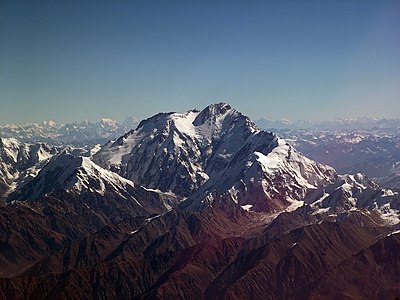


The Westernmost Bastion of the Himalayas
Nanga Parbat, known locally as Diamer, stands as a monumental peak at the western edge of the mighty Himalayas, marking its westernmost extent. With a summit elevation of 8,126 meters (26,660 feet), it ranks as the ninth-highest mountain on Earth. Its strategic location, immediately southeast of the Indus River's northernmost bend in Pakistan-administered Kashmir, positions it as a critical geographical marker.
Traditionally, the Himalayas are defined by the Indus River to the west and the Yarlung Tsangpo/Brahmaputra River to the east, making Nanga Parbat the definitive western anchor of this colossal mountain range. As one of the fourteen 'eight-thousanders,' it represents the pinnacle of high-altitude mountaineering and a significant geological feature shaped by immense tectonic forces. Its sheer scale and isolation contribute to its imposing presence, dominating the surrounding landscape and drawing the attention of adventurers and geologists alike.
The 'Killer Mountain' Phenomenon
Nanga Parbat's formidable reputation is underscored by its notorious nickname, 'Killer Mountain.' This moniker is not an exaggeration but a stark testament to the extreme difficulty and inherent dangers associated with climbing its slopes. The mountain has claimed the lives of numerous climbers, pushing human endurance and mountaineering skill to their absolute limits. Its challenging terrain, unpredictable weather patterns, and extreme altitude create a perilous environment where even the most experienced mountaineers face significant risks.
The high fatality rate has made Nanga Parbat a symbol of the ultimate test in mountaineering, attracting those who seek to confront and overcome extreme challenges. Understanding its climbing history reveals a narrative of human courage, resilience, and the profound respect that such powerful natural forces command.
A Dynamically Growing Giant
Remarkably, Nanga Parbat is recognized by Guinness World Records as the fastest-growing mountain in the world, increasing in height by approximately 7 millimeters (0.27 inches) per year. This astonishing growth is a direct consequence of the ongoing collision between the Indian and Eurasian tectonic plates. The immense geological pressures exerted by these plates cause the Earth's crust to buckle and uplift, leading to the continuous rise of mountains like Nanga Parbat.
This dynamic geological process makes the mountain a living laboratory for studying plate tectonics and mountain formation. Its steady ascent highlights that geological processes are not static but are continuously shaping our planet's surface, making Nanga Parbat a prime example of Earth's active and evolving geology.
Unparalleled Prominence
Nanga Parbat possesses the second-highest topographic prominence among the 100 tallest mountains on Earth, surpassed only by Mount Everest. Topographic prominence is a crucial metric that measures how much a peak rises above its surrounding terrain. A high prominence indicates that a mountain stands significantly isolated and towers over its base.
For Nanga Parbat, this means it dramatically dwarfs the surrounding valleys and lower peaks, creating a visually stunning and geologically significant landform. This exceptional prominence not only contributes to its imposing appearance but also presents unique challenges for climbers, as the ascent involves overcoming a vast vertical gain from its base. Its prominence underscores its status as a dominant feature in the Himalayan landscape.
Nanga Parbat in the Context of High-Altitude Mountaineering
As one of the fourteen eight-thousanders, Nanga Parbat represents a significant challenge within the elite realm of high-altitude mountaineering. The extreme conditions above 8,000 meters, often referred to as the 'death zone,' present physiological challenges that test the limits of human survival. Climbers must contend with dangerously low oxygen levels, extreme cold, high winds, and the risk of altitude sickness.
The history of climbing Nanga Parbat is filled with tales of both triumph and tragedy, reflecting the immense respect and caution required when attempting such ascents. Its difficulty and the sheer scale of the undertaking make it a focal point for mountaineering expeditions and a subject of study for those interested in human physiology and extreme environments.
See also
Frequently Asked Questions
What is Nanga Parbat?+
Why is Nanga Parbat called the "Killer Mountain"?+
Where is Nanga Parbat located?+
How fast does Nanga Parbat grow each year?+
What makes Nanga Parbat stand out among other tall mountains?+
Based on content from Wikipedia · Licensed under CC BY-SA 4.0