

Mudéjar: Amazing Artists and Builders!
Images

2 Euro 2020 Spanien - Architektur der Mudéjares


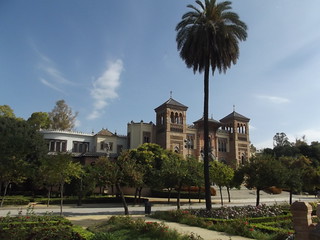


The Genesis of the Mudéjar Identity
The Mudéjar were a distinct socio-religious group that emerged in the Iberian Peninsula from the 11th century onwards, following the Christian Reconquista. These were Muslims who chose to remain in territories conquered by Christian kingdoms, rather than emigrate or convert. Their legal status was often modeled on the dhimmi system of Islamic law, granting them protected status with a degree of religious, legal, and fiscal autonomy, while acknowledging their subservience to Christian rulers.
This parallel society allowed for the preservation of Islamic cultural practices, including artistic traditions, within a Christian political framework. The term 'Mudéjar' itself is believed to derive from the Arabic word 'mudajjan,' meaning 'domesticated' or 'tamed,' reflecting their subordinate position. This unique historical circumstance laid the groundwork for the development of a distinctive artistic and architectural style.
The Articulation of Mudéjar Style
Mudéjar art and architecture represent a remarkable synthesis, where Islamic aesthetic principles and craftsmanship were applied to Christian contexts. Christian patrons commissioned buildings and decorative elements from Mudéjar artisans, who brought with them a rich heritage of geometric abstraction, intricate vegetal motifs, and sophisticated use of materials. Key characteristics include the extensive use of brick, often laid in decorative patterns; elaborate plasterwork (yesería) with complex interlacing designs; and the vibrant use of glazed ceramic tiles (azulejos) in geometric or figurative arrangements.
Wooden ceilings, known as artesonados, are also a hallmark, featuring complex geometric joinery. This style is not merely a copy of Islamic art but an adaptation and innovation, often integrated into Romanesque, Gothic, and later Renaissance architectural forms, creating hybrid structures that are uniquely Iberian.
The Enduring Significance of Mudéjar
The significance of the Mudéjar phenomenon extends far beyond its aesthetic achievements. It stands as a powerful example of cultural resilience and the capacity for creative exchange even amidst political and religious shifts. The Mudéjar communities, despite facing increasing pressure and eventual forced conversions or expulsions (leading to the Moriscos), left an indelible mark on the cultural landscape of Iberia.
Their art and architecture are tangible evidence of a complex historical reality where different cultures interacted, influenced, and ultimately co-created. This legacy is recognized globally, with UNESCO World Heritage sites celebrating Mudéjar architecture, underscoring its universal value as a testament to human ingenuity and the enduring power of cultural dialogue. It challenges simplistic narratives of conquest and assimilation, highlighting the nuanced ways cultures adapt and persist.
Evolution and Transformation
The status of Mudéjar people underwent significant changes over time. Initially, treaties allowed for a degree of autonomy. However, as the Reconquista neared completion, particularly after the fall of Granada in 1492, policies became more restrictive.
Muslims were given the stark choice of conversion to Christianity or exile. Those who converted, often under duress, became known as Moriscos. While outwardly Christian, many Moriscos secretly maintained Islamic practices and cultural traditions.
This led to a period of suspicion and persecution, culminating in the expulsion of the Moriscos in the early 17th century. The art produced by these communities, often termed 'Morisco art,' continued some Mudéjar traditions but also reflected their increasingly precarious position and the pressures of assimilation or clandestine adherence to their faith.
See also
Frequently Asked Questions
Who were the Mudéjar people?+
Why did Mudéjar art look different from other art?+
How did Mudéjar builders make their buildings special?+
Where can we see Mudéjar architecture today?+
What happened to the Mudéjar people after the Reconquista?+
Based on content from Wikipedia · Licensed under CC BY-SA 4.0