

Mount Humphreys
Images

South Boundary Trail: Colter Peak, Mount Schurz, and Mount Humphreys reflected in Yellowstone River


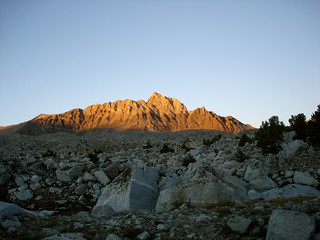


Geographical Prominence and Alpine Environment
Mount Humphreys is a significant peak within the formidable Sierra Nevada mountain range, a geological spine running through eastern California. Its precise location on the Fresno-Inyo county line underscores its role as a natural boundary marker within this vast wilderness. While not classified as a 'fourteener' (a peak exceeding 14,000 feet), its status as the 13th highest peak in California and the highest in the Bishop region grants it considerable topographical importance.
The alpine environment surrounding Mount Humphreys is characterized by extreme conditions: thin air with reduced oxygen partial pressure, harsh winds, and prolonged periods of snow cover. Vegetation is sparse, typically consisting of resilient alpine flora adapted to survive in such a challenging climate. This high-altitude ecosystem supports specialized plant and animal life, making the mountain a unique natural laboratory for studying adaptation to extreme environments.
The rugged terrain and dramatic elevation changes are hallmarks of the Sierra Nevada's grandeur.
Historical Naming and Engineering Legacy
The naming of Mount Humphreys is rooted in the mid-19th century era of American expansion and infrastructure development. In 1873, the California Geological Survey, a scientific body tasked with mapping and understanding the state's natural resources, officially designated the peak. The chosen name honors Andrew A.
Humphreys, a pivotal figure in American civil engineering and military leadership. As Chief Engineer of the United States Army, he played a crucial role in major infrastructure projects, including river and harbor improvements, and contributed significantly to the understanding of hydraulics. The survey's decision to name a prominent mountain after him reflects the era's emphasis on recognizing individuals who advanced the nation's engineering capabilities and scientific knowledge.
This act of nomenclature connects a natural landmark to a specific historical context of national development and scientific endeavor.
Ecological Considerations and Human Interaction
The ecological significance of Mount Humphreys extends beyond its immediate summit. As a high-elevation feature, it influences regional weather patterns, contributing to snowpack that is vital for California's water supply. The alpine zone provides habitat for species adapted to cold, arid conditions, and its preservation is crucial for biodiversity. Human interaction with Mount Humphreys is primarily recreational and scientific.
While its challenging elevation deters casual visitors, experienced mountaineers and hikers are drawn to its rugged beauty and the rewarding views from its higher reaches. The mountain serves as a destination for those seeking to test their limits and connect with the raw power of nature. Understanding the delicate balance of its alpine ecosystem is paramount for responsible recreation and conservation efforts, ensuring that this natural wonder can be appreciated by future generations.
Broader Significance in Geography and Culture
Mount Humphreys holds a multifaceted significance that resonates beyond its immediate geographical location. As the highest peak in the Bishop area, it serves as a constant, defining feature in the local landscape, influencing the identity and perception of the region for its inhabitants. Its ranking as the 13th highest peak in California places it among the state's most imposing natural monuments, contributing to the Sierra Nevada's reputation as a premier mountain destination.
The mountain's name, honoring a key figure in American engineering, also serves as a historical marker, reminding us of the nation's past efforts in exploration, surveying, and infrastructure development. In a broader sense, Mount Humphreys embodies the enduring allure of high places, representing challenges to be overcome, natural beauty to be admired, and a connection to the wild, untamed aspects of the planet. Its presence is a testament to the geological forces that shaped California and continues to inspire awe and exploration.
See also
Based on content from Wikipedia · Licensed under CC BY-SA 4.0