

Moray eel
Images

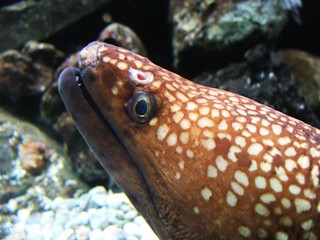
Gymnothorax moringa (spotted moray eel) (Bahamas) 1


Morphological Adaptations and Evolutionary Lineage
The family Muraenidae encompasses a vast array of eel species, characterized by their elongated, serpentine bodies and the absence of pectoral and pelvic fins, which are vestigial or entirely absent. This morphology is a key adaptation for their benthic lifestyle, enabling them to maneuver through complex reef structures and confined spaces. Their skin is typically scaleless and leathery, often protected by a layer of mucus that can vary in composition and function, sometimes offering antimicrobial properties or aiding in hydrodynamics.
The diversity in coloration and patterning across approximately 200 species reflects a wide range of ecological niches and camouflage strategies, from the vibrant hues of reef-dwelling species to the cryptic patterns of those inhabiting deeper, murkier environments. Their evolutionary history is deeply rooted in marine adaptation, showcasing a remarkable specialization for life within the ocean's varied aquatic realms.
Global Distribution and Habitat Specificity
Moray eels exhibit a cosmopolitan distribution, inhabiting marine environments across the globe, predominantly in tropical and subtropical waters. Their preferred habitats are diverse, ranging from shallow, sunlit coral reefs, where they utilize crevices and caves for shelter, to deeper rocky substrates and even shipwrecks. A notable aspect of their distribution is their adaptability to varying salinity levels; while the majority are strictly marine, several species are regularly found in brackish estuarine environments, and a few have successfully colonized freshwater river systems.
This ecological plasticity underscores their resilience and ability to exploit a broad spectrum of aquatic conditions, making them a significant component of various marine and estuarine ecosystems worldwide.
Predatory Strategies and the Pharyngeal Jaw System
As obligate carnivores, moray eels are apex or near-apex predators within their respective ecosystems. Their diet is primarily composed of fish, but also includes crustaceans, cephalopods, and occasionally other small vertebrates. Their hunting behavior is often characterized by ambush predation, utilizing their cryptic coloration and ability to remain motionless in their lairs to surprise unsuspecting prey.
The most striking adaptation in their feeding apparatus is the presence of pharyngeal jaws – a second, independent set of jaws located in the pharynx. These jaws are capable of rapid protrusion, allowing the moray to grasp prey that has already entered the oral cavity and transport it down the esophagus. This sophisticated mechanism significantly enhances their feeding efficiency, enabling them to tackle prey items that might otherwise be too large or difficult to manage with oral jaws alone.
Sensory Perception and Respiratory Mechanisms
Moray eels rely heavily on their olfactory senses for prey detection, possessing a well-developed sense of smell that allows them to track chemical trails in the water, particularly crucial in low-visibility conditions. Their lateral line system is also functional, enabling them to perceive vibrations and water movements, providing spatial awareness and detecting the presence of nearby organisms. Respiration is achieved through a unique buccal pumping mechanism.
By rhythmically opening and closing their mouths, they create a continuous flow of water across their gills, facilitating efficient oxygen extraction from the aquatic medium. This constant water expulsion from the gill slits is a defining visual characteristic of moray eels, often misinterpreted as distress but is, in fact, essential for their survival.
Ecological Roles and Conservation Considerations
Moray eels play a critical role in maintaining the health and balance of marine ecosystems. As predators, they exert top-down control on prey populations, influencing community structure and biodiversity. Their presence is often indicative of a healthy and complex habitat, such as a thriving coral reef.
While the majority of moray eel species are classified as 'Least Concern' by the IUCN, reflecting stable populations globally, localized threats such as habitat degradation (e.g., coral bleaching, coastal development), pollution, and unsustainable fishing practices can impact specific populations. Conservation efforts focused on protecting marine habitats and promoting sustainable fisheries are therefore essential for the long-term survival of these remarkable and ecologically significant creatures.
See also
Frequently Asked Questions
What does a moray eel look like?+
Where do moray eels live?+
How do moray eels catch their food?+
Why do moray eels have a second set of jaws?+
How do moray eels breathe?+
Based on content from Wikipedia · Licensed under CC BY-SA 4.0