

Moonlets: Tiny Companions in Space!
Images

Moonlet




Defining the Undefined
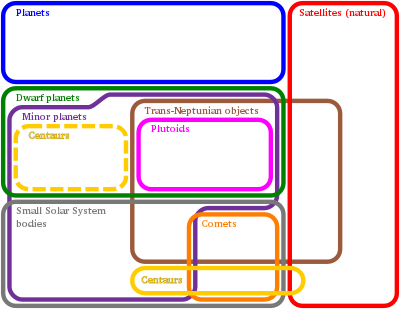
Moonlets represent a fascinating class of small celestial bodies, defined primarily by their diminutive size and their orbital status as natural satellites. Unlike the substantial moons of the gas giants, moonlets are often only a few kilometers in diameter, blurring the line between a moon and a larger asteroid or Kuiper Belt Object. Their origins are multifaceted, likely stemming from primordial material left over from the formation of their parent planets, or as fragments resulting from the tidal disruption or collisions of larger moons.
The study of moonlets is critical for understanding the processes of planetary accretion and the early dynamical evolution of solar systems. Their existence suggests that the formation of satellites is not a monolithic process but rather a spectrum of outcomes influenced by local conditions, gravitational interactions, and the availability of material. Understanding their composition, often a mixture of rock and ice, further informs models of material distribution in protoplanetary disks.
Guardians of the Rings
The most compelling evidence for moonlets comes from the intricate ring systems of the ice giants, particularly Saturn and Uranus. These moonlets are not passive inhabitants but active sculptors, exerting significant gravitational influence. They are responsible for maintaining the sharp edges of ringlets, clearing gaps (like the Cassini Division in Saturn's rings), and creating density waves and wakes within the rings.
Their close proximity to the planet means they orbit rapidly, often within periods of hours, and their gravitational perturbations are crucial for understanding the stability and structure of these vast collections of ice and dust. The shepherd moonlet hypothesis, where pairs of moonlets gravitationally confine ring particles, is a well-established model explaining many observed ring features. Studying these interactions provides a unique laboratory for observing gravitational dynamics in action on a smaller scale.
Orbital Mechanics and Dynamical Significance
The orbital characteristics of moonlets are a direct consequence of Kepler's laws of planetary motion and the immense gravitational pull of their parent planets. Their short orbital periods, sometimes less than a day, are a testament to their close proximity. This rapid orbital frequency means they are constantly interacting with the surrounding ring material, leading to complex dynamical processes. Resonance, where the orbital period of a moonlet is in a simple ratio with another object or a feature within the rings, plays a significant role in shaping ring structures.
Furthermore, moonlets are subject to tidal forces from their parent planets, which can influence their shape, internal structure, and even their orbital evolution over geological timescales. Their study offers a window into the delicate balance of forces that govern celestial bodies in close orbital proximity.
Broader Implications
The significance of moonlets extends beyond their role in ring dynamics. They serve as tangible remnants of the chaotic early stages of solar system formation, providing clues about the conditions and processes that led to the assembly of planets and their satellite systems. Their study contributes to our understanding of impact cratering, tidal forces, and orbital resonances, fundamental concepts in astrophysics and planetary science.
As humanity continues to explore space, moonlets present intriguing targets for future missions. Their small size and potentially unique compositions could offer valuable scientific returns, perhaps even revealing insights into the delivery of water and organic molecules to early planets. Understanding these diminutive worlds is integral to a comprehensive picture of planetary system architecture and evolution.
See also
Frequently Asked Questions
What are moonlets?+
Why do moonlets matter for planetary rings?+
How do moonlets form?+
Where can we see moonlets?+
How fast do moonlets orbit?+
Based on content from Wikipedia · Licensed under CC BY-SA 4.0