

The Moon Treaty: Sharing Space!
Images

Arctic indigenous leaders at IMO




Genesis of a Cosmic Compact
The Moon Treaty, formally known as the Agreement Governing the Activities of States on the Moon and Other Celestial Bodies, emerged from a period of intense space exploration and evolving international space law. Concluded on December 18, 1979, it was a response to the growing potential for both cooperation and conflict in outer space. The treaty's foundational principle is that the Moon and other celestial bodies, along with their natural resources, are the 'common heritage of mankind.' This concept aimed to preempt territorial claims and resource appropriation by individual states, ensuring that space exploration would serve the interests of all nations, not just those with advanced space capabilities.
It sought to extend the principles of the Outer Space Treaty of 1967, which declared space to be free for exploration and use by all states, by providing more specific guidelines for activities on celestial bodies themselves.
The 'Province of All Mankind'
At its heart, the Moon Treaty champions the idea that celestial bodies are not subject to national appropriation by claim of sovereignty, by means of use or occupation, or by any other means. This is a radical departure from terrestrial international law, where territory is often claimed and controlled. The treaty posits that all activities on the Moon and other celestial bodies must be conducted in accordance with international law, including the UN Charter, and must be carried out for the benefit and in the interests of all countries, whether they are developing or developed.
It explicitly prohibits the threat or use of force or any other unlawful threat or use of force against the celestial bodies. Furthermore, it mandates the establishment of an international regime to govern the exploitation of lunar and other natural resources, ensuring that benefits are shared equitably. This vision is a bold attempt to create a truly cooperative and equitable future for humanity beyond Earth.
Operationalizing the Cosmos
The Moon Treaty outlines several key mechanisms to achieve its objectives. Firstly, it requires states to inform the UN Secretary-General about their planned lunar and planetary activities. Secondly, it establishes the principle of peaceful use, prohibiting military installations, weapons testing, and the use of celestial bodies for military purposes other than for scientific investigation or any other peaceful use.
Thirdly, and perhaps most significantly, it calls for the creation of an 'international regime' to manage the exploitation of natural resources found on the Moon and other celestial bodies. This regime would be responsible for regulating extraction, ensuring safety, and distributing the benefits derived from these resources. The treaty also emphasizes the importance of scientific investigation and the preservation of celestial environments for future generations, encouraging international cooperation in these endeavors.
The Shadow of Non-Ratification
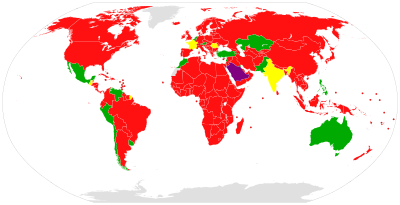
Despite its forward-thinking principles, the Moon Treaty has faced a significant hurdle: its lack of ratification by major spacefaring nations. The United States, Russia, and China, which possess the technological capacity for extensive space exploration and potential resource utilization, have not become parties to the treaty. This absence is critical because these nations are the primary actors in current and future space endeavors.
As of May 2024, only 17 states have ratified the treaty, and most of these are not major space powers. Consequently, the Moon Treaty has had minimal direct influence on contemporary international space law and practice. While its ideals remain influential in discussions about space governance, its practical application is severely constrained by the non-participation of key global players, leading to a complex and sometimes contradictory legal landscape for space activities.
Contemporary Relevance and Future Prospects
While the Moon Treaty's direct legal force is limited due to low ratification, its underlying philosophy continues to resonate in contemporary discussions about space governance, particularly with the resurgence of interest in lunar missions and asteroid mining. The concept of 'common heritage of mankind' remains a powerful ideal, influencing debates on how to manage potential extraterrestrial resources sustainably and equitably. As more nations and private entities become involved in space, the principles enshrined in the Moon Treaty serve as a crucial reference point for developing future international agreements.
The challenge lies in bridging the gap between the treaty's aspirational goals and the practical realities of space exploration, potentially through new agreements or amendments that address the concerns of major spacefaring nations while upholding the spirit of shared access and benefit for all humanity.
See also
Based on content from Wikipedia · Licensed under CC BY-SA 4.0