

Molecular Orbital: Tiny Invisible Worlds!
Images

Molecular orbital

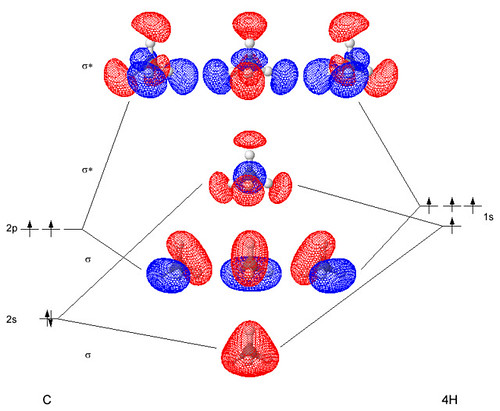


The LCAO Approximation and Molecular Orbital Formation
Molecular Orbital (MO) theory provides a sophisticated description of chemical bonding by considering electrons as delocalized over the entire molecule, rather than localized between two specific atoms. The Linear Combination of Atomic Orbitals (LCAO) approximation is a cornerstone of MO theory, simplifying the complex wave functions of molecular orbitals by representing them as sums and differences of atomic orbital wave functions.
When atoms form a molecule, their atomic orbitals (AOs) interact. If 'n' AOs combine, 'n' molecular orbitals (MOs) are formed. These MOs can be categorized as bonding, antibonding, or non-bonding.
Bonding MOs are lower in energy than the original AOs, leading to increased molecular stability, and their electron density is concentrated between the nuclei. Antibonding MOs are higher in energy, with a node between the nuclei, which destabilizes the molecule. Non-bonding MOs have energies similar to the original AOs and do not significantly affect bond strength.
The specific combinations and resulting MO shapes are dictated by symmetry and energy considerations, often visualized using correlation diagrams.
Energetics, Stability, and Electronic Transitions
The energetic ordering of molecular orbitals is critical for predicting molecular stability and reactivity. The Aufbau principle, Hund's rule, and the Pauli exclusion principle are applied to fill these MOs with electrons. The bond order, a measure of bond strength, is calculated as half the difference between the number of electrons in bonding MOs and antibonding MOs.
A higher bond order generally indicates a stronger, shorter bond. For example, in diatomic molecules, MO diagrams reveal why O2 is paramagnetic (due to unpaired electrons in antibonding pi orbitals) while N2 is diamagnetic. Furthermore, the energy differences between MOs are directly related to a molecule's spectroscopic properties.
When a molecule absorbs electromagnetic radiation, electrons can be promoted from lower-energy MOs to higher-energy MOs. The wavelength of absorbed light corresponds to the energy gap between these orbitals, providing insights into molecular structure and electronic configuration. This forms the basis of techniques like UV-Vis spectroscopy.
Reactivity, Structure, and Modern Applications
Molecular Orbital theory is indispensable for understanding chemical reactivity. Frontier Molecular Orbital (FMO) theory, a simplification of MO theory, focuses on the Highest Occupied Molecular Orbital (HOMO) and the Lowest Unoccupied Molecular Orbital (LUMO). The HOMO-LUMO gap is a key indicator of a molecule's reactivity and stability.
Reactions often occur when the HOMO of one molecule interacts with the LUMO of another. This concept is fundamental in organic chemistry, explaining pericyclic reactions like Diels-Alder cycloadditions, where the symmetry and energy of frontier orbitals dictate the reaction pathway and stereochemistry. Beyond theoretical understanding, MO calculations are vital in computational chemistry for designing new catalysts, predicting drug-target interactions, developing advanced materials with specific electronic or optical properties, and optimizing chemical processes for industrial applications.
The ability to model and predict molecular behavior at this fundamental level drives innovation across numerous scientific and technological fields.
Historical Development and Theoretical Underpinnings
The development of Molecular Orbital theory was a significant leap in quantum chemistry, building upon the burgeoning understanding of atomic structure and wave mechanics. Early pioneers like Friedrich Hund and Robert Mulliken in the 1920s and 1930s laid the groundwork, proposing that electrons in molecules occupy orbitals that extend over the entire molecule. Linus Pauling later developed the Valence Bond theory, which offered an alternative perspective, and for a time, these two theories were seen as competing.
However, MO theory proved more adept at explaining phenomena like paramagnetism and the electronic spectra of molecules. The mathematical rigor of MO theory, involving solving the Schrödinger equation for molecular systems, often required approximations and computational power. The advent of digital computers in the mid-20th century revolutionized MO calculations, enabling more accurate predictions and the study of larger, more complex molecules, solidifying MO theory's position as a central pillar of modern chemical understanding.
See also
Based on content from Wikipedia · Licensed under CC BY-SA 4.0