

Modular Arithmetic: The Clockwork Numbers!
Images
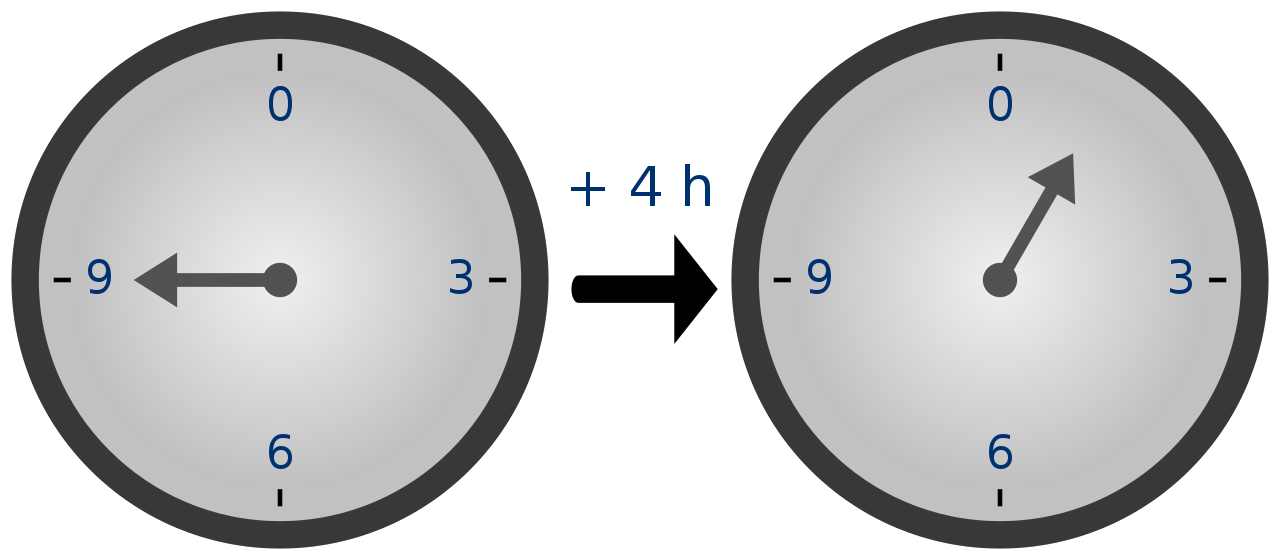
Modular arithmetic
The Elegance of Congruence
Modular arithmetic, formally introduced by Carl Friedrich Gauss in his 1801 masterpiece 'Disquisitiones Arithmeticae,' is a system of arithmetic for integers where numbers are considered equivalent if they leave the same remainder upon division by a fixed integer, known as the modulus. This equivalence is expressed using the congruence relation, denoted as 'a ≡ b (mod m),' which signifies that 'm' divides the difference (a - b).
Gauss's genius lay in recognizing that this concept, while intuitive in applications like timekeeping, could be formalized into a rigorous mathematical framework. He established the fundamental properties of congruence, demonstrating that it behaves like an equivalence relation, allowing for the development of arithmetic operations (addition, subtraction, multiplication) within these modular systems. This abstraction moved beyond simple clock analogies to a powerful tool for number theory.
Historical Trajectory
While Gauss is credited with its formalization, the underlying ideas of modular arithmetic have ancient roots. Early civilizations implicitly used modular concepts for calendrical calculations and astronomical observations, recognizing cyclical patterns in time. For instance, the Babylonians used base-60 systems, and the Mayan calendar involved complex cyclical counting.
However, it was Gauss who synthesized these disparate observations into a coherent theory. Later mathematicians like Euler and Lagrange further developed number theory, building upon Gauss's work. In the 20th century, modular arithmetic became a cornerstone of abstract algebra, particularly in the study of groups, rings, and fields, and found critical applications in computer science and cryptography, solidifying its place as a fundamental mathematical discipline.
The Indispensable Role in Modern Technology and Security
The practical impact of modular arithmetic in the contemporary world is profound and far-reaching. Its most prominent application is in modern cryptography, particularly in public-key cryptosystems like RSA. The security of these systems relies on the computational difficulty of certain modular arithmetic problems, such as factoring large numbers or computing discrete logarithms.
For example, RSA encryption uses modular exponentiation extensively. Beyond security, modular arithmetic is fundamental to computer science for tasks like hash function design, error detection and correction codes (e.g., checksums), and pseudorandom number generation. It also appears in digital signal processing, coding theory, and even in the design of efficient algorithms for solving complex mathematical problems.
Algorithmic Operations
Performing arithmetic operations in a modular system involves reducing the result modulo 'm'. For addition, (a + b) mod m = ((a mod m) + (b mod m)) mod m. For multiplication, (a * b) mod m = ((a mod m) * (b mod m)) mod m.
These properties allow for calculations to be kept within manageable bounds. A particularly important concept is the modular multiplicative inverse. For a number 'a' and modulus 'm', its inverse, denoted a⁻¹, exists if and only if 'a' and 'm' are coprime (their greatest common divisor is 1).
The inverse satisfies (a * a⁻¹) ≡ 1 (mod m). Finding modular inverses is crucial for decryption in systems like RSA and is typically achieved using the Extended Euclidean Algorithm. Division in modular arithmetic is defined as multiplication by the modular inverse.
Advanced Concepts and Future Frontiers
Modular arithmetic extends into more abstract algebraic structures. The set of integers modulo 'm', denoted Zm, forms a ring under addition and multiplication. If 'm' is a prime number, Zm becomes a field, which has profound implications for linear algebra over finite fields and polynomial factorization. Research continues into areas like lattice-based cryptography, which also heavily relies on modular arithmetic principles, offering potential solutions to the challenges posed by quantum computing.
Furthermore, exploring modular arithmetic in higher dimensions and its connections to other areas of mathematics, such as algebraic geometry and topology, remains an active area of mathematical inquiry.
Go deeper
Frequently Asked Questions
What is modular arithmetic?+
Why did Gauss write about modular arithmetic?+
How does modular arithmetic help keep our online messages safe?+
Where else do we see modular arithmetic besides clocks and secrets?+
What is a modular multiplicative inverse and why is it important?+
Based on content from Wikipedia · Licensed under CC BY-SA 4.0