

Minor Planet
Images

Minor planet






Defining the Undefined
The term 'minor planet' has a complex history, reflecting our evolving understanding of the solar system. Officially defined by the International Astronomical Union (IAU), a minor planet is an astronomical object in direct orbit around the Sun that is exclusively classified as neither a planet nor a comet. A key distinction from the eight major planets is their inability to 'clear the neighborhood' around their orbit, meaning their gravitational influence hasn't dominated their orbital path, leaving it populated by other debris.
Historically, terms like 'asteroid' and 'planetoid' were used more broadly, often interchangeably with minor planet. However, the discovery of numerous objects beyond Neptune, particularly Trans-Neptunian Objects (TNOs), complicated these definitions. In 2006, the IAU refined classifications, introducing 'dwarf planet' for objects massive enough to achieve hydrostatic equilibrium and 'small Solar System body' (SSSB) for all other minor planets and comets.
While 'minor planet' is still permitted, 'SSSB' is now the preferred term for objects that are not dwarf planets. The traditional distinction between minor planet and comet remains vital for naming and numbering conventions.
A Chronicle of Discovery
The journey of identifying minor planets began in 1801 with the discovery of Ceres. Initially hailed as a planet, it was soon reclassified as an asteroid, highlighting the early uncertainty. The term 'minor planet' was coined in 1841, and for decades, these objects were considered a subset of planets.
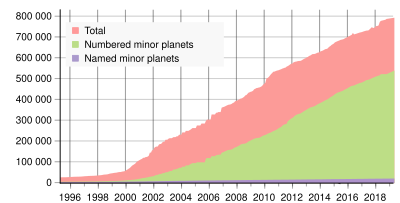
The landscape dramatically shifted with the advent of more powerful telescopes and advanced detection techniques, particularly in the late 20th and early 21st centuries. This led to the discovery of vast populations of minor planets, including near-Earth objects, Jupiter Trojans, and the extensive Kuiper Belt and scattered disc populations. As of October 2025, over 1.4 million minor planets have been cataloged, with more than 875,000 numbered and over 597,000 unnumbered.
This exponential growth in discoveries necessitated the IAU's 2006 reclassification to better categorize these diverse celestial bodies.
The Scientific Imperative
Minor planets are indispensable to our understanding of the solar system's genesis and evolution. As primordial remnants, they preserve compositional and structural information from the protoplanetary disk, offering direct insights into the conditions and processes that governed planet formation. Their distribution and composition provide crucial data for testing models of solar system dynamics, migration, and differentiation.
Furthermore, the study of near-Earth objects (NEOs), a subset of minor planets, is vital for planetary defense, enabling us to identify potential impact threats and develop mitigation strategies. Some minor planets are also considered potential sources of valuable resources, such as water and rare metals, making them targets for future space mining endeavors. Understanding their orbital mechanics is also fundamental for designing interplanetary missions.
Diverse Habitats
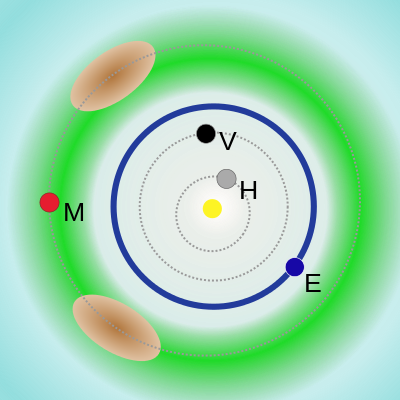
Minor planets inhabit a wide array of regions within and beyond the solar system. The most densely populated area is the main asteroid belt, situated between the orbits of Mars and Jupiter, containing millions of rocky bodies. Beyond this, specific populations exist: Mars Trojans share Mars' orbit, while Jupiter Trojans occupy stable points (Lagrange points) in Jupiter's orbit.
More distant minor planets include Centaurs, which have unstable orbits between Jupiter and Neptune, and Trans-Neptunian Objects (TNOs), residing in the Kuiper Belt and the scattered disc. The Kuiper Belt, a vast, icy disk extending from Neptune's orbit, is home to numerous TNOs, including dwarf planets like Pluto. The scattered disc is a more eccentric region of TNOs with highly inclined orbits.
Some minor planets, when observed releasing gas or dust, may also be dually classified as comets, blurring the lines between these categories.
See also
Frequently Asked Questions
What is a minor planet?+
Why are minor planets called "minor"?+
Where do most minor planets live?+
How many minor planets have been found?+
Why do scientists study minor planets?+
Based on content from Wikipedia · Licensed under CC BY-SA 4.0