

The Smallest Box Around Everything!
Images
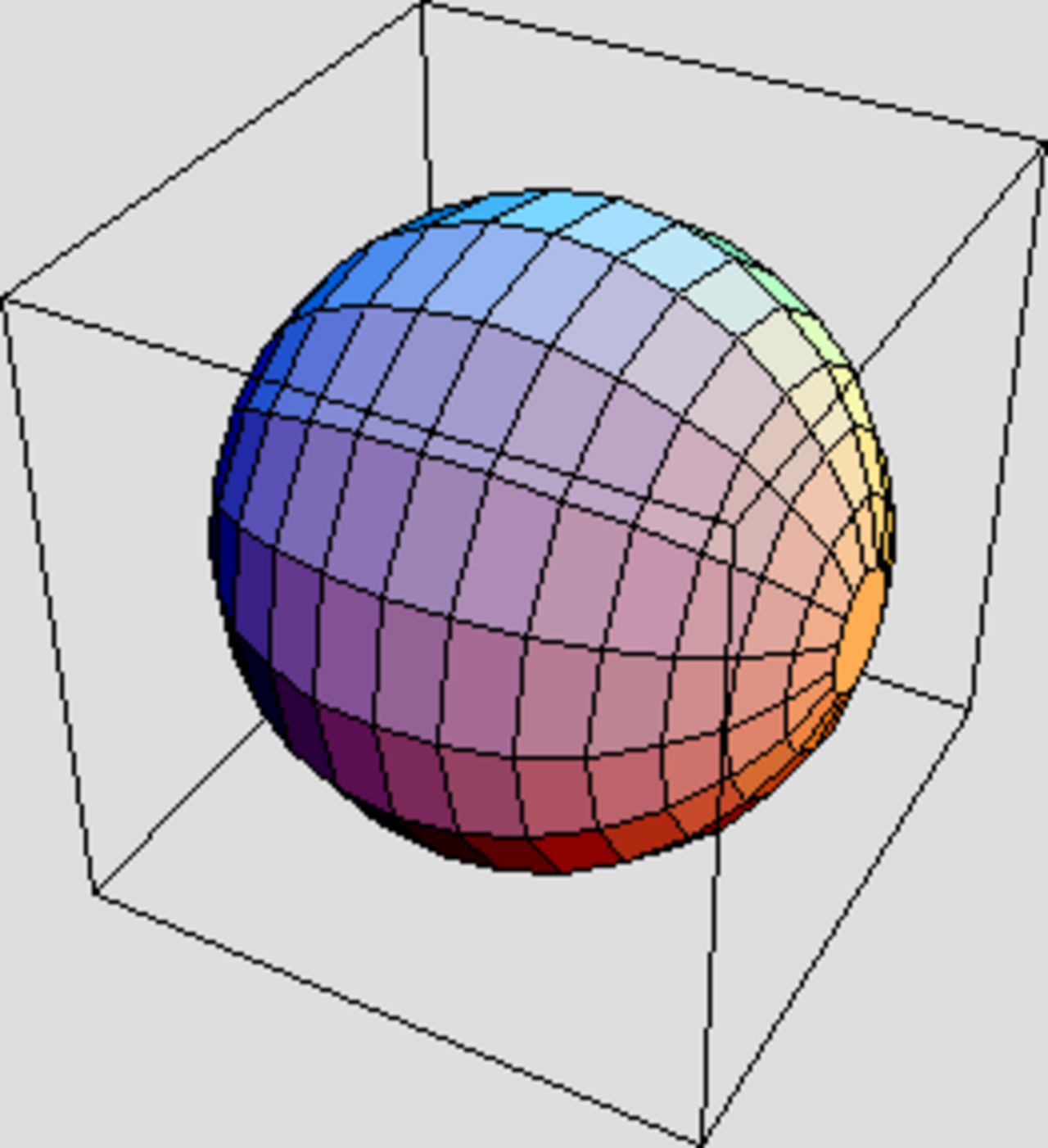
Minimum bounding box
Defining the Optimal Enclosure
In geometric theory, the minimum bounding box (MBB) for a given set of points S in N-dimensional space is the box of the smallest possible measure (typically area in 2D, volume in 3D, or hypervolume in higher dimensions) that completely contains all points in S. This concept is crucial for defining the most compact, axis-aligned or arbitrarily oriented rectangular region that encapsulates a dataset. The 'measure' can vary; while area or volume are common, one might also consider minimizing perimeter or other metrics, leading to variations like the minimum-perimeter bounding box.
The MBB provides a fundamental way to characterize the spatial extent and bounds of a point cloud or geometric object, serving as a foundational element in various geometric algorithms and data structures.
Historical Roots and Algorithmic Evolution
The study of optimal enclosures has roots stretching back to classical geometry, where mathematicians explored problems of fitting shapes and minimizing dimensions. However, the formalization and algorithmic development of the minimum bounding box, particularly in computational contexts, gained significant traction with the advent of computer science and the need to process geometric data efficiently. Early work in computational geometry focused on 2D problems, leading to algorithms for finding the minimum bounding rectangle.
The realization that the MBB of a point set is equivalent to the MBB of its convex hull, a key geometric property, provided a significant heuristic for speeding up computations. This insight allowed algorithms to focus on the boundary points, reducing the complexity of the problem.
The Indispensable Role of MBBs in Modern Computing
The significance of the minimum bounding box extends far beyond theoretical geometry; it is a workhorse in practical computational applications. In computer graphics and game development, MBBs are indispensable for efficient collision detection. By approximating complex object geometries with simpler bounding boxes, systems can quickly rule out non-collisions, drastically reducing the number of precise intersection tests required.
This optimization is critical for real-time performance. Furthermore, MBBs are fundamental in spatial indexing structures like k-d trees and R-trees, which organize data for rapid searching and querying. They are also used in computer vision for object detection and tracking, image segmentation, and in scientific simulations for managing and analyzing large datasets, such as astronomical observations or molecular modeling.
Algorithmic Approaches and Computational Strategies
Calculating the minimum bounding box involves specific algorithms. A critical geometric property is that the minimum bounding box of a point set S is identical to the minimum bounding box of its convex hull. This fact is often exploited to optimize computations, as the convex hull typically has far fewer vertices than the original point set.
For the minimum bounding rectangle (2D case), algorithms like the Rotating Calipers method are highly efficient. This technique involves conceptually rotating a pair of parallel supporting lines around the convex hull and tracking the minimum area rectangle formed. In higher dimensions, algorithms become more complex, often involving techniques from linear programming or specialized geometric algorithms to find the optimal box, which may be axis-aligned or arbitrarily oriented depending on the problem's constraints.
Applications Across Disciplines
The utility of minimum bounding boxes spans a vast array of fields. In video games, they are the backbone of realistic physics and interaction. In Geographic Information Systems (GIS), bounding boxes define the spatial extent of map layers and features, enabling efficient data retrieval and rendering. Robotics relies on MBBs for path planning and obstacle avoidance, allowing autonomous systems to navigate complex environments.
In bioinformatics, they can be used to define the spatial boundaries of protein structures or cellular components. Even in fields like logistics and warehousing, the concept informs optimal packing strategies. The ability to quickly and accurately define the spatial bounds of data makes the MBB a universally applicable tool for spatial reasoning and computational efficiency.
See also
Frequently Asked Questions
What is a minimum bounding box?+
Why do computers use minimum bounding boxes?+
How do we find the minimum bounding box for points in a picture?+
What is a convex hull and how does it help?+
Can minimum bounding boxes be used for more than 2D?+
Based on content from Wikipedia · Licensed under CC BY-SA 4.0