

The Millennium Dome: A Giant Party House!
Images

The Millennium Dome 8-7-2000


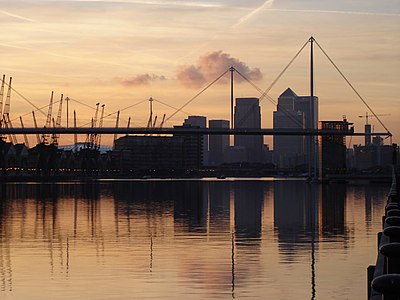


Conception and Construction
The Millennium Dome, officially opened in 1999, was conceived as the flagship project for the United Kingdom's celebration of the third millennium. Situated on the Greenwich Peninsula, its design was intended to be as groundbreaking as the era it represented. Upon its inauguration, it held the distinction of being the fifth largest building globally by usable volume, a testament to its immense scale and ambitious engineering.
The structure itself, a vast geodesic dome, was a marvel of modern architecture, designed to house a comprehensive exhibition exploring themes of time, humanity, and the future. The project aimed to create a national landmark and a focal point for national pride, a beacon for the new century that would draw millions of visitors and stimulate regeneration in East London.
The Exhibition
The exhibition within the Millennium Dome operated throughout the year 2000, featuring twelve themed zones designed to engage visitors with interactive displays and artistic presentations. Despite the significant investment and the innovative content, the exhibition failed to meet its ambitious visitor targets, attracting only around half of the projected 12 million attendees. This shortfall led to widespread criticism and the project being widely perceived as a financial and logistical failure by the media and the public.
The reasons cited for the low attendance were varied, including high ticket prices, poor transport links initially, and a perceived lack of cohesive narrative or compelling attractions. The subsequent dismantling or sale of the original exhibition elements underscored the immediate post-millennium uncertainty surrounding the Dome's future.
Financial Realities and Preservation Debates
The financial implications of the Millennium Dome project extended beyond the exhibition itself. By 2005, reports indicated that the cost of the Dome and its surrounding land, which had expanded significantly from the initial 48 acres enclosed by the structure to 170 acres, along with ongoing management costs until a deal was closed, amounted to £28.7 million. While the land occupied by the Dome alone was valued at £48 million, which could have been realized by demolishing the structure, a decision was made to preserve the building.
This preservation was driven by the recognition of its architectural significance and the potential for future redevelopment, rather than its immediate economic value as a vacant shell.
Transformation and Enduring Legacy
The Millennium Dome's narrative took a dramatic turn with its acquisition and transformation into The O2, an expansive entertainment complex. This redevelopment, completed in 2007, included the O2 Arena, which has since become one of the world's premier live music and sporting venues, hosting countless major events and attracting millions of visitors annually. The surrounding area has also been revitalized, creating a vibrant destination.
The Dome's location is also noteworthy; it sits adjacent to the Prime Meridian, the 0 longitude line, placing it at a significant geographical point. Its accessibility via the North Greenwich station on the Jubilee line has been crucial to its success as a modern entertainment hub, demonstrating a remarkable evolution from a controversial exhibition venue to a thriving cultural landmark.
See also
Frequently Asked Questions
What is the Millennium Dome and where is it located?+
Why was the Millennium Dome built?+
How many people visited the Dome during its first year?+
What happened to the Dome after the exhibition closed?+
How can you get to the Millennium Dome?+
Based on content from Wikipedia · Licensed under CC BY-SA 4.0