

The Shocking Obedience Game!
Images

I Hate It




The Genesis of a Controversial Inquiry
In the wake of the Nuremberg trials and the subsequent trial of Adolf Eichmann in Jerusalem in 1961, a profound question lingered in the minds of many: How could ordinary individuals participate in atrocities like the Holocaust? Stanley Milgram, a social psychologist at Yale University, was deeply troubled by the defense often cited by perpetrators – 'just following orders.' He conceived a series of experiments, beginning in 1961, to empirically investigate the extent to which people would obey an authority figure when instructed to perform actions that conflicted with their personal conscience.
Milgram's research was thus born from a desire to understand the psychological mechanisms that might enable widespread participation in harmful acts, moving beyond mere condemnation to a deeper analysis of human behavior under duress and authority. The experimental design was carefully crafted to elicit genuine moral conflict within participants.
Methodology and Procedure
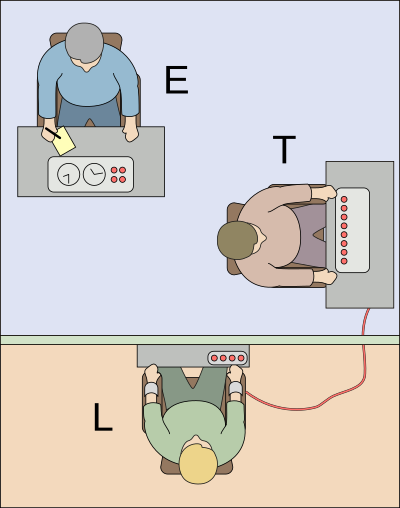
Milgram's experiment involved three roles: the experimenter (an authority figure in a lab coat), the 'teacher' (the actual participant), and the 'learner' (an actor). Participants were led to believe they were part of a study on memory and learning, where the teacher would administer electric shocks to the learner for incorrect answers. The shocks were presented on a generator with switches labeled from 'Slight Shock' (15 volts) to 'XXX' (450 volts).
The learner, situated in an adjacent room, would feign increasingly severe reactions to the shocks, including grunts, pleas to stop, and eventually, ominous silence. When the teacher expressed hesitation or distress, the experimenter would deliver a series of standardized verbal prompts, such as 'Please continue,' 'The experiment requires that you continue,' and 'You have no other choice, you must go on.' These prompts were designed to pressure the participant into continuing the experiment, testing the limits of their obedience against their moral objections.
The Shocking Findings
The results of Milgram's experiments were profoundly disturbing and contrary to many predictions. Milgram initially surveyed psychiatrists and laypeople, who predicted that only a tiny fraction of participants would administer the highest levels of shock. However, the actual findings revealed a starkly different reality.
In the most famous variation of the experiment, every single participant administered shocks up to 300 volts. More alarmingly, a staggering 65% of participants continued to administer shocks all the way to the maximum 450 volts, despite the apparent distress and potential harm to the learner. This high level of obedience suggested that situational factors and the perceived legitimacy of authority could powerfully override individual moral convictions, even in the face of extreme ethical conflict.
Interpretations, Criticisms, and Enduring Relevance
Milgram interpreted his findings as demonstrating the powerful influence of situational factors and the authority of the experimenter, suggesting that many people are capable of acting against their conscience when under perceived legitimate authority. He argued that this could help explain how ordinary people became complicit in the atrocities of the Nazi regime. However, the experiments have also faced significant ethical criticisms regarding the psychological distress inflicted upon participants, the deception involved, and the potential for long-term psychological harm.
Debates continue regarding the precise interpretation of the results and their direct applicability to historical events like the Holocaust, with some scholars emphasizing other factors like ideology and peer pressure. Despite these criticisms, the Milgram experiment remains a cornerstone of social psychology, prompting ongoing discussions about ethics in research, the nature of human obedience, and the critical importance of individual responsibility and moral agency in the face of authority.
See also
Frequently Asked Questions
What was the Shocking Obedience Game about?+
Why did Stanley Milgram do the experiments?+
How did the experiment make people feel?+
How many people kept giving the highest shock?+
What does the experiment teach us about following orders?+
Based on content from Wikipedia · Licensed under CC BY-SA 4.0