

Micrometeorite
Images
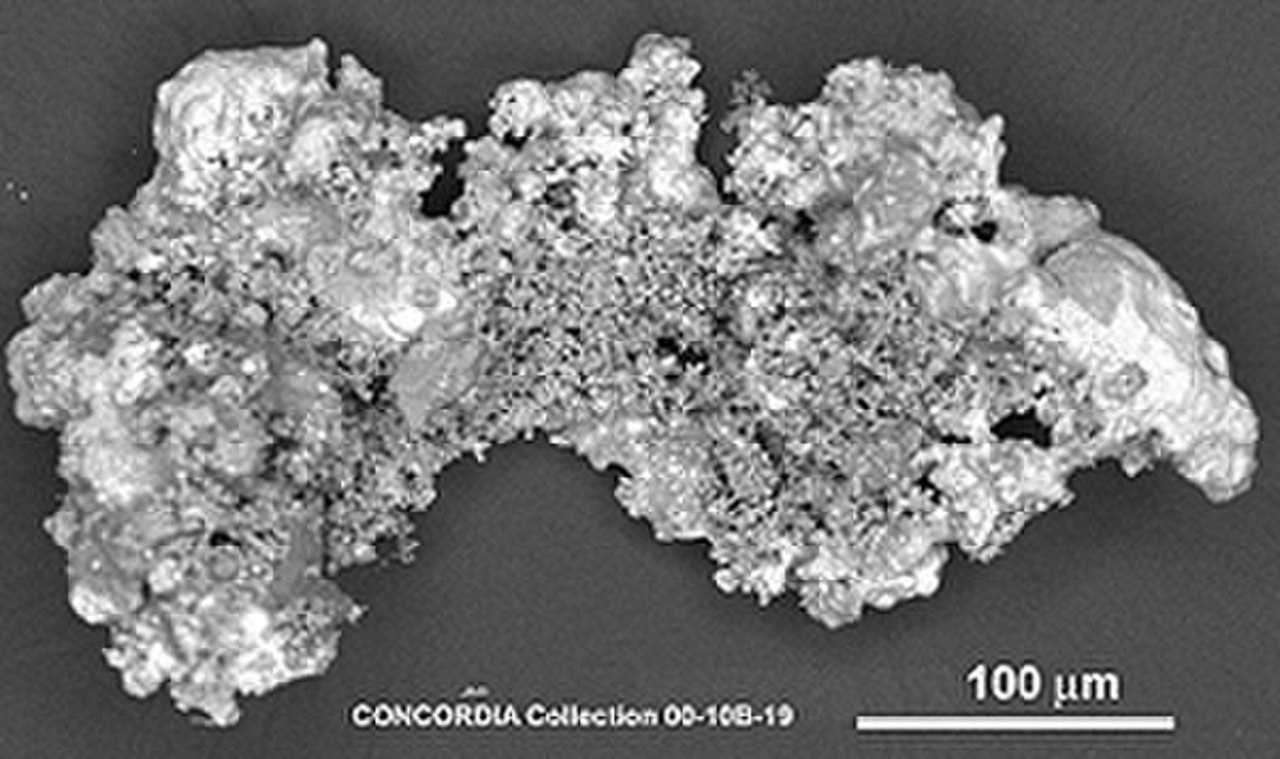
Micrometeorite
Defining the Microscopic
Micrometeorites represent the smallest end of the meteoroid spectrum, officially defined by the International Astronomical Union (IAU) as objects ranging from approximately 30 micrometers to 1 meter in diameter. Micrometeorites specifically fall into the submillimeter range, making them distinct from larger meteorites. They are a crucial component of 'cosmic dust,' a broader category that also encompasses smaller interplanetary dust particles (IDPs).
Unlike meteoroids that often disintegrate completely during atmospheric entry, micrometeorites possess the resilience to survive this fiery passage. Their ubiquity means they constitute the vast majority of extraterrestrial material that has accumulated on Earth's surface throughout its history, offering an unparalleled archive of early solar system conditions and processes. Understanding their origin, trajectory, and composition is fundamental to planetary science.
The Gauntlet of Entry
The atmospheric entry of a micrometeorite is a high-energy event characterized by extreme velocities, typically exceeding 11 km/s. This velocity generates significant aerodynamic heating due to compression of the air ahead of the object and, to a lesser extent, friction. The intense thermal flux causes ablation, a process where the surface material vaporizes or melts and is stripped away.
The degree of ablation depends on the micrometeorite's size, composition, entry angle, and velocity. While larger meteoroids might produce brilliant meteors and reach the ground as recognizable fragments, micrometeorites often undergo substantial mass loss. Their survival hinges on a delicate balance between their initial mass, their heat resistance, and the duration and intensity of atmospheric heating, often resulting in a significantly altered morphology and composition by the time they reach lower altitudes.
Terrestrial Deposition Sites
The deposition of micrometeorites occurs globally, but their detection and collection are significantly influenced by environmental factors. Their small size and low density make them susceptible to being dispersed and mixed with terrestrial sediments, complicating direct observation. Consequently, scientific collection efforts focus on environments that minimize contamination and maximize preservation.
Polar ice caps, particularly in Antarctica, are prime locations due to their stable, cold conditions and low rates of terrestrial dust accumulation. High-altitude atmospheric dust collectors and even the surfaces of tall urban buildings have also yielded significant samples. These specialized collection sites act as natural or artificial sieves, concentrating these otherwise elusive extraterrestrial particles, allowing for detailed analysis of their pristine nature.
A Window to the Past
The scientific significance of micrometeorites lies in their role as direct samples of the early solar system. Their composition reflects the primordial materials from which planets formed approximately 4.6 billion years ago. Unlike terrestrial rocks, which have undergone extensive geological processing, micrometeorites often retain their original extraterrestrial characteristics.
Fred Lawrence Whipple's pioneering work in coining the term 'micro-meteorite' highlighted the importance of these dust-sized objects as a continuous influx of cosmic material. Studying their mineralogy, isotopic composition, and trace elements provides invaluable data on the chemical heterogeneity of the protoplanetary disk, the processes of accretion, and the evolution of interplanetary dust. They are, in essence, microscopic geological records of cosmic history.
The Unseen Majority
While often overlooked in favor of larger, more dramatic meteorites, micrometeorites represent the dominant flux of extraterrestrial material reaching Earth. Their sheer abundance means that collectively, they contribute a substantial mass to the planet over geological timescales. This continuous deposition influences the chemical composition of Earth's surface layers and oceans.
Furthermore, understanding this flux is critical for accurately modeling the delivery of volatile compounds and organic molecules from space, which may have played a role in the origin of life on Earth. The study of micrometeorites, therefore, extends beyond planetary formation to astrobiology and the broader context of Earth's place within the solar system's dynamic environment.
See also
Frequently Asked Questions
What is a micrometeorite?+
How do micrometeorites reach the ground?+
Where can we find micrometeorites?+
Why are micrometeorites important for science?+
Can we see micrometeorites with our eyes?+
Based on content from Wikipedia · Licensed under CC BY-SA 4.0