

Metallicity: The Universe's Secret Ingredients!
Images
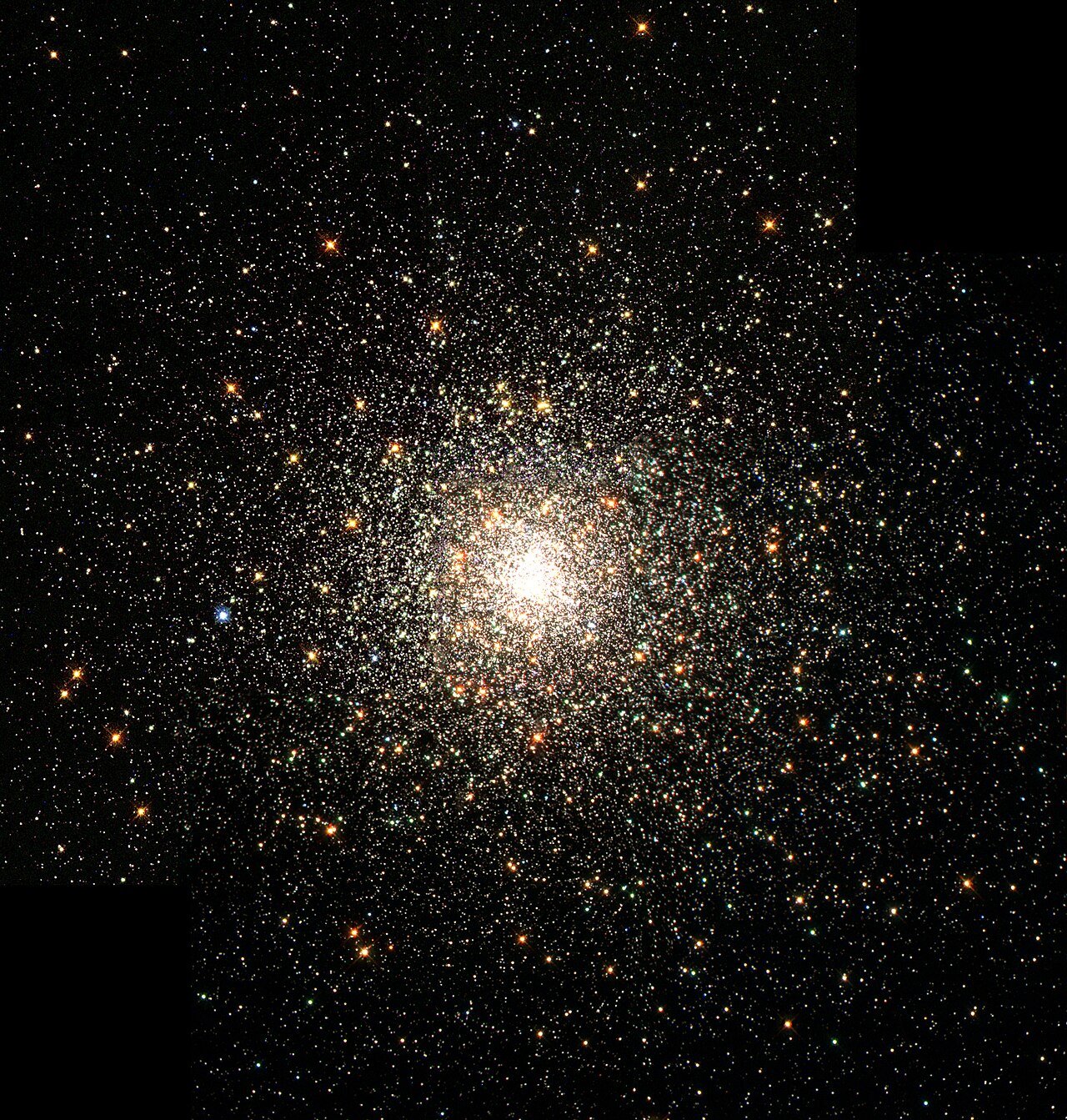
Metallicity


Defining Metallicity
In astronomy, metallicity refers to the abundance of elements heavier than helium in a celestial object, typically expressed as a ratio relative to hydrogen. This concept is fundamental to understanding the chemical composition of the universe beyond its primordial constituents. While in chemistry, 'metals' have specific properties related to conductivity and electron behavior, astronomers employ the term 'metals' as a convenient, albeit chemically imprecise, shorthand for all elements with an atomic number greater than 2 (i.e., excluding hydrogen and helium).
This convention simplifies discussions about stellar and nebular composition. Objects with a high proportion of these heavier elements are termed 'metal-rich,' while those with a low proportion are 'metal-poor.' This metric is crucial because it directly reflects the evolutionary stage of the universe and the processes of nucleosynthesis and chemical enrichment that have occurred over cosmic time.
Nucleosynthesis and Supernovae
The origin of elements heavier than hydrogen and helium lies in stellar nucleosynthesis. Within the cores of stars, immense pressures and temperatures drive fusion reactions that gradually build up heavier elements. Lighter elements like hydrogen fuse into helium, helium into carbon, and so on, up to iron in the most massive stars.
Elements heavier than iron are primarily produced during the explosive death of massive stars in supernova events. These cataclysmic explosions not only create these super-heavy elements but also violently eject them into the interstellar medium. This ejected material, enriched with newly synthesized elements, then mixes with existing gas and dust clouds.
Subsequent generations of stars and planetary systems form from this enriched material, inheriting a higher metallicity than their predecessors. Thus, stars and nebulae are essentially repositories of cosmic history, their metallicity a record of past stellar activity.
Metallicity's Influence
The metallicity of a star significantly impacts its observable properties and evolutionary path. For instance, higher metallicity can affect a star's opacity, influencing its internal structure, luminosity, and lifespan. Metal-poor stars tend to be hotter and bluer, while metal-rich stars can be cooler and redder.
In the context of planet formation, metallicity is paramount. The formation of rocky planets, asteroids, and comets relies on the availability of heavier elements like silicon, iron, and magnesium. Therefore, protoplanetary disks around metal-rich stars are more likely to form substantial planetary systems, including terrestrial planets.
The search for exoplanets, particularly Earth-like ones, often involves targeting stars with higher metallicity, as they offer a greater abundance of the necessary building blocks for planetary construction. Furthermore, the presence of specific elements, even in trace amounts, can be critical for the emergence of life.
Metallicity as a Cosmological Chronometer and Indicator
Metallicity serves as a powerful tool for tracing the chemical evolution of the universe. The earliest stars (Population III stars) are theorized to have formed from pristine gas with virtually zero metallicity. As these stars evolved and died, they seeded the universe with the first heavy elements.
Subsequent generations of stars (Population II and Population I) exhibit progressively higher metallicities. By measuring the metallicity of stars and gas clouds at various distances and epochs, astronomers can reconstruct the timeline of galactic chemical enrichment. This allows us to understand the rates of star formation and supernova explosions throughout cosmic history, providing insights into the formation and evolution of galaxies.
Studying the metallicity gradients within galaxies also reveals information about their internal dynamics and merger histories, making metallicity a key indicator in astrophysical research.
Observational Techniques and Future Prospects
Astronomers determine metallicity primarily through spectroscopy. By analyzing the light emitted or absorbed by stars and nebulae, they can identify the spectral lines corresponding to different elements. The strength and patterns of these lines reveal the abundance of each element.
While measuring hydrogen and helium is straightforward, precisely quantifying the abundance of trace heavier elements requires sophisticated modeling and calibration. Current and future telescopes, such as the James Webb Space Telescope, are equipped with advanced spectrographs capable of analyzing the light from distant galaxies and early stars with unprecedented detail. This will allow for more precise measurements of metallicity across a wider range of cosmic environments and time periods, furthering our understanding of the universe's chemical tapestry and its ongoing evolution.
Go deeper
Frequently Asked Questions
What does "metallicity" mean in space?+
Why do stars with more metals look different?+
How do new stars get their metals?+
Does having more metals help planets form?+
What can metallicity tell us about the age of stars?+
Based on content from Wikipedia · Licensed under CC BY-SA 4.0