

Mathematical Analysis: The Secret Language of Shapes and Change!
Images
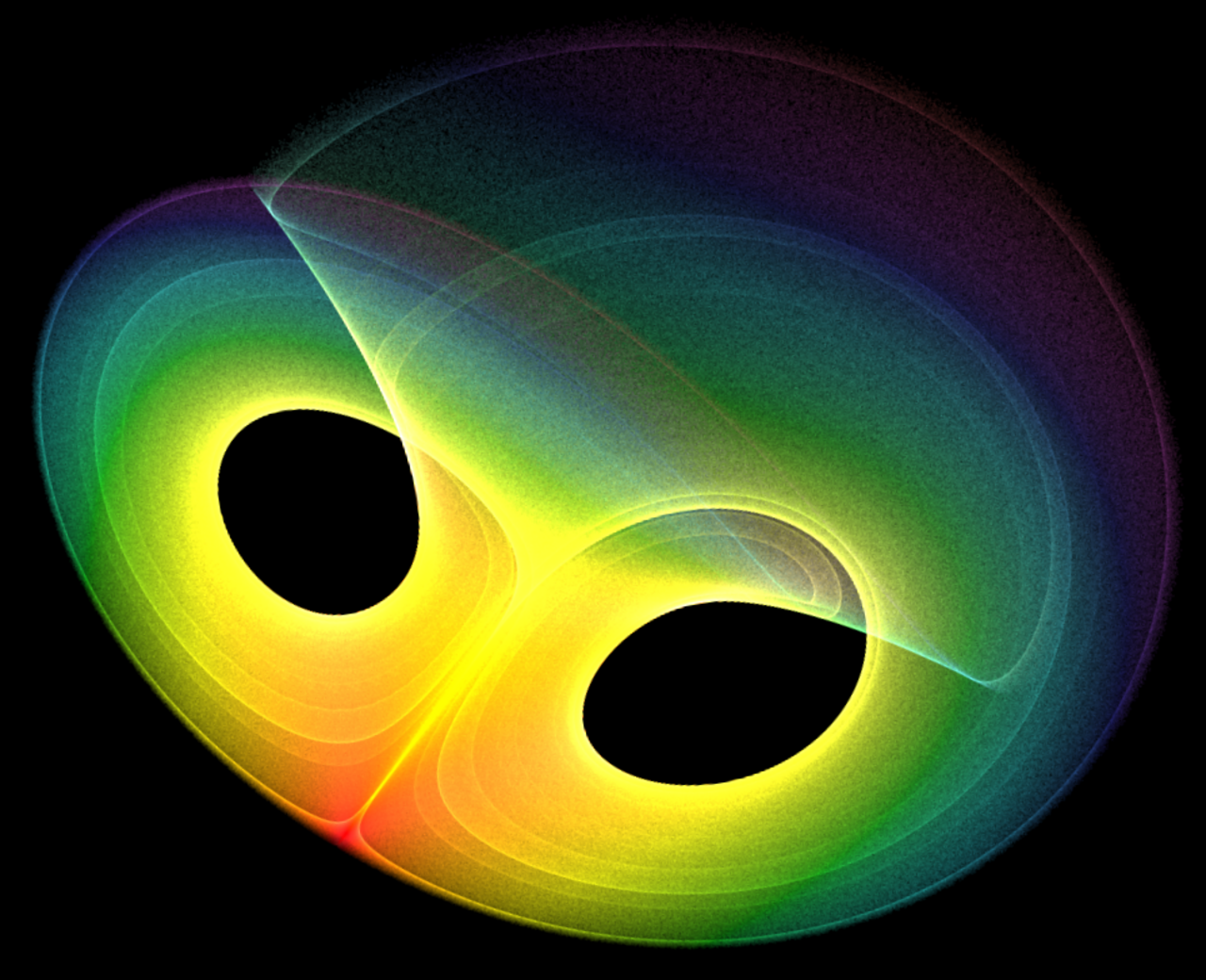
Mathematical analysis
Defining Mathematical Analysis
Mathematical analysis is a vast and foundational branch of mathematics dedicated to the rigorous study of continuity, change, and limits. It provides the theoretical underpinnings for calculus and extends its concepts to more abstract settings. At its core, analysis deals with the properties of real and complex numbers, sequences, series, functions, and their behavior under various operations.
Unlike more elementary arithmetic or algebra, analysis demands precise definitions and formal proofs, ensuring that mathematical statements are not just intuitively true but logically irrefutable. It seeks to understand the behavior of functions as their inputs approach certain values (limits), how smoothly functions change (continuity and differentiability), and how to sum up infinitely many small quantities (integration). This pursuit of rigor is what distinguishes analysis and makes it so powerful for modeling the complexities of the natural world.
From Infinitesimals to Infinite Dimensions
The genesis of mathematical analysis can be traced to ancient Greek mathematicians like Archimedes, who used methods of exhaustion to approximate areas and volumes, foreshadowing integral calculus. However, the true revolution occurred in the late 17th century with the independent development of calculus by Isaac Newton and Gottfried Wilhelm Leibniz. Their work, though groundbreaking, lacked the rigorous foundation that would later be established.
The 18th century saw mathematicians like Euler expand calculus significantly, but it was in the 19th century that mathematicians such as Cauchy, Weierstrass, and Riemann introduced the epsilon-delta definition of limits, providing the rigorous framework for real analysis. This period also saw the development of complex analysis by Cauchy and Riemann, and the beginnings of functional analysis, which studies infinite-dimensional vector spaces, laying the groundwork for quantum mechanics and modern physics.
The Indispensable Architect
Mathematical analysis is not merely an academic pursuit; it is the bedrock upon which much of modern science and technology is built. In physics, it is indispensable for formulating laws of motion, electromagnetism, quantum mechanics, and relativity. Engineers rely on analysis to design everything from microchips and advanced materials to complex control systems and efficient energy grids.
Economists use its tools to build sophisticated models of financial markets, predict economic trends, and optimize resource allocation. Computer scientists employ analysis in algorithm design, data compression, signal processing, and the development of artificial intelligence. The ability to model and predict continuous change, optimize processes, and understand complex systems makes analysis a critical discipline for tackling global challenges and driving innovation across virtually every field of human endeavor.
The Language of Change
The methodology of mathematical analysis is characterized by its reliance on precise definitions and logical deduction, particularly concerning limits. The concept of a limit is fundamental, defining what happens to a function as its input approaches a specific value, often without ever reaching it. This leads to the definition of continuity, which describes functions without breaks or jumps.
Differentiation, the process of finding the derivative, quantifies the instantaneous rate of change of a function, crucial for understanding velocity, acceleration, and rates of growth. Conversely, integration, often viewed as the inverse of differentiation, allows for the summation of infinitesimal quantities to find areas, volumes, or total accumulation. Further extensions include the study of infinite series, which allow for the representation of functions as sums of infinitely many terms, and the development of differential equations, which describe systems evolving over time.
Beyond the Basics
Mathematical analysis is a dynamic field with ongoing research pushing its boundaries. Areas like measure theory provide a more general framework for integration than Riemann or Lebesgue integration, essential for probability theory and advanced statistics. Functional analysis, with its focus on infinite-dimensional vector spaces and operators, is the mathematical language of quantum mechanics and signal processing. Harmonic analysis studies the decomposition of functions into simpler components, like Fourier series, with applications in image and audio processing.
Partial differential equations (PDEs) are central to modeling phenomena in physics and engineering, such as fluid dynamics and heat transfer. The ongoing exploration of these and other advanced topics, such as topological analysis and abstract harmonic analysis, continues to expand our understanding of mathematical structures and their applications.
Go deeper
Based on content from Wikipedia · Licensed under CC BY-SA 4.0