

Mass spectrometry
Images
Mass spectrometry


The Physics of Weighing
Mass spectrometry (MS) is a cornerstone analytical technique that quantifies the mass-to-charge ratio (m/z) of ionized atoms or molecules. The fundamental principle relies on the differential behavior of ions when subjected to electromagnetic fields. A typical MS workflow involves three primary stages: ionization, mass analysis, and detection.
Ionization converts neutral sample molecules into gas-phase ions. Various ionization methods exist, each suited to different sample types and analytical goals. Electron ionization (EI) involves bombarding sample molecules with high-energy electrons, often leading to fragmentation and providing structural information. Electrospray ionization (ESI) and matrix-assisted laser desorption/ionization (MALDI) are softer ionization techniques commonly used for large biomolecules like proteins and peptides, typically producing intact molecular ions.
Following ionization, ions are accelerated into a mass analyzer, which separates them based on their m/z. Common analyzers include quadrupole, time-of-flight (TOF), and ion trap mass analyzers, each offering distinct resolution, mass accuracy, and speed capabilities. For instance, TOF analyzers measure the time it takes for ions to travel a fixed distance, with lighter ions arriving faster.
Finally, a detector, such as an electron multiplier or Faraday cup, registers the abundance of ions at each m/z value, generating the characteristic mass spectrum. This spectrum is a plot of ion intensity versus m/z, serving as a unique chemical fingerprint.
A Legacy of Discovery
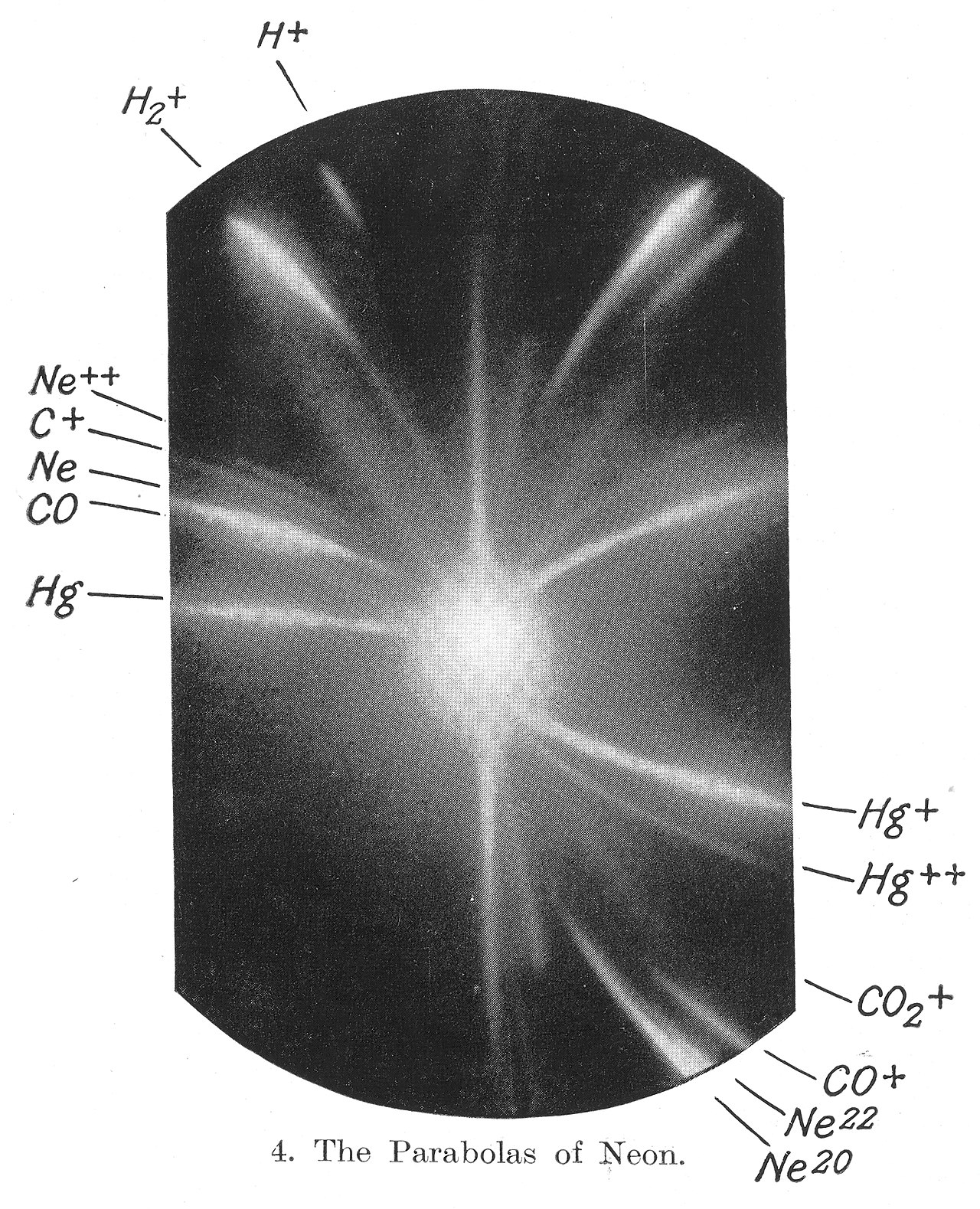
The genesis of mass spectrometry can be traced back to the early 20th century with the pioneering work of physicists investigating the properties of charged particles. J.J. Thomson's experiments with cathode rays in the early 1900s led to the discovery of the electron and the development of the first mass spectrographs, which could separate ions based on their mass.
His student, Francis Aston, significantly advanced the field by developing more precise instruments capable of measuring isotopic masses with remarkable accuracy, earning him the Nobel Prize in Chemistry in 1922. Throughout the mid-20th century, significant theoretical and instrumental developments occurred, including the invention of magnetic sector and quadrupole mass analyzers. The latter half of the century saw the emergence of soft ionization techniques like ESI and MALDI, which revolutionized the analysis of large biomolecules, opening up fields like proteomics and metabolomics.
Tandem mass spectrometry (MS/MS), where ions are fragmented and analyzed in stages, further enhanced structural elucidation capabilities. Today, continuous innovation focuses on increasing sensitivity, resolution, speed, and portability, integrating MS with separation techniques like chromatography (LC-MS, GC-MS) for analyzing complex mixtures.
The Indispensable Tool
Mass spectrometry's significance lies in its unparalleled ability to identify and quantify substances with high sensitivity and specificity, making it indispensable across a vast spectrum of scientific and industrial domains. In pharmaceutical research and development, MS is crucial for drug discovery, characterization, pharmacokinetic studies, and quality control. Clinical diagnostics leverage MS for disease biomarker discovery, therapeutic drug monitoring, and newborn screening, enabling earlier and more accurate diagnoses.
Environmental monitoring relies on MS to detect pollutants, pesticides, and contaminants in air, water, and soil at trace levels. Food safety and authenticity are assured through MS analysis, identifying adulterants, allergens, and verifying origin. Forensic science utilizes MS for identifying illicit drugs, explosives, and trace evidence, playing a critical role in criminal investigations. In materials science, it aids in characterizing novel materials and understanding their properties.
Furthermore, in fundamental research, MS is pivotal in fields like cosmology (analyzing isotopic ratios in meteorites), archaeology (dating artifacts), and astrobiology (searching for organic molecules in extraterrestrial samples).
Beyond Identification
Modern mass spectrometry extends far beyond simple identification. Tandem mass spectrometry (MS/MS or MSn) is a powerful technique that involves multiple stages of mass analysis. After initial ionization and mass selection of a specific ion (precursor ion), this ion is fragmented (e.g., via collision-induced dissociation - CID), and the resulting fragment ions are analyzed.
This process provides detailed structural information about the precursor ion, essential for elucidating the structure of complex molecules like peptides, proteins, and natural products. High-resolution mass spectrometry (HRMS), employing analyzers like TOF or Orbitrap, provides highly accurate mass measurements, allowing for the determination of elemental compositions and differentiation of isobaric compounds (molecules with the same nominal mass but different elemental formulas). The integration of MS with chromatographic separation techniques, such as liquid chromatography (LC-MS) and gas chromatography (GC-MS), is fundamental for analyzing complex biological and environmental samples, enabling the separation and identification of thousands of compounds simultaneously. Future directions include miniaturization for point-of-care diagnostics and field analysis, development of even more sensitive and selective ionization and detection methods, and advanced data analysis algorithms, including AI and machine learning, for interpreting the massive datasets generated by modern MS instruments.
Go deeper
Frequently Asked Questions
What is mass spectrometry and how does it work?+
How do scientists turn molecules into ions for mass spectrometry?+
What are some common ways mass spectrometers separate ions?+
Who discovered the electron and helped start mass spectrometry?+
Why is mass spectrometry useful in medicine and drug research?+
Based on content from Wikipedia · Licensed under CC BY-SA 4.0