

Mary Toft: The Girl Who Fooled the Doctors!
Images
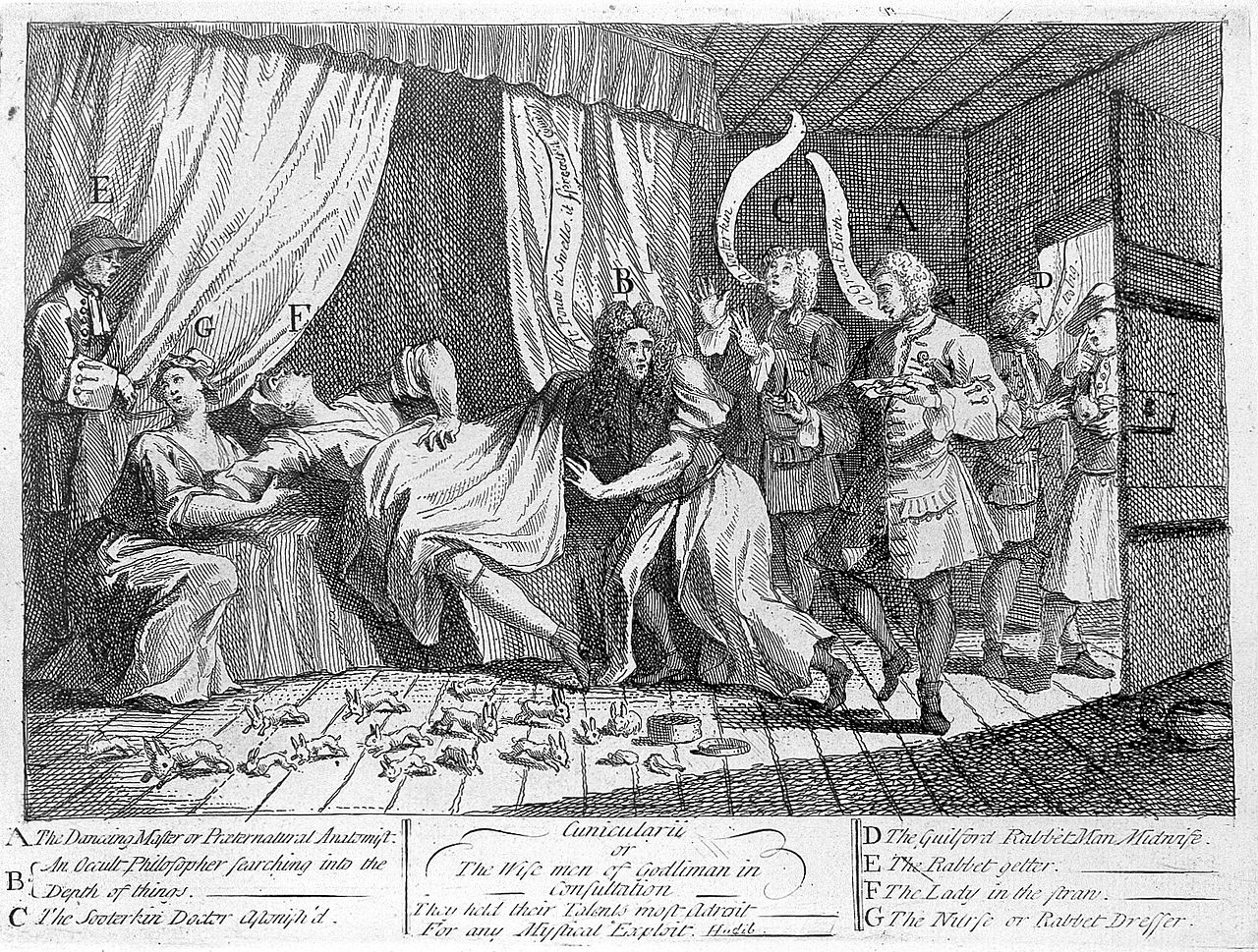
<div class='fn'> Mary Tofts duping several distinguished surgeons, physicians</div>


The Genesis of the Phenomenon
In the year 1726, a seemingly ordinary English woman, Mary Toft of Godalming, Surrey, became the focal point of an extraordinary and ultimately fraudulent event. Following a reported pregnancy that ended in miscarriage, Toft began to assert that she was giving birth to various animal parts, most sensationally, rabbits. This claim, rooted in a supposed fascination with the creatures, was initially investigated by local surgeon John Howard.
Howard's examination, which yielded pieces of animal flesh, lent a veneer of credibility to Toft's increasingly bizarre narrative. His subsequent notification of other physicians, including prominent figures in London, escalated the situation from a local curiosity to a matter of national and even royal interest, setting the stage for a profound public and medical drama.
From Provincial Oddity to Metropolitan Sensation
The sensational news of Mary Toft's alleged deliveries quickly reached the highest echelons of society, including the court of King George I. Nathaniel St. André, the King's own surgeon, became a staunch proponent of Toft's claims, concluding that her case was a genuine medical marvel.
This endorsement, however, was not universally shared. The King, demonstrating a degree of caution, also dispatched surgeon Cyriacus Ahlers, who harbored significant skepticism. Toft was brought to London, a move that transformed her from a village woman into a celebrity subject of intense medical and public scrutiny.
This period in London marked the height of her fame, but also the beginning of the unraveling of her elaborate deception, as the pressure to produce further 'evidence' mounted.
The Unmasking
Under the relentless gaze of London's medical elite and the public's fervent curiosity, Mary Toft's fabricated narrative began to crumble. The expected continuation of her 'deliveries' failed to materialize, leading to mounting suspicion and direct interrogation. Faced with irrefutable lack of evidence and intense pressure, Toft eventually confessed to orchestrating the entire hoax, admitting that her family had been complicit in the deception.
This confession led to her imprisonment as a fraud. However, the true consequence of her actions was not her personal punishment, but the profound damage inflicted upon the reputation of the medical profession. The ease with which prominent doctors had been duped fueled widespread public mockery and a deep-seated distrust in their expertise and judgment.
The Enduring Legacy
The Mary Toft affair left an indelible mark on the history of medicine and public perception. The scandal served as a stark illustration of the era's medical gullibility and the potential for public manipulation. It significantly damaged the careers of several prominent surgeons who had publicly supported Toft's claims, leading to a period of introspection and increased caution within the medical community.
The event was so potent that it became a subject of widespread satire, most notably by the influential pictorial satirist William Hogarth. Hogarth's critical depictions highlighted the perceived foolishness of the medical profession and their susceptibility to sensationalism. The lasting effect was a heightened public skepticism regarding the competence and ethical standards of physicians, contributing to a more critical and questioning public attitude towards medical authority that would persist for generations.
Broader Implications
Mary Toft's hoax was more than just a sensational news story; it was a critical moment in the development of public trust in science and medicine. The ease with which the established medical authorities were deceived highlighted the nascent stage of the scientific method's application and acceptance. It underscored the importance of empirical evidence, rigorous testing, and a healthy dose of skepticism, principles that would become cornerstones of modern scientific inquiry.
The incident demonstrated how deeply ingrained beliefs and the desire for the extraordinary could override rational analysis. Furthermore, the public's fascination and subsequent disillusionment with Toft's story reveal enduring human tendencies towards sensationalism and the complex relationship between belief, deception, and the pursuit of truth, themes that continue to resonate in contemporary discussions about misinformation and public trust in expertise.
See also
Frequently Asked Questions
Who was Mary Toft and what did she say she could do?+
Why did doctors think Mary might really have rabbits?+
What happened when the story reached London and the king?+
How did Mary Toft’s story end?+
Why is Mary Toft’s story important for doctors and people?+
Based on content from Wikipedia · Licensed under CC BY-SA 4.0