

Makers UPV: Your Awesome Invention Station!
Images
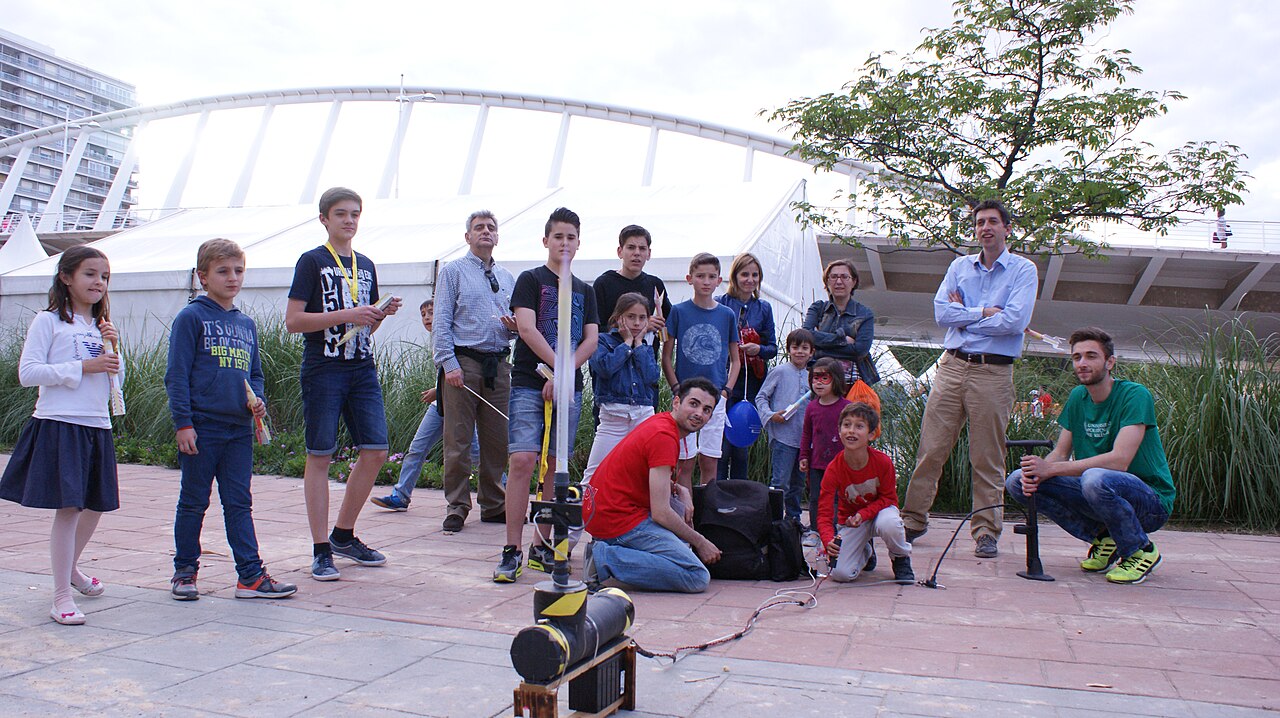
File:Rocket Workshop Makers UPV.jpg


The Genesis and Philosophy of Makers UPV
Makers UPV represents a strategic institutional investment in fostering a culture of innovation and practical skill development within the Polytechnic University of Valencia (UPV). Emerging from the broader global 'maker movement,' which champions accessible technology and hands-on creation, UPV's makerspace provides students with a dedicated environment to move beyond theoretical knowledge. The core philosophy is rooted in experiential learning, encouraging students from diverse academic backgrounds-engineering, design, architecture, and beyond-to collaborate on tangible projects.
This interdisciplinary approach is crucial, mirroring the collaborative nature of modern professional environments and preparing students to tackle complex, multifaceted challenges. By offering a physical space equipped with advanced tools, Makers UPV democratizes access to technologies that were once confined to specialized labs or prohibitively expensive for individual students.
Technological Infrastructure and Capabilities
The technological backbone of Makers UPV is designed to support a wide spectrum of creative and engineering endeavors. Central to its capabilities are advanced digital fabrication tools. High-precision 3D printers, utilizing various materials like plastics, resins, and even metals, enable the creation of complex geometries and functional prototypes with remarkable accuracy.
Complementing this are industrial-grade laser cutters and CNC (Computer Numerical Control) machines, which allow for precise cutting, engraving, and subtractive manufacturing from diverse materials such as wood, acrylic, metals, and composites. Furthermore, the space is equipped with sophisticated CAD (Computer-Aided Design) and CAM (Computer-Aided Manufacturing) software, empowering students to design intricate models and translate them into machine instructions.
Access to electronics workstations, soldering equipment, and microcontrollers also facilitates the development of interactive systems and embedded technologies, offering a comprehensive suite for rapid prototyping and product development.
Pedagogical Impact and Skill Development
The pedagogical impact of Makers UPV is profound, shifting the educational paradigm towards active engagement and problem-based learning. Students are not merely passive recipients of information; they are active creators who learn through iteration, experimentation, and often, failure. This process cultivates essential 21st-century skills, including critical thinking, creative problem-solving, resilience, and adaptability.
The collaborative nature of the makerspace also fosters teamwork, communication, and project management abilities. By undertaking personal or group projects, students gain practical experience in design thinking, material science, engineering principles, and the operational nuances of advanced manufacturing equipment. This hands-on mastery is invaluable for their academic progression and significantly enhances their employability in fields demanding innovation and technical proficiency.
Real-World Applications
Makers UPV serves as a critical nexus between academic learning and the demands of industry. Projects developed within the makerspace often address real-world problems, ranging from the design of assistive technologies for healthcare to the creation of sustainable solutions in energy and environmental science, or the development of novel educational tools. This practical application of knowledge not only validates students' learning but also generates potential intellectual property and entrepreneurial opportunities.
The skills acquired-rapid prototyping, iterative design, and proficiency with digital fabrication tools-are highly sought after by industries such as aerospace, automotive, biomedical engineering, consumer electronics, and advanced manufacturing. By providing a platform for innovation, Makers UPV helps position UPV graduates as leaders capable of driving technological advancement and contributing meaningfully to economic and societal progress.
The Future Trajectory of Makerspaces in Higher Education
The success of initiatives like Makers UPV signals a broader trend in higher education towards integrating practical, technology-driven learning experiences. As digital fabrication technologies continue to evolve and become more accessible, makerspaces are poised to become even more integral to university curricula. Future developments may include expanded material capabilities, integration with virtual and augmented reality for design and simulation, and even greater emphasis on sustainable manufacturing practices.
The model pioneered by Makers UPV demonstrates the power of providing students with the tools, resources, and supportive environment needed to innovate. It underscores the evolving role of universities as not just centers of knowledge dissemination, but as active incubators of creativity, entrepreneurship, and future technological leaders.
See also
Frequently Asked Questions
What is Makers UPV?+
What kinds of tools can I find at Makers UPV?+
How does Makers UPV help students learn?+
Who can use Makers UPV?+
Why is Makers UPV important for future jobs?+
Based on content from Wikipedia · Licensed under CC BY-SA 4.0