

Magellan (spacecraft)
Images

Red alert


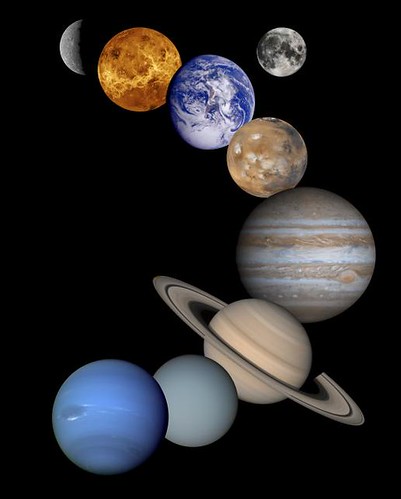


A Robotic Pioneer in Venusian Exploration
Launched on May 4, 1989, NASA's Magellan spacecraft was a pivotal robotic mission designed to meticulously map the surface of Venus and measure its gravitational field. Weighing 1,035 kilograms, it represented a significant investment in understanding our closest planetary neighbor. Venus, often dubbed Earth's 'sister planet' due to its similar size and mass, presents a formidable challenge for observation due to its extremely dense atmosphere, composed primarily of carbon dioxide and sulfuric acid clouds.
Magellan's primary objective was to overcome this atmospheric barrier, providing the first comprehensive, high-resolution radar map of the entire Venusian surface, a feat that had eluded previous missions. Its design and operational strategies pushed the boundaries of interplanetary exploration, setting new standards for future missions.
Synthetic-Aperture Radar
The core scientific instrument aboard Magellan was its synthetic-aperture radar (SAR) mapper. This advanced system was capable of penetrating Venus's opaque cloud cover, which extends hundreds of kilometers above the surface. SAR works by transmitting microwave pulses towards the planet and recording the echoes that return after reflecting off the surface.
By analyzing the time it took for these pulses to return and their intensity, scientists could construct detailed topographic maps. The 'synthetic aperture' aspect refers to how the spacecraft's motion is used to simulate a much larger antenna, thereby achieving significantly higher resolution than would be possible with a physically smaller radar. Magellan's radar system was so effective that it mapped over 98% of Venus's surface at a resolution of about 100-200 meters, revealing a landscape dominated by vast volcanic plains, extensive lava flows, impact craters, and tectonic features like rift valleys and mountain belts.
Revolutionary Orbital Mechanics
Beyond its imaging capabilities, Magellan was instrumental in demonstrating and refining the technique of aerobraking for interplanetary missions. After completing its primary mapping mission in a highly elliptical orbit, Magellan needed to adjust its trajectory to a more circular orbit for gravity measurements. Instead of expending large amounts of propellant to decelerate, Magellan was deliberately plunged into the upper reaches of Venus's atmosphere.
The friction generated by this atmospheric drag slowed the spacecraft down incrementally over several months. This innovative approach conserved a substantial amount of onboard fuel, which could then be used for extended scientific operations or to prolong the mission's lifespan. Aerobraking has since become a standard and highly efficient method for orbital insertion and modification in numerous subsequent space missions, saving considerable mass and cost.
Magellan's Impact on Planetary Science and Spaceflight
The Magellan mission concluded an eleven-year hiatus in U.S. interplanetary exploration, signaling a renewed commitment to venturing beyond Earth's orbit. As the fifth successful NASA mission to Venus, it built upon decades of prior research, providing data that fundamentally reshaped our understanding of the planet. Magellan's detailed geological maps revealed Venus to be a dynamic world, with evidence suggesting relatively recent volcanic activity and significant tectonic resurfacing.
This provided crucial comparative data for understanding planetary evolution, particularly the divergent paths taken by Earth and Venus despite their initial similarities. The mission's success also validated the use of advanced radar technology for planetary surface exploration and proved the efficacy of aerobraking, influencing the design and operational strategies of future spacecraft like Mars Global Surveyor and Galileo.
Legacy and Continued Relevance of Magellan's Discoveries
The data returned by Magellan continues to be a cornerstone for Venusian research. Its high-resolution maps remain the most detailed global coverage of the planet's surface available. Scientists still analyze this data to investigate the processes that led to Venus's extreme greenhouse effect, its lack of plate tectonics as seen on Earth, and the nature of its volcanic and seismic activity.
Understanding Venus is critical for comprehending the range of conditions under which rocky planets can form and evolve, offering vital context for the search for exoplanets and the study of Earth's own climate. Magellan's legacy extends beyond Venus; it represents a triumph of engineering, scientific ingenuity, and a persistent human drive to explore the unknown, inspiring generations of scientists and engineers.
See also
Frequently Asked Questions
What was the Magellan spacecraft and why was it launched?+
How did Magellan see the surface of Venus?+
What is aerobraking and how did Magellan use it?+
What did Magellan discover about Venus?+
Why is Magellan important for future space missions?+
Based on content from Wikipedia · Licensed under CC BY-SA 4.0