

Macromolecule
Images

Non-thermal Processing of Major Food Macromolecules


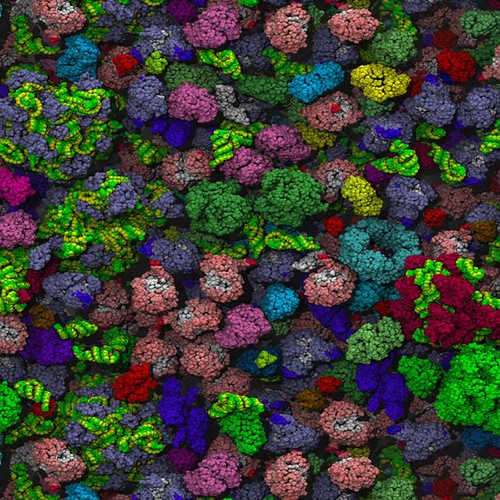

Defining the Colossal
Macromolecules are defined by their substantial molecular weight, arising from the extensive repetition of low molecular weight units. This structural characteristic is paramount; the 'multiple repetition of units derived, actually or conceptually, from molecules of low relative molecular mass' is the defining principle. Polymers represent the physical manifestation of this concept, where long chains are formed through covalent bonding of monomers.
The properties of a macromolecule are intrinsically linked to its chain length, the nature of its repeating units, and its three-dimensional conformation. Whether naturally occurring biopolymers like proteins and nucleic acids, or synthetic polymers such as polyethylene and nylon, their immense size dictates their unique physical and chemical behaviors, enabling functions far beyond those of their constituent smaller molecules. This repetitive, modular design allows for incredible diversity and complexity from simple building blocks.
The Symphony of Synthesis
The formation of macromolecules, particularly biopolymers, is a testament to the sophisticated biochemical machinery of life. Polymerization reactions are the core mechanism, where monomers are covalently linked. In biological systems, this is often a highly regulated process.
For instance, DNA replication and protein synthesis involve enzymatic catalysis that precisely sequences monomers according to genetic instructions. Carbohydrate synthesis involves enzymes that link monosaccharides into polysaccharides. Synthetic polymers are created through various polymerization techniques, such as addition polymerization (e.g., for polyethylene) and condensation polymerization (e.g., for nylon), often initiated by catalysts or specific reaction conditions.
The control over chain length, branching, and stereochemistry during synthesis is critical for tailoring the final material's properties for specific applications, from high-strength fibers to flexible films.
The Indispensable Role
Macromolecules are the cornerstone of biological function and the foundation of modern material science. In living organisms, biopolymers are indispensable: nucleic acids (DNA, RNA) store and transmit genetic information, proteins perform a vast array of functions including enzymatic catalysis, structural support, and signaling, and carbohydrates serve as energy sources and structural components. Beyond biology, synthetic macromolecules have revolutionized human civilization.
Polyolefins like polyethylene and polypropylene are ubiquitous in packaging, containers, and textiles due to their low cost and versatility. Polyamides like nylon are essential for durable fabrics, ropes, and engineering components. The development of advanced polymers continues to drive innovation in fields like medicine (biocompatible implants, drug delivery systems), electronics (insulators, conductive polymers), and aerospace (lightweight, high-strength composites).
Tracing the Giants
The concept of macromolecules emerged gradually through the work of several pioneering scientists. Early observations of natural substances like rubber, cellulose, and starch revealed their unusually high molecular weights and peculiar properties, leading to debate about their structure. Hermann Staudinger, in the early 20th century, was a pivotal figure.
He proposed the existence of 'Riesenmoleküle' (giant molecules) composed of repeating monomer units linked by covalent bonds, a radical idea at the time that challenged the prevailing view of small molecules. His extensive research on polymers, for which he was awarded the Nobel Prize in Chemistry in 1953, established polymer science as a legitimate field. Subsequent work by scientists like Wallace Carothers (inventor of nylon) further advanced the understanding and synthesis of macromolecules, paving the way for the polymer industry.
Ubiquitous Presence
Macromolecules are not confined to laboratories or textbooks; they are woven into the very fabric of our daily lives and industrial processes. Nutritionally, our diets are rich in biopolymers: carbohydrates (starches, sugars) provide energy, proteins are essential for tissue repair and function, and lipids, though not strictly polymers, are large molecules vital for cell membranes. Industrially, synthetic macromolecules are indispensable.
Polyethylene is found in everything from grocery bags to fuel tanks. Polyvinyl chloride (PVC) is used in pipes and window frames. Polystyrene forms insulation and disposable cups. Even advanced materials like Kevlar, used in bulletproof vests, are complex polyamides.
The ongoing research into new macromolecular structures promises further advancements in sustainability, medicine, and technology, underscoring their enduring significance.
See also
Frequently Asked Questions
What is a macromolecule?+
Why do macromolecules matter in our bodies?+
How are macromolecules made?+
Where can we find macromolecules?+
What are some examples of macromolecules?+
Based on content from Wikipedia · Licensed under CC BY-SA 4.0