

The Amazing Love Chair!
Images
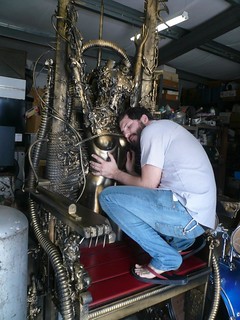
ben loves chair


The Genesis of the Siège d'Amour
The 'siège d'amour,' or love chair, stands as a fascinating artifact of historical furniture design, born from a very specific and personal request. Commissioned by King Edward VII of Britain, a monarch known for his opulent lifestyle and social engagements, this piece was not intended for public display or conventional use. Instead, it was conceived by a French furniture manufacturer to facilitate a particular form of intimate interaction: allowing the King to engage simultaneously with two companions.
This bespoke creation speaks volumes about the era's understanding of luxury, privacy, and the role of furniture in shaping social dynamics, even in the most private spheres of life. It represents a pinnacle of personalized craftsmanship, where the functional requirements of a royal client dictated an innovative and unconventional design.
Architectural Intimacy
The ingenuity of the love chair lies in its deliberate architectural design, engineered to optimize proximity and comfort for three individuals. Unlike standard seating arrangements, the 'siège d'amour' was shaped to accommodate a central occupant with two flanking individuals. This configuration likely involved a wide, possibly semi-circular or deeply contoured seat, allowing the two companions to sit at an angle that facilitated direct interaction with the person in the middle.
The precise dimensions and upholstery would have been crucial in ensuring not only physical closeness but also a sense of ease and relaxation, thereby enhancing the intended social and intimate experience. This was not merely a piece of furniture; it was a carefully calibrated environment designed to foster specific interpersonal dynamics, showcasing a sophisticated understanding of human comfort and social engineering within furniture design.
Cultural Resonance
The love chair, though a singular historical object, offers a unique lens through which to examine historical attitudes towards pleasure, privacy, and social hierarchy. Its existence highlights the lengths to which the wealthy and powerful would go to indulge their desires and create specialized environments for their personal lives. In a broader cultural context, it can be seen as an early, albeit extreme, example of furniture designed to facilitate specific social interactions beyond simple utility.
While direct descendants are rare, the underlying principle of creating spaces that encourage connection and intimacy can be observed in modern design trends, such as the resurgence of conversation pits or modular seating arrangements. The 'siège d'amour' thus serves as a historical marker, illustrating how furniture has always been intertwined with human relationships and the pursuit of comfort and enjoyment.
The Legacy of Bespoke Comfort
The creation of the love chair underscores a historical period where bespoke furniture was a significant marker of status and personal luxury. For King Edward VII, this chair was a tool to enhance his social life, demonstrating that even the most private aspects of existence could be catered to by skilled artisans. While the specific context of the 'siège d'amour' is tied to royal indulgence, the concept of furniture designed for enhanced social interaction has a lasting legacy.
Modern interior design continues to explore how seating arrangements can foster connection, whether through communal sofas, integrated lounge areas, or even specially designed booths in public spaces. The love chair, in its unique way, represents an early, bold experiment in using design to shape human connection, a principle that remains relevant in how we furnish our homes and public environments today.
Beyond the Obvious
When examining the love chair, it's important to move beyond a superficial understanding and consider its implications within the social and historical context of late 19th and early 20th century Britain and France. The commission by King Edward VII speaks to the era's evolving notions of leisure and personal relationships, particularly among the aristocracy. The French manufacturer's response highlights the international reputation of French craftsmanship in luxury goods.
The 'siège d'amour' was not merely a piece of furniture; it was a statement about the King's desires and the lengths to which his court would go to accommodate them. It also raises questions about the intersection of design, power, and personal life, and how objects can become repositories of social history. The chair's existence prompts reflection on the evolution of intimacy, social norms, and the enduring human desire for comfort and connection, all encapsulated within a single, unconventional piece of furniture.
See also
Frequently Asked Questions
What is the love chair?+
Why did King Edward VII want a love chair?+
How was the love chair designed?+
Who made the love chair?+
Is the love chair still used today?+
Based on content from Wikipedia · Licensed under CC BY-SA 4.0