

London Overground: London's Orange Train Adventure!
Images

Railway bridge - Primrose Hill, Camden - London Overground 378 207


Genesis and Integration
The London Overground emerged in 2007 as a strategic initiative by Transport for London (TfL) to consolidate and rebrand several existing suburban rail routes, primarily those previously operated under the Silverlink Metro franchise. This move aimed to create a more cohesive and easily navigable rail network within the Greater London area and extending into Hertfordshire. By integrating these lines, TfL sought to improve passenger experience, enhance service reliability, and establish a distinct identity for this crucial segment of the capital's transport infrastructure.
The Overground operates as part of the broader National Rail network, adhering to national standards while benefiting from TfL's localized management and branding strategies. This dual affiliation allows it to leverage national infrastructure while maintaining a unique, London-centric service offering, serving as a critical link between the city center and its sprawling suburbs.
A Canvas of Culture
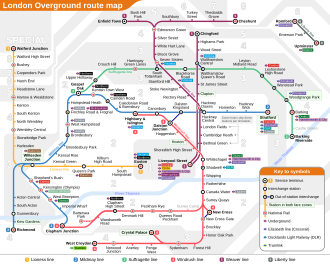
A pivotal moment in the London Overground's history occurred in 2024 with the introduction of distinct colors and names for each of its six lines: Lioness (yellow), Mildmay (blue), Windrush (red), Weaver (purple), Suffragette (green), and Liberty (grey). This ambitious rebranding transcends mere aesthetic enhancement; it represents a deliberate effort to imbue the network with cultural significance and reflect London's multifaceted identity.
Each name and color is carefully chosen to reference historical events, influential figures, or communities that have shaped the city. For instance, the Windrush line acknowledges the legacy of the Windrush generation, while the Suffragette line honors the women's suffrage movement. This initiative transforms the Overground into a dynamic narrative medium, allowing passengers to engage with London's diverse heritage simply by observing their train line's color.
It fosters a sense of place and belonging, making public transport a vehicle for cultural storytelling and recognition.
Operational Framework
The operational structure of the London Overground exemplifies a common model in modern public transportation: a public body overseeing strategy and branding, with day-to-day operations managed by a private contractor. Transport for London (TfL), a statutory body of the Greater London Authority, holds the concessionary rights and dictates the service's identity, including its iconic orange livery and the newer line-specific colors. Since 2016, Arriva Rail London has been the contracted operator responsible for running the trains, managing staff, and maintaining rolling stock.
This arrangement allows TfL to set service standards, performance targets, and strategic direction, while Arriva focuses on the complex logistics of daily train operations. This public-private partnership aims to combine the public service ethos of TfL with the operational efficiency and expertise of a specialized private operator, ensuring the Overground functions effectively as a key component of London's integrated transport system.
Socio-Economic Impact and Future Trajectory
The London Overground serves as a critical engine for socio-economic activity, facilitating commuting, commerce, and social interaction across a vast metropolitan area. By providing reliable and accessible transport links, it supports employment opportunities, educational access, and the vitality of local economies in the communities it serves. The network's strategic importance is underscored by its role in connecting diverse neighborhoods, fostering social cohesion, and reducing reliance on private vehicles, thereby contributing to environmental sustainability goals.
The recent rebranding, with its emphasis on cultural narratives, also enhances the Overground's role in promoting civic pride and acknowledging London's multicultural fabric. As London continues to grow, the Overground's capacity for expansion and its integration with other transport modes will remain paramount to its ongoing success and its contribution to the city's dynamic urban landscape.
Go deeper
Frequently Asked Questions
What is the London Overground?+
Why does the London Overground have different colors and names for its lines?+
How do the trains get run on the London Overground?+
Where can I find the London Overground trains?+
Why are the trains orange?+
Based on content from Wikipedia · Licensed under CC BY-SA 4.0