

Llama
Images

Llama
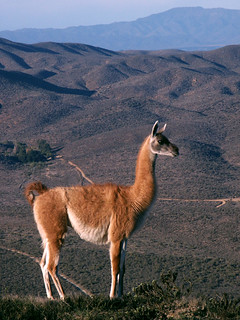


The Llama's Enduring Legacy
The llama (Lama glama) holds a profound historical and cultural significance, particularly within the Andean civilizations of South America. Domesticated from the wild guanaco (Lama guanicoe) approximately 4,000 to 5,000 years ago, llamas were fundamental to the survival and development of societies like the Inca Empire. Their primary role as pack animals allowed for the transport of goods, agricultural products, and building materials across the formidable terrain of the Andes Mountains, facilitating trade and the construction of complex infrastructure.
Beyond transportation, their wool provided essential clothing and textiles, and their dung served as a valuable fuel source in treeless high-altitude regions. While alpacas were primarily bred for their fine fleece, llamas were favored for their strength and carrying capacity. Today, llamas continue to be vital to many indigenous communities, serving not only as pack animals but also in tourism and as guard animals for livestock, demonstrating their enduring adaptability and value in a changing world.
Physiological Adaptations for Extreme Altitudes
Llamas exhibit remarkable physiological adaptations that enable them to thrive in the extreme conditions of the high Andes, characterized by low oxygen levels, cold temperatures, and rugged terrain. Their blood contains a higher concentration of red blood cells and hemoglobin compared to lowland mammals, allowing for more efficient oxygen transport in the thin air. They possess a unique respiratory system that can extract more oxygen from each breath.
Their thick, multi-layered fleece provides exceptional thermal insulation, protecting them from sub-zero temperatures. Furthermore, their padded, leathery foot soles offer excellent traction on steep, rocky slopes, preventing slips and falls. Their digestive system is highly efficient at extracting nutrients from sparse, fibrous vegetation, and their ability to ruminate allows them to process tough plant matter effectively, minimizing water loss through excretion.
These adaptations collectively make the llama an ideal ungulate for high-altitude environments.
Dietary Ecology and Digestive Efficiency
As obligate herbivores, llamas subsist on a diet primarily composed of grasses, sedges, and other low-growing vegetation endemic to the Andean highlands. Their digestive tract is a marvel of evolutionary engineering, featuring a three-compartment stomach (often referred to as a pseudo-ruminant system, though technically different from true ruminants) that facilitates the breakdown of cellulose. This complex system allows for microbial fermentation, where symbiotic microorganisms break down plant fibers into usable nutrients.
The process of rumination, where partially digested food is regurgitated and re-chewed, significantly increases the surface area for enzymatic action, maximizing nutrient absorption. This efficient digestive strategy is crucial for survival in environments where food resources can be seasonally limited and of lower nutritional quality. Their ability to utilize coarse, fibrous plants that other animals cannot digest makes them a keystone species in nutrient cycling within their ecosystem.
Social Behavior, Communication, and Defense Mechanisms
Llamas are highly social herd animals, exhibiting complex social structures and communication methods. Within a herd, a distinct hierarchy is established, often maintained through subtle body language and vocalizations. Their primary defense mechanism is their keen sense of awareness and their ability to flee from perceived threats.
However, when cornered or provoked, llamas employ spitting as a defensive and offensive tactic. This is typically a regurgitated stomach substance, often mixed with saliva, expelled with considerable force and accuracy. It serves as a deterrent to predators and a means of asserting dominance or expressing displeasure within the herd.
Other vocalizations include a distinctive humming sound, used for various social interactions, and alarm calls that alert the herd to danger. Their intelligence and social nature have contributed to their successful integration into human management systems, where they can also act as effective guard animals for sheep and other vulnerable livestock, deterring predators like coyotes and foxes.
See also
Frequently Asked Questions
What do llamas eat?+
Why do llamas have thick fur?+
How do llamas help people in the Andes?+
Why do llamas have a lot of red blood cells?+
What does it mean that llamas spit?+
Based on content from Wikipedia · Licensed under CC BY-SA 4.0