

Moons: Our Cosmic Neighbors!
Images

FM 105, through Abandoned Pony Truss Swing Bridge over Cow Bayou, Cormier Road, Orangefield, Texas 1301031354BW



![[0009] Eriocrania sparrmannella](https://live.staticflickr.com/7137/13617211703_7770de74f2_n.jpg)
The Astounding Diversity of Solar System Moons
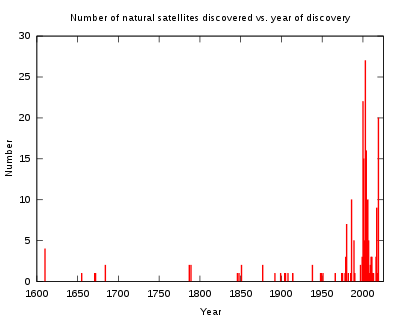
The solar system hosts a vast and diverse population of natural satellites, with over 431 confirmed moons orbiting the eight planets and the nine most likely dwarf planets. This count continues to grow as observational technology advances, revealing smaller and more distant bodies. The distribution of these moons is far from uniform; gas giants like Jupiter and Saturn possess extensive satellite systems, numbering in the dozens, while inner planets like Mercury and Venus have none, and Mars has only two small, irregular moons.
A significant subset of these moons, at least 19, are large enough to be gravitationally rounded, achieving a state of hydrostatic equilibrium. This classification blurs the lines between moons and dwarf planets, as these bodies possess sufficient mass to overcome their material strength and assume a nearly spherical shape. The composition of these large, rounded moons is also noteworthy, with nearly all exhibiting icy crusts, a stark contrast to the rocky surfaces of Earth's Moon and Jupiter's volcanically active moon, Io.
This dichotomy highlights the varied evolutionary pathways moons have taken within different planetary environments.
Formation Pathways
The origins of natural satellites are explained by several prominent theories, reflecting the complex processes that shaped the early solar system. The most widely accepted model for the formation of large moons, particularly those orbiting gas giants, is co-accretion. This theory posits that these moons formed from circumplanetary disks of gas and dust that surrounded the young planets, similar to how planets themselves formed from the solar nebula.
Alternatively, some moons, especially smaller, irregularly shaped ones, are thought to be captured bodies. These could be asteroids or comets that strayed too close to a planet and were ensnared by its gravitational field. The composition and orbital characteristics of a moon often provide clues to its formation history; for instance, moons in retrograde orbits or those with highly inclined orbits are often considered captured objects.
The study of these formation mechanisms is critical for understanding the broader context of planetary system formation and evolution across the galaxy.
Unique Worlds
Among the diverse array of natural satellites, certain moons stand out for their extraordinary geological activity and potential habitability. Jupiter's moon Io is a prime example, renowned as the most volcanically active body in the solar system. Its surface is constantly reshaped by hundreds of active volcanoes, driven by intense tidal heating caused by Jupiter's immense gravity and the gravitational tug-of-war with other large Galilean moons.
This internal heat prevents Io from developing an icy crust, making it a unique, sulfur-rich world. In contrast, many other large moons, such as Jupiter's Europa and Saturn's Enceladus, are covered in thick ice shells. Beneath these frozen exteriors, strong evidence suggests the presence of vast liquid water oceans, warmed by tidal forces.
These subsurface oceans are considered prime candidates for harboring extraterrestrial life, making them focal points for astrobiological research and future space missions.
Scientific Significance
Natural satellites are not merely celestial curiosities; they are invaluable scientific laboratories that offer profound insights into planetary evolution, the history of the solar system, and the potential for life beyond Earth. Their study allows scientists to test and refine models of planet formation and dynamics. The geological diversity of moons, from Io's extreme volcanism to the potential subsurface oceans of Europa and Enceladus, provides a comparative framework for understanding planetary processes under different conditions.
Furthermore, the discovery of liquid water on icy moons has revolutionized astrobiology. These hidden oceans, shielded from harsh surface radiation and potentially containing the necessary chemical ingredients, represent some of the most promising environments for searching for extant life within our solar system. Understanding the conditions within these moons could inform our search for life on exoplanets as well.
See also
Based on content from Wikipedia · Licensed under CC BY-SA 4.0