

List of countries by Human Development Index
Images
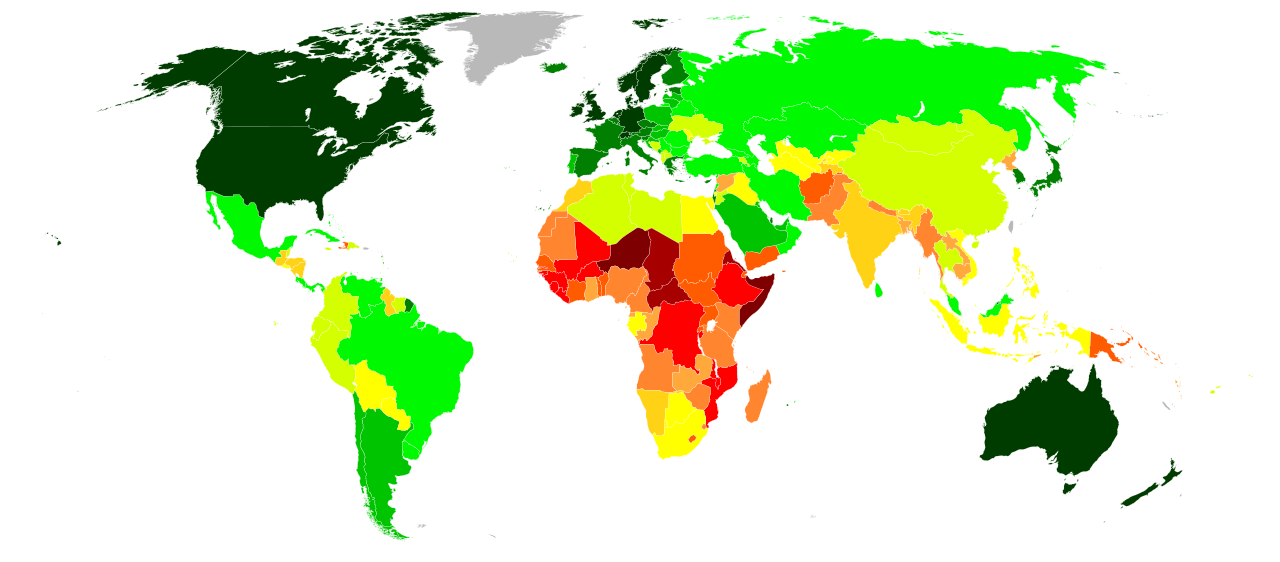
UN Human Development Report 2015


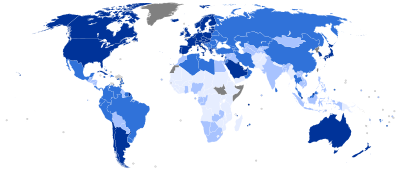


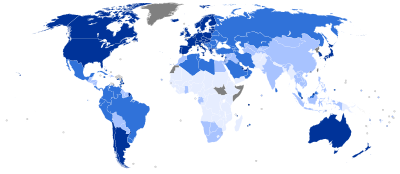


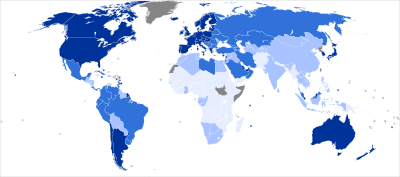
The HDI
The Human Development Index (HDI), compiled annually by the United Nations Development Programme (UNDP), represents a significant departure from purely economic indicators of national progress. It was conceived to provide a more holistic assessment of human well-being by focusing on three fundamental dimensions: a long and healthy life, access to knowledge, and a decent standard of living.
Life expectancy at birth serves as the proxy for health, while education is measured through expected years of schooling for children and mean years of schooling for adults. The standard of living is gauged by Gross National Income (GNI) per capita, adjusted for purchasing power parity. This multidimensional approach allows for a more nuanced comparison of development across countries and over time, shifting the focus from mere economic output to the actual capabilities and opportunities available to a nation's citizens.
Evolution of the HDI
The HDI has not remained static since its inception. It has evolved in response to both academic critique and a growing understanding of development's complexities. Initially, the index faced criticism for its weighting of components and the differing valuation of life expectancy across countries.
In response, the UNDP introduced the Inequality-adjusted Human Development Index (IHDI) in 2010. The IHDI effectively 'discounts' the HDI score based on the level of inequality in each dimension, providing a more accurate picture of actual human development experienced by the average person. Further critiques highlighted the omission of crucial factors like gender inequality and environmental sustainability.
This led to the development of the Gender Development Index (GDI) in 1995 and, more recently, the Planetary Pressures-adjusted Human Development Index (PHDI), which penalizes countries with high ecological footprints, underscoring the interconnectedness of human development and planetary health.
The Significance of the HDI in Global Development Discourse
The HDI's primary significance lies in its ability to reframe the conversation around development. By moving beyond GDP, it emphasizes that true progress is about improving people's lives. This has profound implications for policy-making.
Countries with high HDI scores often demonstrate effective governance and investment in public services like healthcare and education. Conversely, a low HDI score can serve as a critical signal for policymakers and international organizations, highlighting areas where targeted interventions are most needed. The index fosters accountability and encourages a focus on human capital development, which is increasingly recognized as a key driver of sustainable economic growth and social stability.
It provides a common language for discussing global disparities and advocating for equitable progress.
Methodology and Interpretation
The calculation of the HDI involves several key steps. Data for life expectancy, education (expected and mean years of schooling), and GNI per capita are collected. Each of these indicators is then normalized to a value between 0 and 1 using a minimum and maximum goalpost. For example, life expectancy is scaled from 20 years (minimum) to 85 years (maximum).
These normalized indices are then combined using a geometric mean to produce the final HDI score. The geometric mean is used to ensure that poor performance in one dimension cannot be compensated by exceptionally high performance in another. Interpretation requires understanding that the HDI is a summary measure; while it provides a valuable overview, it does not capture all aspects of human development, such as political freedom, social inclusion, or individual happiness.
Beyond the National Average
Recognizing that national averages can mask significant internal disparities, the concept of the Subnational Human Development Index (SHDI) was introduced. Developed by the Global Data Lab, the SHDI provides HDI data for over 1,600 regions within countries, offering a granular view of development differences. This is crucial for understanding regional inequalities and tailoring policy responses.
Furthermore, the aforementioned IHDI, GDI, and PHDI represent ongoing efforts to refine the HDI's scope. The IHDI addresses intra-country inequality, the GDI focuses on gender disparities, and the PHDI integrates environmental sustainability. These advanced indices acknowledge that a comprehensive understanding of human development requires accounting for distribution, gender, and ecological impact, reflecting a mature and evolving approach to measuring global progress.
See also
Frequently Asked Questions
What does the list of countries by Human Development Index show?+
How is the HDI score for each country calculated?+
Why do some countries rank higher than others on the HDI list?+
What can a country do to improve its HDI ranking?+
Are there different HDI measures that look at inequality or the environment?+
Based on content from Wikipedia · Licensed under CC BY-SA 4.0