

Linear function
Images

Linear function kx




The Duality of Linearity
In mathematics, the term 'linear function' carries two distinct, though related, meanings. In calculus and analysis, it typically refers to a function whose graph is a straight line, meaning it's a polynomial of degree zero or one. These are often called 'affine functions' to distinguish them from the more abstract concept.
The defining characteristic here is a constant rate of change. In contrast, linear algebra defines a linear function as a 'linear map' or 'linear transformation.' This is a function between vector spaces that preserves vector addition and scalar multiplication. This means that if you transform two vectors and add them, you get the same result as adding the vectors first and then transforming the sum.
This property is fundamental to understanding transformations in geometry and solving systems of linear equations, forming the bedrock of many advanced mathematical and scientific fields.
From Ancient Geometry to Modern Algebra
The concept of linearity has roots stretching back to ancient Greek geometry, where straight lines were fundamental to proofs and constructions. However, the formalization of linear functions as we know them today is largely a product of the development of analytic geometry and algebra. René Descartes' invention of the Cartesian coordinate system in the 17th century provided a bridge between geometry and algebra, allowing lines to be represented by equations.
This paved the way for mathematicians like Isaac Newton and Gottfried Wilhelm Leibniz to develop calculus, where linear approximations and functions play a crucial role. The abstract concept of linear maps in vector spaces emerged later, significantly advanced by mathematicians like Georg Ferdinand Ludwig Philipp Cantor and David Hilbert in the late 19th and early 20th centuries, solidifying linearity as a core principle in abstract mathematics.
The Indispensable Role of Linearity in Science and Technology
Linear functions are paramount because they provide the simplest and most fundamental models for understanding change. In physics, they describe motion with constant velocity, Hooke's Law for springs, and Ohm's Law relating voltage, current, and resistance. In economics, they model supply and demand curves under certain conditions, and in computer science, they are essential for algorithms dealing with data structures like arrays and for understanding the computational complexity of operations.
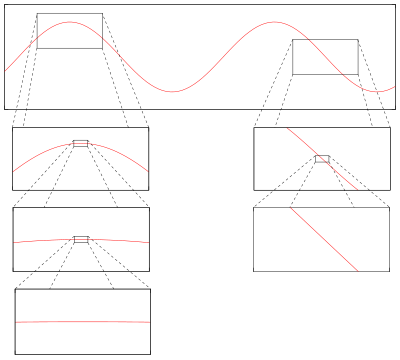
The ability to approximate complex, non-linear systems with linear models over small intervals (linearization) is a powerful technique used across all scientific disciplines, enabling analysis and prediction where direct solutions are intractable. This makes linear functions a cornerstone of quantitative reasoning.
Deconstructing the Linear Equation
The standard form of a linear function in two variables, y = mx + b, elegantly captures its essence. The parameter 'm' represents the slope, quantifying the rate at which the dependent variable (y) changes with respect to the independent variable (x). It dictates the steepness and direction of the line.
The parameter 'b' is the y-intercept, indicating the value of y when x is zero, essentially the starting point or baseline. In the context of linear algebra, a linear map T: V → W between vector spaces V and W satisfies T(u + v) = T(u) + T(v) and T(cv) = cT(v) for all vectors u, v in V and scalar c. This property ensures that the structure of the vector spaces is preserved under the transformation, leading to predictable and manageable changes in vectors.
From Simple Graphs to Complex Systems
The applications of linear functions are vast and varied. In everyday life, they model scenarios like calculating the cost of a taxi ride (fare + per-mile charge) or determining the total distance traveled at a constant speed. In engineering, linear models are used in control systems, signal processing, and structural analysis. Machine learning heavily relies on linear algebra and linear functions for tasks such as linear regression, classification algorithms (like logistic regression, which uses a linear combination of features), and dimensionality reduction techniques like Principal Component Analysis (PCA).
Even in biology, linear models can approximate population growth under ideal conditions or the relationship between drug dosage and response within a certain range. Their ubiquity underscores their foundational importance.
See also
Frequently Asked Questions
What is a linear function in math?+
How do linear functions help us in everyday life?+
Why do linear functions have a slope and a y‑intercept?+
How did people discover linear functions?+
What is a linear map in linear algebra?+
Based on content from Wikipedia · Licensed under CC BY-SA 4.0