

Lesser Poland Voivodeship
Images

Dobiecki manor house, 1890 by arch. Teodor Talowski, Szkolna street, Cianowice Duże village, Kraków county, Lesser Poland Voivodeship, Poland


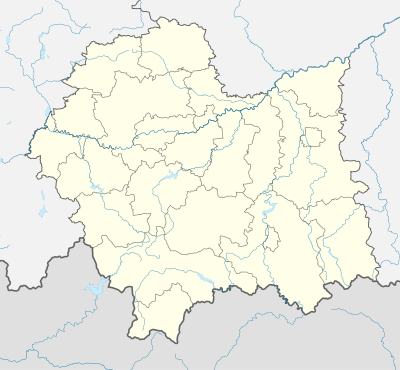


Geographical Tapestry
Lesser Poland Voivodeship (Województwo Małopolskie) occupies a strategic position in southern Poland, bordering Slovakia to the south. Its geography is remarkably diverse, dominated by significant mountain ranges that define its character and influence its development. The southern border is dramatically marked by the Tatra Mountains, the highest range within the Carpathians, known for their alpine beauty and challenging terrain, attracting both tourists and mountaineers.
To the west, the Jura Krakowsko-Częstochowska forms a distinct landscape of limestone hills, characterized by unique rock formations, caves, and medieval castles perched atop strategic heights. The region is predominantly situated within the Vistula River basin, with the river itself serving as a vital artery, shaping the landscape and historical settlement patterns. The climate is temperate continental, featuring warm summers and cold, snowy winters, which supports a variety of ecosystems and influences agricultural practices and tourism.
This varied topography, from high mountain peaks to river valleys and rolling uplands, provides a rich natural heritage and diverse opportunities for economic activity, including agriculture, forestry, and extensive tourism.
Kraków
The capital city, Kraków, is the historical and cultural heart of Lesser Poland, serving as a testament to Poland's rich past. As the former royal capital for centuries, it retains an unparalleled architectural legacy, with its Old Town designated a UNESCO World Heritage site. The Main Market Square, a vast medieval plaza, is surrounded by historic townhouses and significant religious structures like St.
Mary's Basilica, famous for its hourly trumpet call. Wawel Hill, crowned by the Royal Castle and Cathedral, stands as a potent symbol of Polish statehood and identity, having been the seat of Polish monarchs. Beyond its historical significance, Kraków has consistently reinvented itself as a vibrant cultural hub.
Its designation as a European City of Culture in 2000 underscored its contemporary artistic dynamism. The city boasts a thriving arts scene, numerous festivals, and a rich academic tradition, exemplified by the Jagiellonian University, founded in 1364, which remains one of Poland's premier institutions of higher learning. This enduring cultural capital, combined with its historical gravitas, makes Kraków a focal point of national pride and international interest.
Cultural Identity and Socio-Economic Dynamics
The cultural identity of Lesser Poland is deeply rooted in its historical Małopolska region, a name that evokes a long and complex past. While the modern voivodeship covers only a portion of the historical territory, it preserves many of the region's distinct traditions, folklore, and dialects. The population, predominantly Polish, exhibits a strong sense of regional pride, often expressed through folk arts, music, and traditional festivals.
The cuisine reflects this heritage, offering hearty dishes that are both comforting and representative of the land. Kraków, as a major metropolitan center, acts as a melting pot, integrating diverse influences from across Poland and internationally, while smaller towns and rural areas often maintain more traditional lifestyles. This dynamic interplay between historical continuity and modern adaptation shapes the social fabric of Lesser Poland.
The region's economic landscape is robust, with Kraków serving as a significant economic engine. Key sectors include advanced manufacturing, information technology, business services, and a substantial tourism industry, driven by the region's historical sites and natural attractions. The presence of a highly educated workforce, fueled by its numerous universities, supports innovation and attracts foreign investment, positioning Lesser Poland as a key player in Poland's national economy.
Governance, Education, and Connectivity
Lesser Poland Voivodeship operates within Poland's decentralized administrative system, with a voivode appointed by the central government and an elected regional assembly (Sejmik). This structure allows for regional governance while maintaining national oversight. The voivodeship is further divided into powiats (counties) and gminas (municipalities), creating multiple layers of local administration responsible for public services. Education is a cornerstone of the region's development strategy.
Kraków, in particular, is a major educational hub, hosting several prestigious universities, including the Jagiellonian University, AGH University of Science and Technology, and the University of Economics. These institutions not only provide higher education but also engage in significant research and development, contributing to the region's innovation ecosystem. The voivodeship benefits from excellent transportation infrastructure.
Kraków's John Paul II International Airport is the second-largest in Poland, facilitating international travel and commerce. Major expressways and railway lines connect Kraków to other key Polish cities like Warsaw, Wrocław, and Katowice, as well as to neighboring countries. This connectivity is crucial for its economic growth, enabling trade, tourism, and the exchange of ideas, reinforcing Lesser Poland's position as a vital region within Poland and Europe.
See also
Frequently Asked Questions
What is Lesser Poland Voivodeship?+
Where is Kraków in Lesser Poland?+
Why are the Tatra Mountains special in Lesser Poland?+
How does the Vistula River help people in Lesser Poland?+
What food can you eat in Lesser Poland?+
Based on content from Wikipedia · Licensed under CC BY-SA 4.0