

Silverfish: The Speedy Little Swimmers!
Images

Silverfish - דגיג כסף הסוכר


Echoes of Antiquity
The silverfish, scientifically classified as Lepisma saccharinum, represents a fascinating window into insect evolution. Belonging to the order Zygentoma, these insects are considered among the most primitive living insects, retaining traits that have remained largely unchanged for hundreds of millions of years. Their lineage predates the evolution of wings, a characteristic that sets them apart from the vast majority of modern insect species.
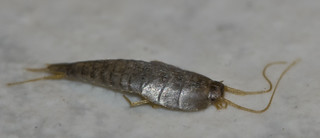
This evolutionary conservatism means that silverfish possess a body plan and physiological mechanisms that are remarkably similar to their ancient ancestors. Their common name, 'silverfish,' is a direct reflection of their appearance and locomotion: a silvery, iridescent sheen caused by fine scales covering their bodies, combined with a rapid, undulating movement that superficially resembles that of a fish. This unique gait, achieved through the coordinated action of abdominal muscles, allows them to navigate surfaces with surprising speed and agility, a crucial adaptation for a wingless creature.
The scientific name, Lepisma saccharinum, further underscores their dietary specialization, with 'saccharinum' referring to their preference for sugary and starchy substances.
A Carbohydrate Connoisseur
The dietary habits of Lepisma saccharinum are central to its ecological niche and its interaction with human environments. Silverfish are primarily detritivores with a strong preference for complex carbohydrates, particularly starches and sugars. This specialized diet allows them to exploit resources that are inaccessible to many other organisms.
Their digestive system is equipped with enzymes capable of breaking down cellulose, a major component of plant cell walls, and other complex polysaccharides. This capability enables them to consume a wide range of materials, including paper, book bindings, wallpaper paste, textiles (such as cotton, linen, and silk), and even dried food products like flour and cereals. Their ability to thrive on such materials often leads to their classification as household pests, as they can cause damage to books, documents, and stored goods.
However, their impact is generally superficial, and they are not known to transmit diseases. The scientific name itself, saccharinum, directly references their affinity for sugars, highlighting this defining characteristic of their feeding behavior.
Ubiquitous Dwellers
Silverfish exhibit a cosmopolitan distribution, meaning they are found on every continent except Antarctica. Their success in colonizing diverse environments is largely attributed to their adaptability and their ability to thrive in close association with humans. They are synanthropic, preferring the stable, often humid, and dark conditions found within human dwellings.
Ideal habitats include bathrooms, kitchens, laundries, basements, and attics, where they can find ample food sources and shelter in cracks, crevices, behind baseboards, and within stored items. They are particularly drawn to areas with moderate to high humidity levels, as moisture is essential for their survival and reproduction. While they can exist in drier environments, their activity and reproductive rates are significantly reduced.
In natural settings, they might be found in damp leaf litter, under bark, or in caves, but their populations are most robust in human-modified landscapes, making them a common, albeit often unseen, inhabitant of our homes.
Life Cycle and Behavior
The life cycle of Lepisma saccharinum is characterized by gradual metamorphosis, meaning the young nymphs resemble miniature adults and undergo a series of molts to reach maturity. This process can take several months to over a year, depending on environmental conditions such as temperature and food availability. Adults are capable of reproduction throughout their lifespan, which can extend for two to three years, and sometimes longer under optimal conditions.
They are primarily nocturnal, emerging from their hiding places to forage for food under the cover of darkness. Their rapid, erratic movements are a primary defense mechanism against predators like spiders, centipedes, and ants. Reproduction is often triggered by specific environmental cues, and females can lay clutches of eggs in sheltered locations.
The eggs hatch into small, pale nymphs that gradually darken and develop their characteristic silvery scales as they mature through successive molts. Their ability to survive for extended periods without food, coupled with their efficient reproductive strategy, contributes to their persistent presence in human environments.
See also
Frequently Asked Questions
What does a silverfish look like and why is it called a fish?+
What do silverfish eat?+
Where do silverfish like to live?+
Are silverfish dangerous or do they spread disease?+
How fast can silverfish move and why?+
Based on content from Wikipedia · Licensed under CC BY-SA 4.0