

Lemony Snicket's A Series of Unfortunate Events
Images

Daniel Handler


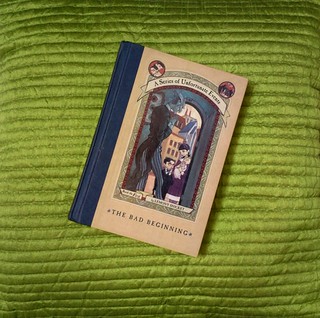

From Literary Phenomenon to Cinematic Canvas
The 2004 film 'Lemony Snicket's A Series of Unfortunate Events' represents a significant cinematic undertaking, translating Daniel Handler's critically acclaimed and commercially successful book series into a visual medium. The decision by Nickelodeon Movies in 2000 to acquire the film rights signaled the literary world's recognition of the series' potential for broader appeal. The development process was complex, marked by directorial changes, with Barry Sonnenfeld initially attached before Brad Silberling assumed control.
Robert Gordon's screenplay adaptation was crucial, tasked with condensing the intricate narratives of the first three novels-'The Bad Beginning,' 'The Reptile Room,' and 'The Wide Window'-into a cohesive cinematic experience. Handler's own involvement in the early screenplay stages ensured a degree of fidelity to the source material's unique voice. Principal photography, commencing in November 2003, utilized the controlled environments of Paramount Pictures and Downey Studios' sound stages and backlots.
This deliberate choice allowed for the meticulous construction of the film's distinctive, often claustrophobic, gothic world, emphasizing the artificiality and theatricality inherent in the Baudelaire's perpetually unfortunate circumstances.
The Theatricality of Villainy and Virtue
The casting of 'A Series of Unfortunate Events' is central to its success, featuring a blend of comedic genius and dramatic gravitas. Jim Carrey's portrayal of Count Olaf is a masterclass in performance, embodying the character's theatrical ego, desperate avarice, and menacing unpredictability. His ability to inhabit multiple disguises-from Stefano Magnifico to Captain Sham-underscores Olaf's slippery, untrustworthy nature and the film's meta-commentary on performance and deception.
Liam Aiken and Emily Browning as Klaus and Violet Baudelaire, respectively, provide the emotional anchor, conveying intelligence, resilience, and a profound sense of loss. Their performances capture the nuanced struggle of children forced into adult responsibilities. Jude Law's narration as Lemony Snicket is pivotal, serving not merely as exposition but as a philosophical counterpoint, offering wry observations on fate, misfortune, and the human condition. The ensemble, including veterans like Meryl Streep and Catherine O'Hara, adds layers of eccentric charm and gravitas, reinforcing the film's distinctive tone and thematic depth.
A Visual Symphony of Gloom and Grandeur
The film's aesthetic is arguably its most striking feature, earning it an Academy Award for Best Makeup and nominations for Best Art Direction and Best Costume Design. The production design, led by K.K. Barrett, meticulously crafts a world steeped in gothic melancholy and surrealism.
The Baudelaire mansion, with its oppressive architecture and decaying grandeur, visually represents the orphans' isolation and inherited burden. Conversely, Count Olaf's dilapidated theater and various temporary abodes reflect his chaotic and opportunistic lifestyle. The costume design by Colleen Atwood further enhances the narrative, with each character's attire communicating their personality and social standing.
The film's visual language is not merely decorative; it actively contributes to the storytelling, amplifying the sense of dread, absurdity, and the Baudelaire's persistent struggle against overwhelming odds. This commitment to a singular, evocative visual style distinguishes the film and deepens its thematic resonance.
Resilience as an Art Form
Beyond its surface-level narrative of misfortune, 'A Series of Unfortunate Events' delves into profound themes of resilience, the nature of storytelling, and the search for meaning in a seemingly chaotic world. The Baudelaire orphans' unwavering determination to survive and protect each other, despite continuous setbacks, serves as a powerful allegory for human perseverance. Their individual skills-Violet's inventive ingenuity, Klaus's intellectual prowess, and Sunny's surprising resourcefulness-highlight the importance of diverse talents and collaborative problem-solving.
The film, much like the books, challenges conventional narrative structures by embracing ambiguity and acknowledging the often-unpleasant realities of life. Lemony Snicket's role as narrator is crucial here; he is not just an observer but a commentator on the act of storytelling itself, questioning the audience's desire for happy endings. This meta-narrative invites viewers to consider how we process tragedy and find hope, making the film a thought-provoking exploration of coping mechanisms and the enduring strength of the human spirit.
Critical Reception and Legacy
Upon its release in December 2004, 'Lemony Snicket's A Series of Unfortunate Events' garnered generally positive reviews from critics. Many lauded its distinctive visual style, the evocative musical score by Thomas Newman, and the strong performances, particularly Jim Carrey's transformative role. However, some critics noted the film's somewhat somber tone, which, while faithful to the books, may have alienated audiences seeking lighter fare.
The film's length was also a point of discussion, with some feeling it was too brief to fully explore the depth of the source material. Despite these critiques, the film achieved considerable box office success, grossing $211 million worldwide. Its lasting impact lies in its unique artistic vision and its faithful, albeit condensed, adaptation of a beloved literary series.
It stands as a testament to the power of gothic storytelling and the enduring appeal of characters who face adversity with intelligence and unwavering spirit, paving the way for future adaptations and cementing its place in popular culture.
See also
Frequently Asked Questions
What is the movie 'Lemony Snicket's A Series of Unfortunate Events' about?+
Who plays Count Olaf in the film?+
Why did the movie win an Academy Award?+
How were the movie’s sets built?+
Who narrated the movie?+
Based on content from Wikipedia · Licensed under CC BY-SA 4.0