

Leif Erikson Day: The Viking Who Sailed to America!
Images
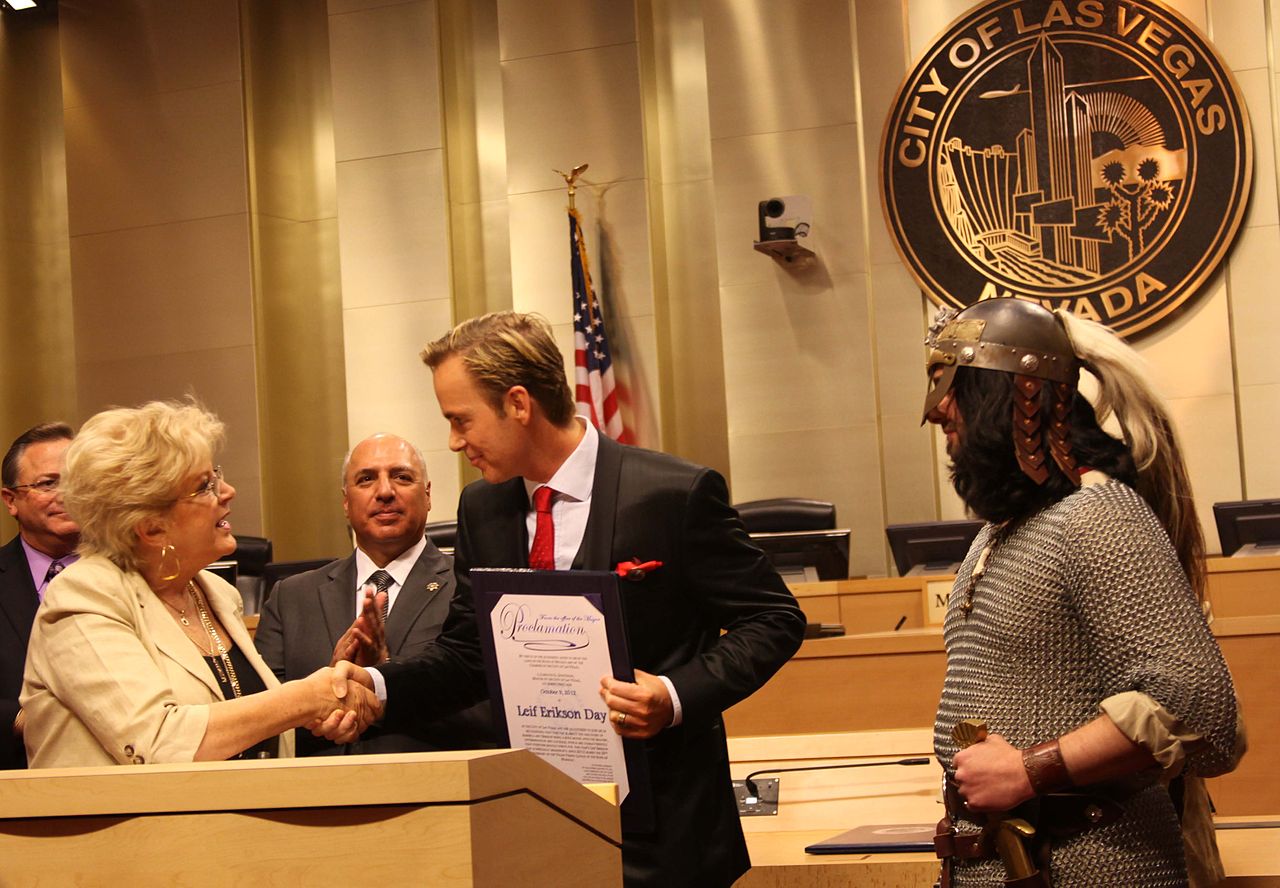
Christian-Schoyen


The Saga of Leif Erikson
Leif Erikson, son of the famed Erik the Red, was a pivotal figure in Norse exploration. Born in Iceland around 970 AD, he inherited a legacy of seafaring and settlement. Driven by accounts of lands to the west of Greenland, Leif embarked on an expedition circa 1000 AD.
His voyage was not merely an accidental discovery but a deliberate undertaking, likely fueled by the Norse tradition of seeking new territories for settlement and resources. The technological prowess of the Norse, evident in their longships, allowed them to navigate the treacherous North Atlantic. These vessels, designed for both speed and stability, were crucial for such ambitious transoceanic journeys, enabling Leif and his crew to reach shores previously unknown to the European world.
His journey represents a significant expansion of the known world for Europeans.
Vinland
Leif Erikson's landing in North America, a region he named Vinland, is a cornerstone of early transatlantic history. While the precise location remains a subject of scholarly debate, archaeological evidence at L'Anse aux Meadows in Newfoundland, Canada, strongly supports a Norse presence around the 11th century. This site, a UNESCO World Heritage site, features remains of Norse turf buildings, tools, and artifacts, providing tangible proof of their settlement.
The discovery of Vinland by Leif Erikson predates Columbus's arrival by approximately five centuries, fundamentally altering our understanding of when and by whom the Americas were first explored by Europeans. This historical precedence challenges Eurocentric narratives and underscores the advanced navigational capabilities and exploratory drive of the Norse civilization.
October 9th
The selection of October 9th for Leif Erikson Day is a deliberate act of historical commemoration with a dual purpose. While it honors Leif's pioneering voyage, the date is primarily linked to the arrival of the Norwegian vessel 'Restauration' in New York Harbor on October 9, 1825. This event marked a significant moment for Norwegian immigration to the United States, initiating a substantial wave of Scandinavian settlement.
By aligning Leif Erikson Day with this later historical event, the observance bridges ancient exploration with modern cultural connections. It serves not only to remember a historical figure but also to acknowledge the enduring ties between Nordic countries and North America, celebrating both the spirit of discovery and the ongoing contributions of immigrant communities.
Leif Erikson Day
Leif Erikson Day is more than a historical footnote; it is an essential component in re-evaluating the history of discovery. It compels us to move beyond singular narratives and embrace a more nuanced understanding of global interactions. The holiday encourages a critical examination of how history is taught and remembered, emphasizing that 'discovery' is often a matter of perspective.
By acknowledging Leif's voyages, we recognize the agency and achievements of non-European peoples in shaping the course of history. This day fosters intercultural dialogue, prompting reflection on the complex legacy of exploration, migration, and the continuous exchange of cultures that has defined the North American continent.
Broader Implications
The legacy of Leif Erikson and the Norse exploration of North America has broader implications for understanding historical patterns of migration and cultural exchange. While the Norse settlements in Vinland were not permanent in the same way as later European colonies, their presence demonstrates an early, albeit limited, interaction between European and Indigenous populations. This historical precedent is crucial for understanding the long-term dynamics of transatlantic contact.
In contemporary society, Leif Erikson Day serves as a reminder of the importance of diverse historical perspectives and the ongoing process of uncovering and reinterpreting the past. It encourages a global outlook and an appreciation for the myriad journeys that have shaped our world, fostering a deeper understanding of our shared human history.
See also
Based on content from Wikipedia · Licensed under CC BY-SA 4.0