

Las Tunas Province
Images

File:Puerto Padre (Cuban municipal map).png
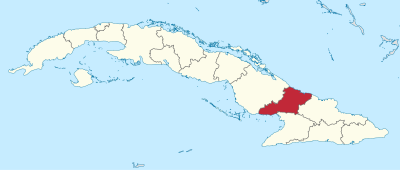


Geomorphology and Climatology
Las Tunas Province occupies a significant portion of eastern Cuba, characterized by a predominantly flat topography interspersed with low-lying hills and coastal plains. Its geological makeup is primarily composed of sedimentary rocks, contributing to fertile soils that are highly conducive to agriculture. The province experiences a tropical savanna climate, marked by distinct wet and dry seasons. Average temperatures remain high throughout the year, with rainfall concentrated primarily between May and October.
This climatic pattern significantly influences the province's natural vegetation, which consists mainly of grasslands and scattered woodlands, and dictates the agricultural calendar. The extensive coastline along the northern edge, facing the Atlantic Ocean, also plays a role in moderating temperatures and influencing local weather phenomena. The province's geographical position makes it a key agricultural region within Cuba, leveraging its climate and soil resources for production.
Historical Trajectory
The historical narrative of Las Tunas Province is deeply intertwined with Cuba's broader colonial and post-colonial history. Initially inhabited by indigenous Taíno people, the region later became a strategic area during the Spanish colonial era, primarily for its agricultural potential and later for its role in Cuba's independence struggles. The capital city, Las Tunas, carries a historical legacy; its former name, Victoria de Las Tunas, signifies a pivotal moment, likely a military victory during the wars of independence against Spanish rule.
Throughout the 19th and 20th centuries, the province's development was heavily influenced by the sugar industry and cattle ranching, shaping its demographic patterns and economic structure. The establishment of Puerto Padre as a significant port further contributed to its economic and social development, facilitating trade and communication. The province's evolution reflects Cuba's national journey towards sovereignty and modernization.
Cultural Synthesis and Societal Fabric of Las Tunas
The cultural landscape of Las Tunas Province is a vibrant testament to Cuba's syncretic heritage, blending Spanish colonial influences with African traditions and indigenous roots. Spanish is the official and predominant language, serving as the primary medium of communication and cultural expression. Societal life is deeply communal, with strong emphasis placed on family ties and collective activities. Music and dance are not merely forms of entertainment but are integral to social cohesion and identity, with genres like son cubano, salsa, and rumba being popular.
Traditional festivals, religious observances, and local celebrations play a crucial role in reinforcing community bonds and preserving cultural heritage. The people of Las Tunas are often characterized by their resilience, warmth, and deep connection to their land and traditions, contributing to a distinct provincial identity within the Cuban mosaic.
Economic Pillars
The economy of Las Tunas Province is predominantly agrarian, capitalizing on its favorable climate and fertile soils. Historically, sugarcane cultivation has been a cornerstone of its agricultural output, alongside extensive cattle ranching. These primary sectors not only provide raw materials for domestic consumption and export but also support related industries such as food processing and livestock management.
Beyond agriculture, the province has developed some industrial capacity, including manufacturing and the production of construction materials. The urban centers, particularly the capital city Las Tunas and Puerto Padre, function as hubs for commerce, services, and distribution, connecting the province's economic activities to national and international markets. The provincial government actively seeks to diversify the economy, promote efficiency in its traditional sectors, and attract investment to foster sustainable development and employment opportunities.
Governance and Educational Frameworks in Las Tunas
Las Tunas Province operates within Cuba's socialist political system, governed by a provincial People's Power Assembly, which is the highest local organ of state power. This assembly is responsible for overseeing economic, social, and cultural development within the province, implementing national policies, and addressing local needs. The provincial government is tasked with managing public services, infrastructure, and resource allocation. Education is a fundamental priority in Las Tunas, as it is across Cuba.
The province provides a comprehensive, state-funded education system accessible to all citizens, from early childhood education through higher learning. This includes primary, secondary, and vocational training institutions, as well as university-level education. The educational curriculum emphasizes not only academic achievement but also civic values, technical skills, and a strong sense of national identity, aiming to equip its population for active participation in the province's and the nation's development.
See also
Frequently Asked Questions
What is Las Tunas Province like?+
Why is the climate in Las Tunas special?+
How does Las Tunas help Cuba's food?+
What is the capital city of Las Tunas Province?+
What kinds of music do people in Las Tunas enjoy?+
Based on content from Wikipedia · Licensed under CC BY-SA 4.0