

Lao language
Images

Chiang Rai, Akha woman




Phonetic Tapestry
Lao, officially known as 'Phasa Lao,' is the national language of Laos and a prominent language in the Isan region of northeastern Thailand, where it is often referred to as Isan. With a total speaker base exceeding 6.7 million, it serves as a crucial linguistic and cultural anchor. A defining characteristic of Lao is its tonal nature.
As a tonal language, the pitch contour applied to a syllable fundamentally alters its lexical meaning, a feature shared with many other Kra-Dai languages. This requires speakers to master precise intonation, transforming simple utterances into distinct words. For instance, a word pronounced with a rising tone will have a different meaning than the same word spoken with a falling tone.
Complementing its tonal system, Lao is also an analytic language. This means grammatical relationships and sentence structure are primarily conveyed through word order and the use of auxiliary words, rather than through inflectional morphology (changing word endings). This contrasts sharply with highly inflected languages and aligns it with other East and Southeast Asian languages, including its close relatives in the Tai family and even some Sino-Tibetan and Austroasiatic languages, suggesting fascinating linguistic convergence.
Historical Roots and Script Evolution
The historical trajectory of the Lao language is deeply intertwined with the migration and cultural development of the Tai peoples. The Lao script, an abugida, is a direct descendant of ancient Tai scripts, which themselves were influenced by Indic scripts. This evolution reflects centuries of cultural exchange and adaptation across Southeast Asia.
The script’s development is a testament to the enduring legacy of early writing systems and their ability to be modified to suit new linguistic contexts. As a Southwestern Tai language, Lao shares a common ancestor with languages like Thai and Shan. This shared heritage results in a significant degree of mutual intelligibility among speakers of these languages, facilitating communication and cultural understanding across regional and national boundaries.
Despite script differences, the core vocabulary and grammatical structures often allow for a degree of comprehension, fostering a sense of shared linguistic space.
Linguistic Hegemony and Cultural Preservation
In Laos, Lao functions not only as the official language but also as a vital lingua franca, bridging the diverse linguistic landscape of the nation. While numerous minority languages are spoken, Lao provides a common platform for national unity, governance, and commerce. Its cultural significance is profound, permeating Laotian literature, media, music, and traditional arts.
The Vientiane dialect is widely recognized as the de facto standard, serving as the basis for formal communication and media, although an officially codified standard remains elusive. This organic standardization highlights the language's dynamic evolution within its speech community. The preservation and promotion of Lao are critical for maintaining national identity and cultural continuity in the face of globalization and external influences.
Global Diasporic Presence and Linguistic Continuity
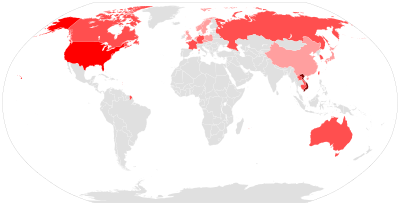
The Lao language has transcended its geographical origins, establishing a significant presence in diaspora communities worldwide. Large Lao-speaking populations can be found in countries such as the United States, France, Canada, and Australia, where migrants have established communities and strived to maintain their linguistic heritage. These diaspora communities play a crucial role in the ongoing vitality of the Lao language, often establishing community schools, cultural centers, and media outlets to pass the language and traditions to younger generations.
The challenges faced by these communities include language shift due to assimilation pressures and the need for resources to support language maintenance. Nevertheless, the continued use of Lao abroad underscores its importance as a marker of identity and a connection to ancestral roots for millions of people globally.
Comparative Linguistics and Language Contact
Lao's linguistic profile offers a rich ground for comparative studies. Its tonal and analytic characteristics place it within the broader context of East and Southeast Asian languages, inviting comparisons with languages from the Sino-Tibetan family (like Mandarin Chinese) and the Austroasiatic family (like Vietnamese). The degree of mutual intelligibility with closely related Southwestern Tai languages, particularly Thai and Isan, is a key area of interest, highlighting patterns of linguistic divergence and convergence.
Understanding these relationships helps linguists map language families and trace historical migrations. Furthermore, the influence of historical contact with other languages, such as Pali and Sanskrit through Buddhism, has also shaped Lao vocabulary and cultural expressions, adding another layer of complexity to its study.
See also
Frequently Asked Questions
What is the Lao language?+
Why does Lao sound musical?+
How does Lao grammar work?+
Where is Lao spoken?+
What makes the Lao script special?+
Based on content from Wikipedia · Licensed under CC BY-SA 4.0