

Lake stratification
Images
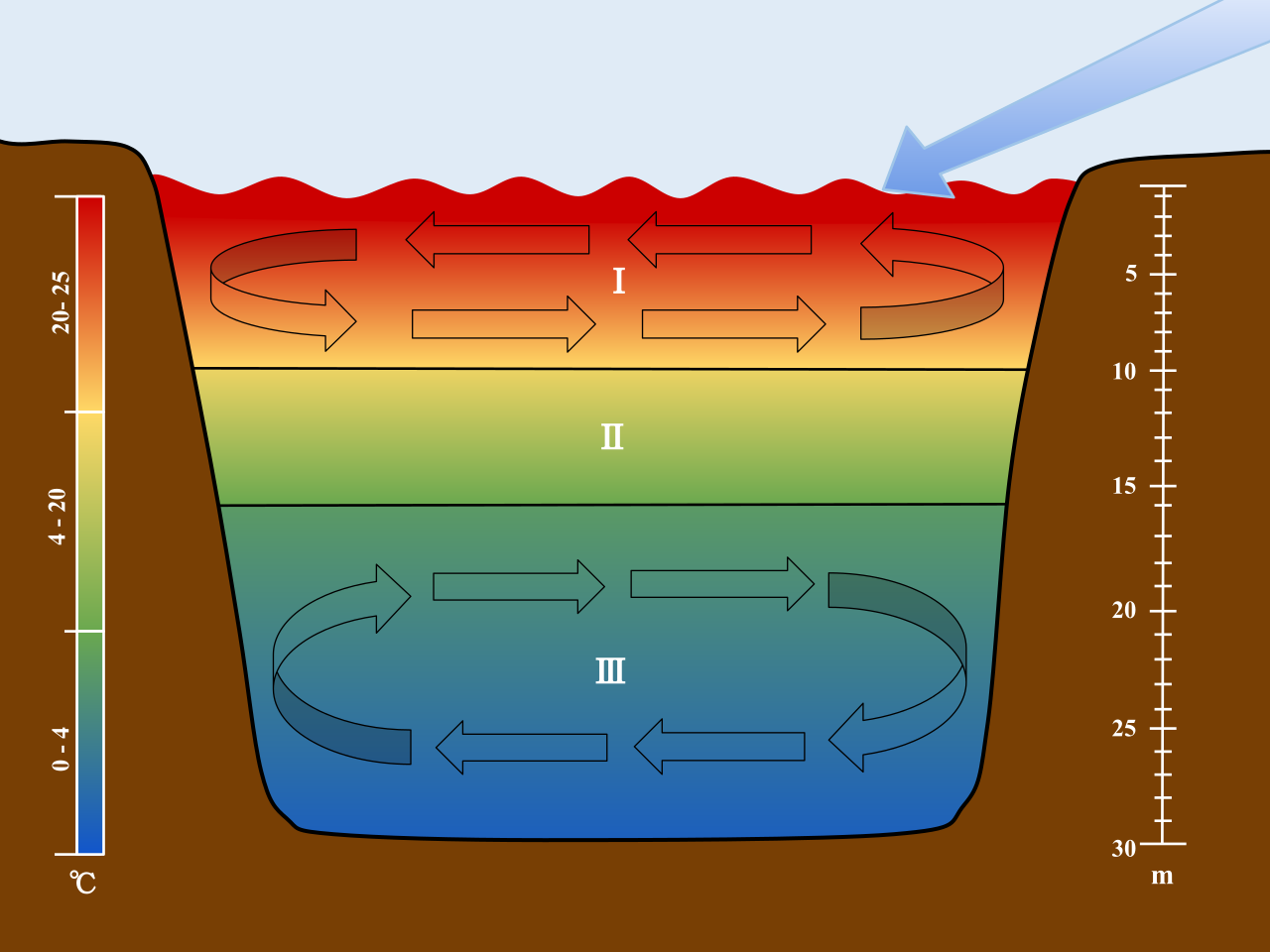
Lake Stratification (11)


The Physics of Density
Lake stratification is fundamentally a consequence of water's unique density properties, primarily influenced by temperature. Water reaches its maximum density at approximately 4 degrees Celsius (39.2 degrees Fahrenheit). In temperate climates, during summer, solar radiation heats the surface waters, creating a warm, less dense epilimnion.
This layer floats atop the cooler, denser hypolimnion. The transition zone between these two layers is the thermocline, characterized by a rapid decrease in temperature with depth. The stability of this stratification is quantified by the Schmidt stability index, which measures the work required to mix the water column.
Factors like wind fetch, lake depth, and basin shape influence the strength and duration of stratification. In winter, a reverse stratification can occur if the lake freezes, with the densest water (4°C) at the bottom and colder water (0-4°C) above, capped by ice. This density-driven layering profoundly impacts light penetration, oxygen distribution, and nutrient cycling within the lake.
Ecological Ramifications
Stratification creates distinct ecological niches within a lake, dictating the distribution and abundance of aquatic life. The epilimnion, rich in sunlight and dissolved oxygen, supports high primary productivity by phytoplankton and zooplankton. However, it can also experience significant temperature fluctuations and nutrient depletion.
The hypolimnion, conversely, is characterized by low temperatures, limited light, and often depleted oxygen due to decomposition processes consuming organic matter sinking from above. This anoxic or hypoxic environment restricts the types of organisms that can survive there, favoring specialized bacteria and invertebrates. The thermocline acts as a significant barrier to vertical migration for many species, influencing feeding patterns and predator-prey dynamics.
Seasonal turnover events are critical for re-oxygenating the hypolimnion and redistributing essential nutrients, thereby resetting the lake's productivity cycle and supporting a broader range of life.
Seasonal Dynamics
The annual cycle of stratification and mixing, known as turnover, is a defining characteristic of many lakes. In spring, as ice melts and surface waters warm, they eventually reach 4°C. This allows the entire water column to mix, a process termed spring turnover.
This event is crucial for replenishing oxygen in the deep waters and bringing nutrients from the sediment surface to the sunlit epilimnion, often triggering a spring algal bloom. Summer stratification then establishes, creating the distinct layers. As autumn progresses, surface waters cool, increasing their density and leading to fall turnover.
This mixing further distributes oxygen and nutrients, preparing the lake for winter. The timing, intensity, and duration of stratification and turnover are influenced by regional climate, latitude, and lake morphology. Changes in these climatic patterns, such as warming temperatures, can alter stratification regimes, impacting lake ecosystems.
Human Impacts and Future Considerations
Human activities can significantly alter natural lake stratification patterns. Eutrophication, the excessive enrichment of a lake with nutrients (often from agricultural runoff or sewage), can lead to more intense and prolonged stratification. This increased nutrient load fuels algal blooms, and their subsequent decomposition consumes large amounts of oxygen in the hypolimnion, exacerbating hypoxia and creating 'dead zones'. Climate change is also a major concern, with rising global temperatures predicted to increase water temperatures, strengthen stratification, and potentially reduce the frequency or duration of turnover in some regions.
This can lead to decreased habitat availability for cold-water species, altered food webs, and changes in water quality. Understanding lake stratification is therefore vital for effective water resource management, conservation efforts, and predicting the ecological consequences of environmental change.
See also
Frequently Asked Questions
What is lake stratification?+
Why does the top layer of a lake get warmer than the bottom?+
How does lake stratification affect fish and plants?+
What is a turnover and why is it important?+
How can human activities change lake stratification?+
Based on content from Wikipedia · Licensed under CC BY-SA 4.0