

Lake Baikal
Images
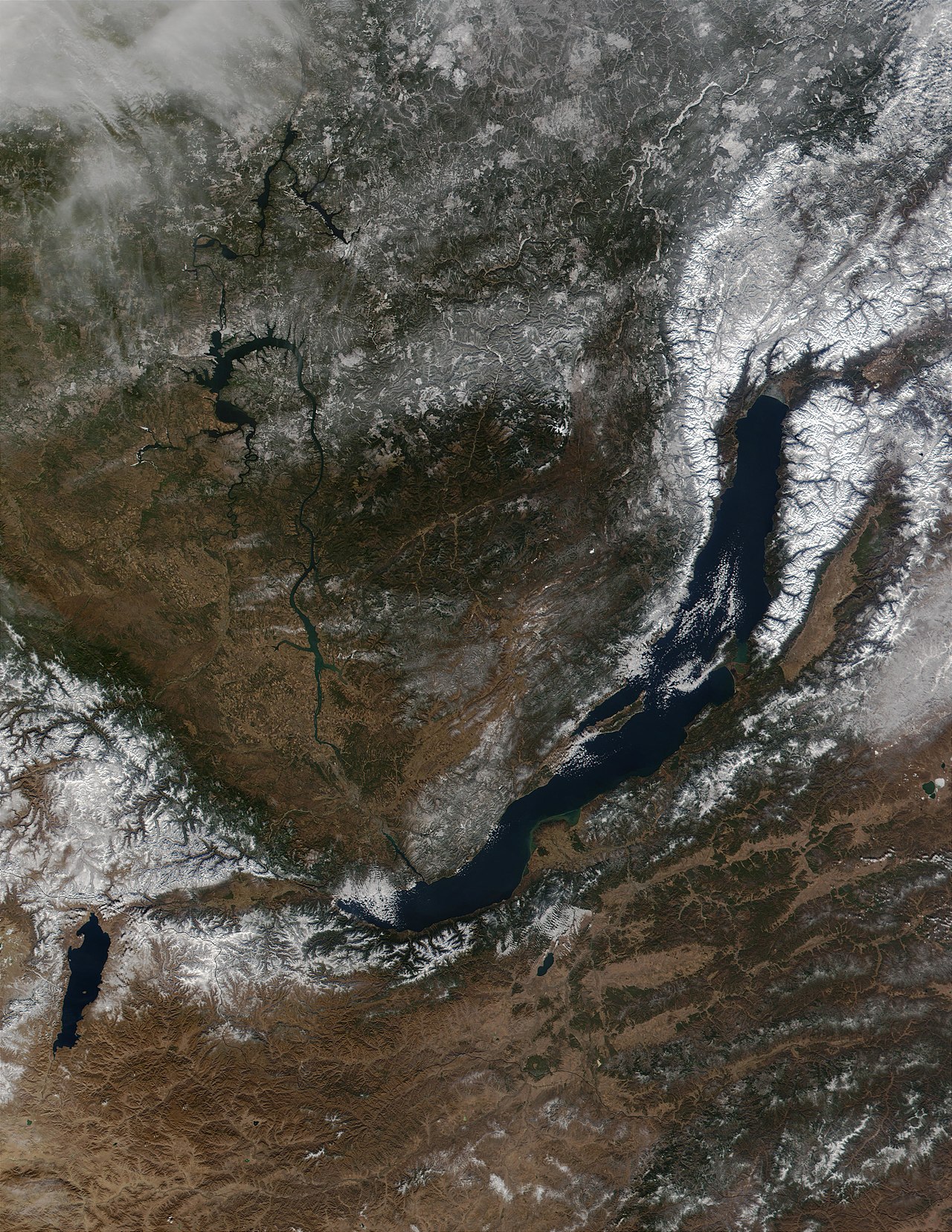
Lake Baikal
Tectonic Origins and Hydrological Significance
Lake Baikal's existence is a testament to powerful geological forces. Situated in southern Siberia, it is the world's deepest continental rift lake, formed approximately 25 to 30 million years ago within the Baikal Rift Zone. This tectonic activity continues, with the lake basin widening by about 2 cm per year.
Its immense depth, reaching a maximum of 1,642 meters (5,387 feet), is unparalleled among freshwater bodies. This depth, combined with its vast surface area of 31,722 km², results in an extraordinary volume of freshwater: 23,615.39 km³. This constitutes about 22-23% of the planet's unfrozen surface freshwater, a critical global resource.
The lake's water is also characterized by its exceptional clarity, with visibility often exceeding 40 meters, due to low levels of dissolved minerals and organic matter, and the action of endemic microorganisms that filter the water.
An Evolutionary Crucible
As the world's oldest lake, Baikal has served as a refuge and evolutionary incubator for millions of years. Its long, stable history, isolated from major glacial events that affected other large lakes, has allowed for the development of a unique and highly endemic biota. Scientists estimate that around 80% of the approximately 1,700 known species inhabiting Baikal are endemic, meaning they exist nowhere else on Earth.
This includes iconic species like the Baikal seal (Pusa sibirica), the only pinniped species to be exclusively freshwater-dwelling. The lake also supports a rich diversity of fish, including numerous species of the endemic Comephorus (golomyanka) and various Cottus (sculpins), as well as a vast array of invertebrates, such as amphipods and sponges. This extraordinary biodiversity makes Baikal a crucial site for understanding evolutionary processes and ecological adaptation.
Climate, Environment, and Human Interaction
The climate surrounding Lake Baikal is continental, marked by extreme temperature variations. Winters are severe, with average January temperatures around -19°C (-2°F), and the lake's surface typically freezes over, forming a thick ice layer. Summers are relatively short and mild, with average July temperatures reaching up to 14°C (57°F).
The region experiences distinct seasons, influencing the local flora and fauna. Historically, the area has been inhabited by various indigenous peoples, including the Buryats, who have developed distinct cultural traditions and livelihoods closely tied to the lake and its surrounding steppes and forests. Their traditional practices, such as nomadic herding, have shaped the landscape over centuries.
The designation of Lake Baikal as a UNESCO World Heritage Site in 1996 underscores its global ecological and cultural significance, necessitating careful management and conservation efforts.
Conservation Challenges and Global Relevance
Despite its protected status, Lake Baikal faces numerous environmental challenges. Industrial pollution from sources like the Baikal Pulp and Paper Mill (though now closed, legacy issues remain), agricultural runoff, and increased tourism can impact water quality and biodiversity. Invasive species, potentially introduced through shipping, also pose a threat to the endemic ecosystem. The lake's role as a massive reservoir of clean freshwater makes its conservation a matter of global importance, especially in the context of increasing water scarcity worldwide.
Ongoing scientific research continues to monitor the lake's health, study its unique ecosystems, and inform conservation strategies to protect this irreplaceable natural wonder for future generations.
Go deeper
Frequently Asked Questions
What makes Lake Baikal special?+
How old is Lake Baikal?+
Why is the water in Lake Baikal so clear?+
What animals live only in Lake Baikal?+
What problems threaten Lake Baikal?+
Based on content from Wikipedia · Licensed under CC BY-SA 4.0