

The Kármán Line: Earth's Awesome Space Border!
Images

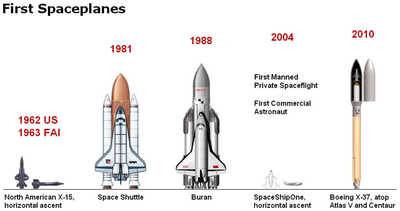
The World's First Five Spaceplanes


The 100-Kilometer Threshold
The Kármán line, established at an altitude of 100 kilometers (62 miles) above mean sea level, represents the widely accepted, albeit conventional, demarcation between Earth's atmosphere and outer space. This definition, primarily adopted by the Fédération aéronautique internationale (FAI), serves as a crucial reference point for international record-keeping and regulatory frameworks concerning aeronautics and astronautics.
It is important to note that this line does not possess inherent physical significance; rather, it is a consensus-based boundary. The transition from a dense atmosphere to the near-vacuum of space is a gradual process, and experts may disagree on a precise, universally applicable physical boundary. Nonetheless, the 100 km mark provides a practical and internationally recognized standard for differentiating between atmospheric flight and spaceflight, a distinction with profound legal and operational implications.
From Aerodynamic Limits to International Standards
The concept of an upper limit for atmospheric flight was first explored by Theodore von Kármán, a Hungarian-American physicist and aerospace engineer. In the mid-20th century, von Kármán theoretically calculated that at an altitude of approximately 83.8 kilometers (52.1 miles), the atmosphere would become too thin for conventional aircraft wings to generate sufficient lift, a concept rooted in the principles of aerodynamics. While von Kármán's work laid the scientific groundwork, the formalization of the Kármán line at 100 kilometers occurred in the 1960s through the FAI.
This international body, responsible for setting standards in air sports and aeronautical records, adopted this altitude as the boundary for spaceflight. This standardization was essential for establishing consistent criteria for recognizing spaceflights and for developing international agreements governing activities in near-Earth space.
Legal and Regulatory Significance
The Kármán line plays a pivotal role in the legal and regulatory landscape of international space law, even though no single international treaty definitively defines the edge of space or national airspace. Its primary utility lies in differentiating between aircraft and spacecraft. Aircraft operate within national airspace and are subject to national aviation laws, while spacecraft are considered to be operating in outer space, governed by international space law principles.
Most international organizations, including the United Nations, recognize the FAI's definition or a closely related altitude. This distinction is critical for issues such as sovereignty, liability for space objects, and the allocation of radio frequencies. The acceptance of the Kármán line provides a foundational element for managing human activities in the increasingly crowded domain above our planet.
The Physics of Transition
The Kármán line signifies a critical shift in the physical environment encountered by vehicles. Below this altitude, atmospheric density is sufficient for aerodynamic forces to be significant. Airplanes rely on lift generated by their wings moving through this air.
However, as altitude increases, atmospheric density decreases exponentially. At the Kármán line, the air is so rarefied that aerodynamic lift becomes negligible. This is why rockets, which generate thrust by expelling propellant, are necessary for reaching and operating in space.
Furthermore, the Kármán line is a relevant altitude for orbital mechanics. Satellites orbiting at or below this altitude experience significant atmospheric drag, causing their orbits to decay over time, eventually leading to re-entry into the atmosphere. Even satellites in highly elliptical orbits will experience increased drag if their trajectory dips below this 100 km mark.
Beyond the Line
The Kármán line is more than just a theoretical concept; it is the gateway to space exploration and the burgeoning space industry. It is the altitude that astronauts and space tourists must cross to be considered in space. Companies developing suborbital and orbital spaceflight capabilities, such as Virgin Galactic and Blue Origin, often reference the Kármán line in their mission profiles.
For suborbital flights, crossing the Kármán line is a key objective, offering a brief experience of weightlessness and views of Earth's curvature. As space becomes more accessible, the definition and implications of the Kármán line will continue to be debated and refined, influencing everything from national security to commercial space ventures and the future of humanity's presence beyond Earth.
See also
Frequently Asked Questions
What is the Kármán line?+
Why is the Kármán line set at 100 kilometers?+
Who decided that 100 kilometers is the border of space?+
What changes when you cross the Kármán line?+
Is the Kármán line a real physical border in the sky?+
Based on content from Wikipedia · Licensed under CC BY-SA 4.0