

The Giant Knesset Menorah
Images
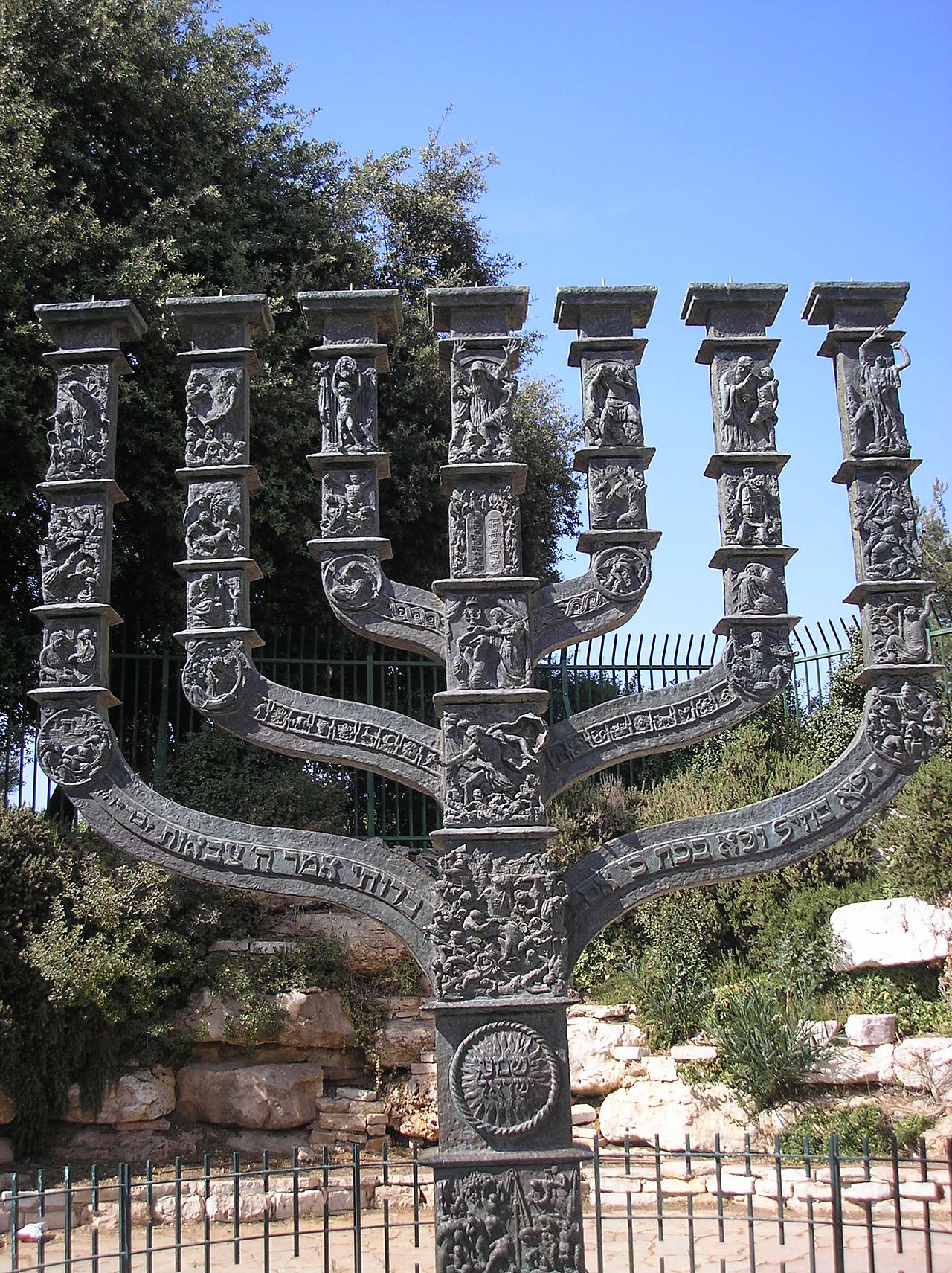
Knesset Menorah P5200005


A Sculptural Chronicle of Resilience
The Knesset Menorah is a monumental bronze sculpture, standing at 4.30 meters high and 3.5 meters wide, with a substantial weight of 4 tons. Its sheer scale is impressive, dwarfing onlookers and commanding attention in its prominent location at the edge of Wohl Rose Park, directly opposite the Knesset building in Jerusalem. Designed by the émigré Jewish sculptor Benno Elkan, who fled Nazi Germany, the menorah was presented as a gift from the British Parliament to the Knesset on April 15, 1956.
This gesture marked the eighth anniversary of Israeli independence, symbolizing a significant diplomatic and cultural exchange, and acknowledging the shared historical narrative that connects Britain and Israel. The choice of bronze, a durable and noble material, further emphasizes the enduring nature of the stories it represents.
Visualizing the Diaspora and Return
The artistic genius of Benno Elkan is profoundly evident in the Knesset Menorah's intricate design, which functions as a visual textbook of Jewish history. The menorah is adorned with a series of detailed bronze reliefs, each telling a part of the complex saga of the Jewish people. The six outer branches are dedicated to depicting the struggles for survival and the experiences of the Jewish diaspora.
These panels illustrate formative events, biblical narratives, and key concepts that have shaped Jewish identity throughout centuries of exile and persecution. They serve as a powerful reminder of the resilience and unwavering spirit of a people dispersed across the globe, yet deeply connected to their heritage.
The Central Narrative
The central branch of the Knesset Menorah is particularly significant, as it encapsulates the overarching narrative of return and national rebirth. Its reliefs trace the historical arc from the ancient biblical aspirations of returning to the Land of Israel to the monumental achievement of establishing the modern State of Israel in 1948. This section visually articulates the deep-seated yearning for sovereignty, the challenges of aliyah (immigration), and the arduous process of nation-building.
It transforms abstract historical concepts into tangible, evocative imagery, allowing viewers to connect with the profound historical journey that led to the creation of a Jewish homeland.
Symbolism, Memory, and Contemporary Relevance
Beyond its historical narrative, the Knesset Menorah serves as a potent symbol of remembrance, continuity, and national identity. It stands as a tangible link between the ancient past and the present, honoring the sacrifices and perseverance of generations. For Israelis and visitors alike, it is a focal point for reflection on the historical forces that have shaped the nation and its people.
In a contemporary context, the menorah continues to resonate, reminding observers of the ongoing importance of safeguarding heritage, cherishing independence, and understanding the profound historical underpinnings of the State of Israel. It is a testament to the enduring power of art to convey complex historical narratives and foster a sense of collective memory.
See also
Frequently Asked Questions
What is the Giant Knesset Menorah?+
How tall and heavy is the Knesset Menorah?+
Who made the Knesset Menorah and why is it special?+
What stories are shown on the menorah?+
Where can I see the Knesset Menorah?+
Based on content from Wikipedia · Licensed under CC BY-SA 4.0