

Kitfo
Images

kitfo


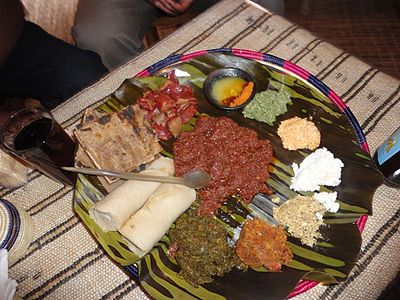
The Art of Preparation
Kitfo stands as a testament to the nuanced flavors and culinary traditions of Ethiopia, particularly its origins within the Gurage community. The dish's foundation is high-quality beef, meticulously minced to achieve a fine texture. This raw preparation is central to its identity, though a lightly cooked variant, known as 'kitfo leb leb,' exists for those who prefer it.
The magic truly happens with the marination. Mitmita, a complex spice blend typically featuring chili peppers, cardamom, cloves, and salt, provides a pungent heat and aromatic depth. Complementing this is niter kibbeh, a clarified butter that has been slow-simmered with a variety of herbs and spices such as fenugreek, cumin, coriander, and garlic.
This infusion process imbues the butter with a rich, savory, and fragrant profile. The precise balance of these elements-the freshness of the beef, the fiery kick of mitmita, and the aromatic complexity of niter kibbeh-creates a dish that is both intensely flavorful and deeply satisfying. The term 'kitfo' itself, derived from the Ethio-Semitic root 'k-t-f,' meaning 'to chop finely,' underscores the importance of the meticulous preparation of the meat.
Cultural Tapestry
The genesis of Kitfo is intrinsically linked to the Gurage people, an ethnic group in Ethiopia renowned for their distinct cultural practices and agricultural ingenuity. While the exact historical timeline is not precisely documented, Kitfo emerged as a significant dish within their traditional cuisine. It reflects a deep understanding of local ingredients and a culinary heritage that values bold flavors and communal eating.
The Gurage people traditionally consumed Kitfo, and its spread throughout Ethiopia speaks to its widespread appeal and the cultural exchange between different communities. The dish is not merely sustenance; it embodies a part of their identity and history. Its recognition and adoption by other Ethiopian groups highlight how culinary traditions can transcend ethnic boundaries, becoming national treasures.
The preparation and consumption of Kitfo are often steeped in ritual and social custom, reinforcing its importance beyond its gustatory qualities.
A Feast for the Senses
In Ethiopian culture, food serves as a powerful medium for social cohesion and the celebration of significant events. Kitfo occupies a distinguished position within this framework, typically reserved for special occasions rather than daily consumption. Its presence elevates gatherings, signaling festivity, generosity, and communal joy.
Holidays such as Meskel, a major Christian festival celebrated on September 27th, often feature Kitfo as a celebratory dish. This association with important religious and cultural observances imbues Kitfo with a profound significance. It is a dish that brings people together, fostering bonds and shared memories.
The act of preparing and sharing Kitfo during these times reinforces cultural continuity and strengthens community ties. Its status as a celebratory food underscores its perceived value and the respect accorded to it within Ethiopian society.
Harmonious Pairings
The presentation and consumption of Kitfo are enhanced by carefully selected accompaniments that create a balanced and complete culinary experience. The quintessential partner to Kitfo is injera, the ubiquitous Ethiopian sourdough flatbread made from teff. Injera's porous, absorbent texture is ideal for sopping up the rich, spiced juices of the Kitfo, while its characteristic tanginess provides a refreshing counterpoint to the dish's intensity.
Beyond injera, Kitfo is frequently served with ayibe, a soft, fresh, and mild cottage cheese. Ayibe acts as a palate cleanser, tempering the heat of the mitmita and the richness of the niter kibbeh. Another common accompaniment is gomen, a preparation of cooked greens, often collard greens, seasoned with garlic and other spices, adding a healthy, earthy dimension.
For a more authentic Gurage presentation, Kitfo might be served with kocho, a dense, unleavened bread derived from the ensete plant, sometimes garnished with an ensete leaf, offering a unique regional variation that speaks to the diversity within Ethiopian cuisine.
Beyond the Plate
Kitfo's enduring appeal lies in its bold flavors, unique preparation, and deep cultural roots. While traditionally prepared with raw beef, its adaptation to 'kitfo leb leb' demonstrates culinary flexibility and an ability to cater to broader palates. The dish has gained international recognition, appearing on menus in Ethiopian restaurants worldwide, allowing global audiences to experience this authentic taste of Ethiopia.
Its significance extends beyond mere culinary enjoyment; it represents a connection to heritage, a celebration of community, and a testament to the richness of Ethiopian gastronomy. In a modern context, Kitfo continues to be a symbol of cultural pride and a dish that sparks conversation about food traditions, ethical sourcing of ingredients, and the art of spice blending. Its continued popularity ensures that this traditional dish remains a vibrant and relevant part of Ethiopia's culinary landscape.
See also
Frequently Asked Questions
What is Kitfo?+
Why do people use spices like mitmita in Kitfo?+
How is Kitfo prepared?+
Where does Kitfo come from?+
When do people eat Kitfo?+
Based on content from Wikipedia · Licensed under CC BY-SA 4.0