

Kingdom of León
Images

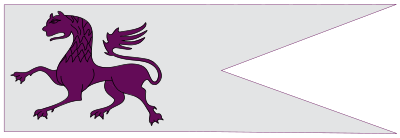
'Coats of Arms' bracelet (Coats of Arms for Kingdom of León, & Salamanca)




Genesis and Consolidation
The Kingdom of León emerged in 910 AD as a deliberate act of political consolidation by the Christian princes of Asturias. This shift of capital from Oviedo to León was more than a geographical relocation; it represented a strategic reorientation aimed at strengthening their position against the expanding Umayyad Caliphate of Córdoba and consolidating power within the Christian north.
The foundation is often attributed to the division of Alfonso III of Asturias's kingdom among his three sons: García, Ordoño II, and Fruela II. García is recognized as the first monarch to officially reign from León, but the subsequent reigns were characterized by intense rivalry and conflict among these brothers and their descendants. This initial fragmentation and the ensuing civil wars over succession, such as the one following Ordoño II's death which saw his brother Fruela II briefly ascend, underscore the precarious nature of early medieval state-building.
The establishment of León as a royal seat signaled an ambition to create a more centralized and powerful entity, capable of projecting authority and defending its nascent Christian identity in a contested landscape.
Dynastic Strife and the Fragility of Royal Power
The history of the Kingdom of León is replete with examples of dynastic instability and the constant struggle for royal authority. The succession of kings was rarely smooth, often involving fratricidal conflict and usurpation. Following García's death in 914, Ordoño II united León and Galicia, but his reign was marked by military campaigns and internal dissent.
His death in 924 led to a period of intense civil war, culminating in Fruela II's brief reign and subsequent death from leprosy. Alfonso IV, Ordoño II's son, eventually seized power, only to be deposed and later imprisoned by his own brother, Ramiro II, in 932. Ramiro II's reign, though strong, was followed by further complications.
His elder son, Ordoño III, died prematurely, leading to the ascension of his half-brother, Sancho I 'The Fat,' whose legitimacy was challenged. The challenges extended to the next generation, with Sancho's son Ramiro born in 961, becoming king at a very young age under the regency of his mother Teresa Ansúrez and aunt Elvira Ramírez. This pattern of minority regencies and contested successions highlights the persistent vulnerability of the Leonese monarchy to internal factions and external pressures, shaping its political trajectory and its interactions with neighboring powers.
The Crucible of Conflict
The Kingdom of León existed in a state of perpetual tension, defined by its strategic position on the frontiers of Christendom and Islamic rule in Iberia. From the south, the formidable military power of the Umayyad Caliphate and later successor taifa kingdoms posed a constant existential threat. The Leonese monarchy engaged in continuous warfare, both defensive and offensive, against these forces.
Simultaneously, the kingdom faced incursions from the north, most notably from Viking raiders. The raid led by Gunrod in 968, which saw him establish a base in Galicia for eighteen months, exemplifies the disruptive potential of these Norse expeditions. The destruction of Santiago de Compostela by Norman Vikings in 1008 further illustrates the vulnerability of the northern Christian kingdoms.
Intriguingly, these Christian kingdoms often employed Vikings as mercenaries in their own internecine conflicts, revealing a complex web of alliances and rivalries. Beyond defense, León actively pursued territorial expansion, particularly southwards into the region known as 'Extremadura Leonesa.' This expansion was often facilitated by the establishment of military orders, which played a crucial role in settling and defending these newly acquired frontiers, pushing the boundaries of Christian control further into the peninsula.
Sovereignty and Union
The Kingdom of León's trajectory was significantly influenced by the emergence of new political entities and its evolving relationship with its neighbors. The County of Portugal, initially a vassal territory, gradually asserted its independence, culminating in its recognition as the Kingdom of Portugal in 1139 under Afonso I. This marked a significant loss of territory and influence for León.
Conversely, León's relationship with the County of Castile evolved from rivalry to a complex interdependence. The County of Castile had initially split off from León in 931, but over time, dynastic marriages and political necessity led to periods of union. Most notably, from the 1230s onwards, the Kingdom of León entered into a personal union with the Kingdom of Castile, forming a formidable power bloc.
While this union was sometimes contested, as seen in the brief period of dispute from 1296 to 1300, it fundamentally altered the political landscape of Iberia. León retained its distinct identity as a constituent realm within the Crown of Castile and later the unified Spanish Crown, a status it maintained until the administrative reforms of 1833. This enduring legacy highlights León's critical role not just as an independent kingdom, but as a foundational element in the formation of modern Spain.
The Enduring Echoes of León
The Kingdom of León's significance extends beyond its military and political history; it played a vital role in the cultural and linguistic development of the Iberian Peninsula. As a center of Christian resistance and statehood, it fostered a distinct cultural identity that contributed to the broader Hispano-Christian culture. The city of León itself became a significant ecclesiastical and royal center, influencing art, architecture, and legal traditions.
The kingdom's legal codes and administrative practices, developed over centuries of governance, provided a framework for subsequent political structures. Furthermore, the Leonese dialect and its literary output contributed to the rich tapestry of Romance languages evolving in the peninsula. The eventual integration into the larger Spanish state did not erase this distinct heritage.
The memory of León as a historical kingdom continues to resonate in regional identities and historical narratives within modern Spain. Its long struggle for survival, its internal complexities, and its eventual incorporation into a larger unified monarchy offer profound insights into the processes of state formation, cultural synthesis, and the enduring quest for identity in medieval and early modern Europe.
See also
Based on content from Wikipedia · Licensed under CC BY-SA 4.0