

Kamakura Period: When Samurai Ruled Japan!
Images

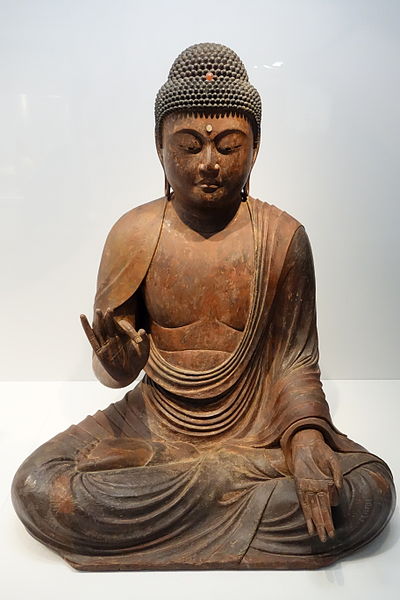
Bodhisattva, Kamakura period, Japan



The Genesis of Warrior Hegemony
The Kamakura period represents a watershed moment in Japanese history, marking the definitive rise of the samurai class to political and military dominance. Emerging from the ashes of the Genpei War (1180–1185), a brutal conflict between the Taira and Minamoto clans, Minamoto no Yoritomo strategically consolidated power. While the official establishment of the Kamakura Shogunate is often cited as 1192, when Yoritomo received the title of Seii Taishōgun, many historians argue that the true foundation was laid in 1185.
This was the year Yoritomo established the shugo (military governors) and jitō (land stewards), effectively creating a parallel administrative structure that superseded imperial authority. This marked the formal inception of Japan's feudal system, where loyalty and military service formed the bedrock of governance, fundamentally altering the socio-political landscape and diminishing the emperor's direct power to a symbolic role.
Shifting Power Dynamics and the Hōjō Regency
The early years of the Kamakura Shogunate were characterized by the consolidation of Minamoto power, including the subjugation of the Northern Fujiwara in 1189. However, internal power struggles soon led to a significant transfer of authority. By the early 13th century, the formidable Hōjō clan had effectively seized control, with the head of the clan serving as Shikken (Regent).
Under this arrangement, the shogun became a largely ceremonial figurehead, while the Hōjō clan wielded the real executive power. This period of Hōjō dominance was marked by significant administrative reforms and the codification of laws, aiming to stabilize the burgeoning feudal state and manage its complex internal relationships. The Hōjō regency demonstrated a capacity for collective leadership and judicial innovation, laying groundwork for future governance structures.
The Mongol Storms
The Kamakura period faced its most severe external threat with the two massive Mongol invasions in 1274 and 1281. Led by Kublai Khan, the Mongol Empire launched formidable fleets with the aim of conquering Japan. The samurai warriors, though perhaps outnumbered and facing unfamiliar tactics and weaponry, displayed extraordinary bravery and resilience.
Crucially, Japan was aided by powerful typhoons, later termed 'kamikaze' (divine winds), which devastated the Mongol fleets and prevented successful landings. These invasions, while a profound test of Japan's defenses, ultimately reinforced the samurai's role as protectors of the nation and solidified the perception of Japan as divinely protected, significantly impacting national identity and morale.
Legal Codification and Cultural Renaissance
The Hōjō regency's administrative achievements were particularly notable in the realm of law. In 1232, they promulgated the Goseibai Shikimoku (also known as the Joei Shikimoku), Japan's first comprehensive military code of law. This document provided a clear legal framework for the samurai class, addressing issues of land tenure, inheritance, and dispute resolution, thereby strengthening the feudal system and promoting stability.
Beyond legal advancements, the Kamakura period also witnessed a significant cultural and religious efflorescence. Buddhism experienced a major expansion, with the rise of 'New Buddhism' (Shin Bukkyō) schools like Jōdo-shū (Pure Land Buddhism) and Zen Buddhism, which offered more accessible paths to enlightenment and gained widespread popularity among both samurai and commoners, profoundly shaping Japanese spirituality and aesthetics.
The Twilight of the Shogunate and the Dawn of Imperial Restoration
The later Kamakura period saw the gradual erosion of the shogunate's authority. Internal dissent and the immense cost of repelling the Mongol invasions weakened the ruling structure. In an attempt to mitigate internal conflict and legitimize rule, the Hōjō rulers implemented a policy of alternating the imperial throne between two rival lines, the Northern and Southern Courts.
This delicate balance proved unsustainable. By the 1330s, Emperor Go-Daigo of the Southern Court, seeking to restore direct imperial rule, launched a rebellion. Allied with powerful samurai like Ashikaga Takauji and Nitta Yoshisada, Go-Daigo's forces ultimately besieged and destroyed Kamakura in 1333, bringing the Kamakura Shogunate to an end.
This event ushered in a brief period of imperial restoration (1333–1336) before internal power struggles led to the establishment of the Ashikaga Shogunate and the subsequent Muromachi period, demonstrating the cyclical nature of power in Japanese history.
See also
Frequently Asked Questions
What was the Kamakura period and when did it happen?+
Who was Minamoto no Yoritomo and what did he do?+
How did the Hōjō clan become powerful during the Kamakura period?+
What happened during the Mongol invasions of 1274 and 1281?+
What was the Goseibai Shikimoku and why was it important?+
Based on content from Wikipedia · Licensed under CC BY-SA 4.0