

Kalākaua: The Merrie Monarch of Hawaii
Images

File:Royal Order of Kalākaua Breast Badge.jpg


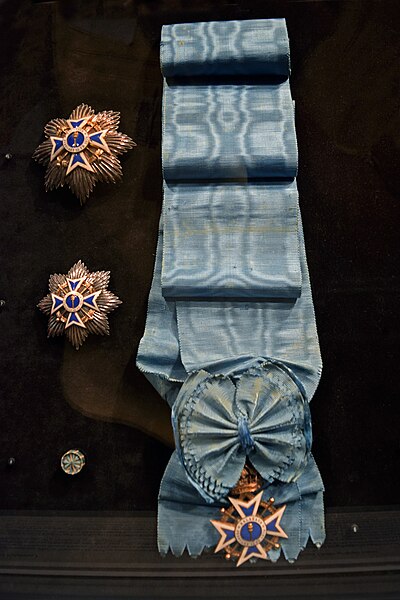


The 'Merrie Monarch' and the Resurgence of Hawaiian Culture
King Kalākaua, born David Laʻamea Kamanakapuʻu Māhinulani Nālaʻiaʻehuokalani Lumialani Kalākaua, ascended to the Hawaiian throne in 1874, marking the beginning of the end for the sovereign Kingdom of Hawaii. His reign, lasting until his death in 1891, is often characterized by his vibrant personality and his concerted efforts to revitalize Hawaiian culture, earning him the moniker 'Merrie Monarch.' At a time when Westernization had led to the suppression of many indigenous traditions, Kalākaua actively promoted and celebrated Hawaiian arts and customs.
His coronation and jubilee celebrations were pivotal in the public revival of the hula, a dance form that had been marginalized. This cultural renaissance was not merely entertainment; it was a deliberate assertion of Hawaiian identity and sovereignty in the face of increasing foreign encroachment. Economically, his reign benefited from the Reciprocity Treaty of 1875, which fostered trade with the United States, bringing a period of prosperity.
However, this treaty also granted the U.S. exclusive rights to Pearl Harbor, a concession that would have long-term strategic implications.
A Global Diplomat and Educational Visionary
Kalākaua was a monarch with an expansive vision that extended far beyond the Hawaiian Islands. In 1881, he undertook an unprecedented global tour, visiting Asia, Europe, and North America. This journey was multifaceted: he sought to attract skilled labor for the burgeoning sugar industry, foster international alliances, and, crucially, to expose his people to diverse educational opportunities.
Recognizing the importance of a well-educated populace for national development, Kalākaua established a government-funded program to send qualified Hawaiian students abroad for higher education. This initiative underscored his belief in empowering his people with knowledge and skills necessary to navigate an increasingly complex world and to lead their nation effectively. His travels also served to raise Hawaii's profile on the international stage.
Monumental Endeavors and Fiscal Realities
The reign of Kalākaua was marked by significant architectural and cultural undertakings that aimed to solidify the kingdom's prestige and historical continuity. He commissioned the iconic statue of King Kamehameha I, a powerful symbol of Hawaiian unity and heritage, which remains a prominent landmark. Furthermore, he initiated a grand restoration and expansion of ʻIolani Palace, transforming it into a symbol of Hawaiian monarchy and modernity, complete with electricity and telephones.
While these projects were intended to foster national pride and serve as enduring cultural assets, they were also immensely expensive. The substantial expenditures associated with these endeavors, combined with Kalākaua's ambitious, albeit ultimately unrealized, plans for a Polynesian confederation, provided ammunition for annexationist factions within Hawaii and the United States.
The Erosion of Royal Authority and the Path to Annexation
Despite Kalākaua's efforts to strengthen the monarchy and promote Hawaiian culture, his reign was increasingly challenged by internal political pressures and external ambitions. The economic prosperity brought by the Reciprocity Treaty was accompanied by growing American influence and a desire among some to see Hawaii annexed by the United States. Kalākaua's grand projects and his vision for a unified Polynesia were viewed with suspicion by those who favored closer ties with the U.S.
In 1887, a group of American and European businessmen and residents, backed by a militia, forced Kalākaua to sign a new constitution. This document, often called the 'Bayonet Constitution,' severely curtailed the monarch's powers, disenfranchised many native Hawaiians, and effectively rendered the monarchy a figurehead. This constitutional crisis significantly weakened the monarchy and paved the way for its eventual overthrow.
Kalākaua designated his sister, Liliʻuokalani, as his heir apparent, and she would ascend the throne to face the final chapter of Hawaiian independence.
See also
Frequently Asked Questions
Who was Kalākaua?+
Why was he called the Merrie Monarch?+
What did Kalākaua do to revive the hula?+
What was the Reciprocity Treaty of 1875?+
Why did Kalākaua travel around the world in 1881?+
Based on content from Wikipedia · Licensed under CC BY-SA 4.0